Und dann auf "Zum Home-Bildschirm [+]".

Stöbern
genialokal zum Startbildschirm hinzufügen
Installieren Sie die genialokal App auf Ihrem Startbildschirm für einen schnellen Zugriff und eine komfortable Nutzung.
Installieren Sie die genialokal App auf Ihrem Startbildschirm für einen schnellen Zugriff und eine komfortable Nutzung.
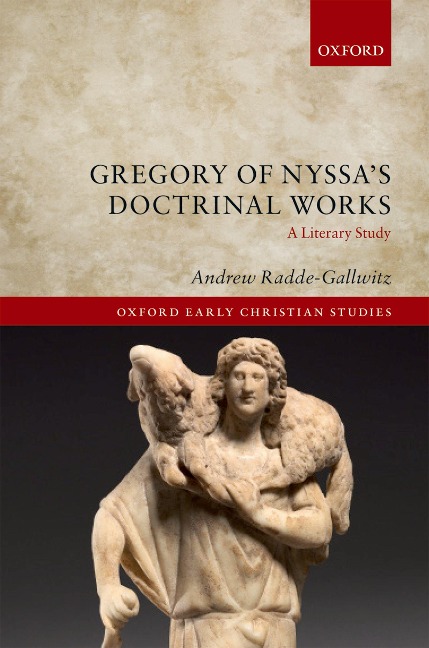
Gregory of Nyssa is firmly established in today's theological curriculum and is a major figure in the study of late antiquity. Students encounter him in anthologies of primary sources, in surveys of Christian history and perhaps in specialized courses on the doctrine of the Trinity, eschatology, asceticism, or the like. Gregory of Nyssa's Doctrinal Works presents a reading of the works in Gregory's corpus devoted to the dogmatic controversies of his day. Andrew Radde-Gallwitz focuses as much on Gregory the writer as on Gregory the dogmatic theologian. He sets both elements not only within the context of imperial legislation and church councils of Gregory's day, but also within their proper religious context-that is, within the temporal rhythms of ritual and sacramental practice. Gregory himself roots what we call Trinitarian theology within the church's practice of baptism. In his dogmatic treatises, where textbook accounts might lead one to expect much more on the metaphysics of substance or relation, one finds a great deal on baptismal grace; in his sermons, reflecting on the occasion of baptism tends to prompt Trinitarian questions.
Andrew Radde-Gallwitz is Assistant Professor at the University of Notre Dame. He works on the intellectual history of Christianity from the second through the fifth centuries. With particular interest in early Christian doctrine, his research focuses on late ancient Platonism and the tradition of negative theology. He is the author of Basil of Caesarea, Gregory of Nyssa, and the Transformation of Divine Simplicity (2009) and Basil of Caesarea (2012).
- Abbreviations - Introduction - Part I: Trinitarian Confession - 1: Christ's Creed - 2: Eunomius' Creeds - Excursus: The Distinction of Hypostases - 3: µ-a - e-t--: A Reading of Against Eunomius 2 and To Ablabius - Part II: Saving Economy - 4: After the Passion - 5: The Virgin's Child - 6: 383 and After - Conclusion - Bibliography
Dieses eBook wird im PDF-Format geliefert und ist mit einem Adobe Kopierschutz (DRM) versehen. Sie können dieses eBook mit allen Geräten lesen, die das PDF-Format und den Adobe Kopierschutz (DRM) unterstützen.
Zum Beispiel mit den folgenden Geräten:
• tolino Reader
Laden Sie das eBook direkt über den Reader-Shop auf dem tolino herunter oder übertragen Sie das eBook auf Ihren tolino mit einer kostenlosen Software wie beispielsweise Adobe Digital Editions.
• Sony Reader & andere eBook Reader
Laden Sie das eBook direkt über den Reader-Shop herunter oder übertragen Sie das eBook mit der kostenlosen Software Sony READER FOR PC/Mac oder Adobe Digital Editions auf ein Standard-Lesegeräte mit epub- und Adobe DRM-Unterstützung.
• Tablets & Smartphones
Möchten Sie dieses eBook auf Ihrem Smartphone oder Tablet lesen, finden Sie hier unsere kostenlose Lese-App für iPhone/iPad und Android Smartphone/Tablets.
• PC & Mac
Lesen Sie das eBook direkt nach dem Herunterladen mit einer kostenlosen Lesesoftware, beispielsweise Adobe Digital Editions, Sony READER FOR PC/Mac oder direkt über Ihre eBook-Bibliothek in Ihrem Konto unter „Meine eBooks“ - „online lesen“.
Schalten Sie das eBook mit Ihrer persönlichen Adobe ID auf bis zu sechs Geräten gleichzeitig frei.
Bitte beachten Sie, dass die Kindle-Geräte das Format nicht unterstützen und dieses eBook somit nicht auf Kindle-Geräten lesbar ist.