Und dann auf "Zum Home-Bildschirm [+]".

Stöbern
genialokal zum Startbildschirm hinzufügen
Installieren Sie die genialokal App auf Ihrem Startbildschirm für einen schnellen Zugriff und eine komfortable Nutzung.
Installieren Sie die genialokal App auf Ihrem Startbildschirm für einen schnellen Zugriff und eine komfortable Nutzung.
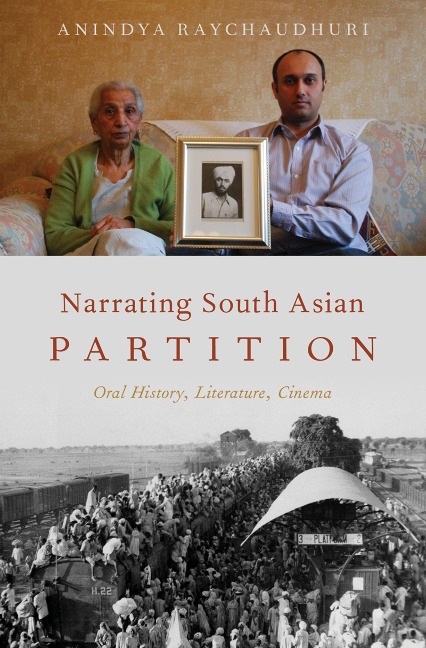
The history of the 1947 Indian/Pakistani partition is one of separation: a country and people newly divided. However, in telling this story, Anindya Raychaudhuri, the son of a partition participant, looks to unity, joining for the first time the public and private memory narratives of this pivotal moment in time. Narrating Partition features in-depth interviews with more than 120 individuals across India, Pakistan, Bangladesh, and the United Kingdom, each reflecting on a direct or inherited experience of the 1947 Indian/Pakistani partition. Through the collection of these oral history narratives, Raychaudhuri is able to place them into comparison with the literary, cinematic, and artistic representations of partition, and in doing so, examine the ways this event is remembered, re-interpreted, and reconstructed--and the narrator's role in this process. These stories also reflect on the themes of home, family, violence, childhood, trains, and rivers within these public and private narratives. Crucially, Raychaudhuri is the first writer to use oral history in addressing the Bengal/Punjab partition as part of this same event, examining the memorial legacy in both the Bengali and Punjabi communities.
Anindya Raychaudhuri is Lecturer at the School of English, University of St Andrews. He was previously British Academy Postdoctoral Fellow, first at UCL and then at the University of St Andrews. He is editor of The Journal of the Oral History Society and The Spanish Civil War: Exhuming a Buried Past. In 2016, he was named one of the BBC/AHRC New Generation Thinkers.
Acknowledgments
Introduction 1. "Wasn't It Golden?": Remembering the Lost Home 2. "My Other Mother: Separated and Reconstructed Families 3. "This Eight-Year-Old, He's Too Little": Children Taking Back Control 4. "The Most Awful Thing I Watched": Partition and the Many Meanings of Violence 5. "All Trains Stop There: The Icon of the Death-Train 6. "I Still Dream of the Padma": Changing Riverscapes of Partition 7. "The Cause": Working through the Memories of Partition Conclusion: The Vital Importance of the Word
Appendix 1: List of Interviewees Appendix 2: Glossary of South Asian Words Notes Bibliography Index
Dieses eBook wird im PDF-Format geliefert und ist mit einem Adobe Kopierschutz (DRM) versehen. Sie können dieses eBook mit allen Geräten lesen, die das PDF-Format und den Adobe Kopierschutz (DRM) unterstützen.
Zum Beispiel mit den folgenden Geräten:
• tolino Reader
Laden Sie das eBook direkt über den Reader-Shop auf dem tolino herunter oder übertragen Sie das eBook auf Ihren tolino mit einer kostenlosen Software wie beispielsweise Adobe Digital Editions.
• Sony Reader & andere eBook Reader
Laden Sie das eBook direkt über den Reader-Shop herunter oder übertragen Sie das eBook mit der kostenlosen Software Sony READER FOR PC/Mac oder Adobe Digital Editions auf ein Standard-Lesegeräte mit epub- und Adobe DRM-Unterstützung.
• Tablets & Smartphones
Möchten Sie dieses eBook auf Ihrem Smartphone oder Tablet lesen, finden Sie hier unsere kostenlose Lese-App für iPhone/iPad und Android Smartphone/Tablets.
• PC & Mac
Lesen Sie das eBook direkt nach dem Herunterladen mit einer kostenlosen Lesesoftware, beispielsweise Adobe Digital Editions, Sony READER FOR PC/Mac oder direkt über Ihre eBook-Bibliothek in Ihrem Konto unter „Meine eBooks“ - „online lesen“.
Schalten Sie das eBook mit Ihrer persönlichen Adobe ID auf bis zu sechs Geräten gleichzeitig frei.
Bitte beachten Sie, dass die Kindle-Geräte das Format nicht unterstützen und dieses eBook somit nicht auf Kindle-Geräten lesbar ist.