Und dann auf "Zum Home-Bildschirm [+]".

Stöbern
genialokal zum Startbildschirm hinzufügen
Installieren Sie die genialokal App auf Ihrem Startbildschirm für einen schnellen Zugriff und eine komfortable Nutzung.
Installieren Sie die genialokal App auf Ihrem Startbildschirm für einen schnellen Zugriff und eine komfortable Nutzung.
Ihr gewünschter Artikel ist in 0 Buchhandlungen vorrätig - wählen Sie hier eine Buchhandlung in Ihrer Nähe aus:

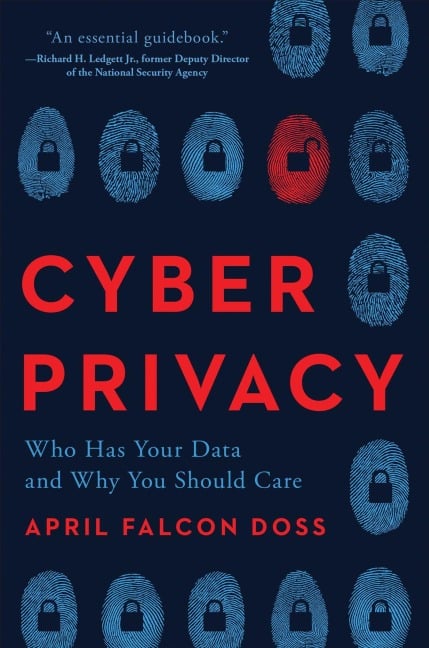
April Falcon Doss, a cybersecurity and privacy expert with experience working for the NSA and the US government, explores the most common types of data being collected about individuals today and delve into how it is being used-sometimes against us-by the private sector, the government, and even our employers and schools.
April Falcon Doss spent over a decade at the National Security Agency, where she was the associate general counsel for intelligence law. She also served on Capitol Hill as the senior minority counsel for the Russia investigation in the United States Senate Select Committee on Intelligence. Doss is a regular commentator on data privacy, cybersecurity, and national security issues. She has appeared on CNN, MSNBC, and NPR. April's articles have appeared in a wide range of publications, including the Washington Post, Atlantic, Weekly Standard, Lawfare, and SciTech Lawyer.
Contents Introduction: Mapping the Privacy Landscape Section I: What Kinds of Data Are We Talking About, and What Kind of Privacy Do We Mean? Chapter 1: Categories of Data, and How It's Collected Chapter 2: A Buzzsaw of Buzzwords: How Cloud Computing, Algorithms, and Analytics Are Impacting Data Today Chapter 3: The Privacy Prism: A Single Term with Many Dimensions Chapter 4: What's It to You? Understanding What Privacy Is Worth Section II: If You're Not Paying for the Product, You Are the Product Chapter 5: The Big 4: Apple, Google, Facebook, Amazon Chapter 6: When Your Data Goes to Someone You Didn't Expect Chapter 7: Minority Report: The Algorithms Making Predictions About Your Current Mental Health, Your Future Medical Conditions, and the Likelihood That You'll Commit a Crime Chapter 8: Differentiating the Real from the False Section III: Power Play: How Personal Data Exacerbates the Imbalances in Everyday Life Chapter 9: It's 11 PM. Do You Know Where Your Employees Are? Chapter 10: Data-Driven Privacy Disorder? How Data Collection and Algorithms Are Being Used in Education, and What That Means for Our Kids Chapter 11: When Your Data Is You: Facial Recognition, Biometric Technology, and Public Health Chapter 12: Underpaid Data Labor: AI Training, Digital Piecework, and the Survey Economy Chapter 13: The Stalker in Your Phone Section IV: Who's Your Big Brother? Chapter 14: The US Intelligence Community Post-WWII: Just Because You're Paranoid Doesn't Mean They're Not Watching You Chapter 15: Where Do You Draw the Line? Data Collection in the US Intelligence Community Post-9/11 Chapter 16: Mass Surveillance and Bulk Interception: A Distinction with a Difference Chapter 17: Community Policing: All Surveillance Is Local Chapter 18: Government Surveillance in a Time of Trump: Why We Still Need It, How to Control It, and How to Protect Ourselves Against It Section V: Global Rules in a Connected World: How Other Countries Handle Data Chapter 19: A Brief European (De-)Tour, or Is Being Forgotten Really a Right? Chapter 20: Total(itarian) Surveillance: How the Other Half Lives Section VI: Pandora's Box: Data's Dangers, and Finding Hope at the Bottom of the Box Chapter 21: Quantum Policy, or How a New Approach to Law and Policy Could Give Cyber Privacy a Fighting Chance Conclusion: Making Sure That Human Beings Still Pass the Turing Test Notes Acknowledgments About the Author Index