Und dann auf "Zum Home-Bildschirm [+]".

Stöbern
genialokal zum Startbildschirm hinzufügen
Installieren Sie die genialokal App auf Ihrem Startbildschirm für einen schnellen Zugriff und eine komfortable Nutzung.
Installieren Sie die genialokal App auf Ihrem Startbildschirm für einen schnellen Zugriff und eine komfortable Nutzung.

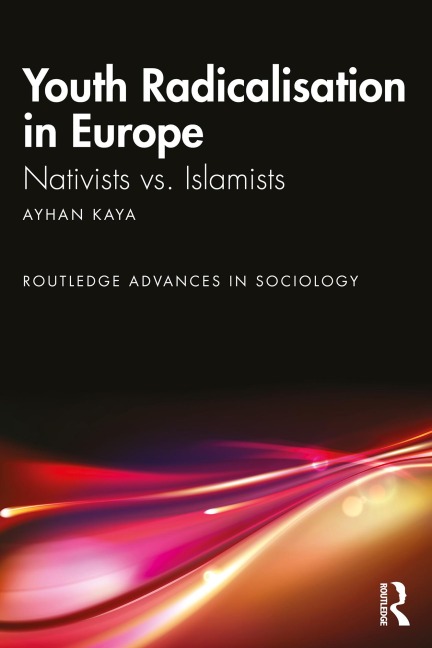
Based on extensive in-depth interview research with young Europeans, this book reveals the root causes of radicalisation among European youth with different ethno-cultural and religious backgrounds. Drawing on interdisciplinary research and the voices of young people themselves, the book demonstrates that both nativist and Islamist trajectories emerge from overlapping experiences of inequality, insecurity, spatial marginalisation, and fractured futures. It explores the dynamics of radicalisation within European societies by examining the intersecting forces of globalisation, socio-economic deprivation, political deprivation, and spatial deprivation. It will appeal to scholars and students working on radicalisation, de-radicalisation, emotions, democracy and diversity management, minority and migration studies, globalisation, socio-economic deprivation, youth studies, and religious, nationalist, and culturalist ideologies. It will also be useful to policymakers and practitioners who work in the field of radicalisation and de-radicalisation.
Ayhan Kaya is a Professor of Politics and Jean Monnet Chair of European Politics of Interculturalism in the Department of International Relations, Istanbul Bilgi University. He is a member of the Science Academy, Turkey, since 2012, and a member of the British Academy since 2024. He received his PhD and MA degrees at the University of Warwick, United Kingdom. One of the latest books is Populism and Heritage in Europe: Lost in Diversity and Unity (2019).
Introduction; 1. Social Movements Theory: Reactionary Radicalisation; 2. Deprivation: Socioeconomic, Political, and Spatial Grievances; 3. Ressentiment: Humiliation and Injustice; 4. Nostalgia: Mystification of the Past; 5. (Co)Radicalisation: Nativist vs. Islamist Radicalisms; Conclusion: A Relational Framework for Youth Radicalisation in Europe