Und dann auf "Zum Home-Bildschirm [+]".

Stöbern
genialokal zum Startbildschirm hinzufügen
Installieren Sie die genialokal App auf Ihrem Startbildschirm für einen schnellen Zugriff und eine komfortable Nutzung.
Installieren Sie die genialokal App auf Ihrem Startbildschirm für einen schnellen Zugriff und eine komfortable Nutzung.
Ihr gewünschter Artikel ist in 0 Buchhandlungen vorrätig - wählen Sie hier eine Buchhandlung in Ihrer Nähe aus:

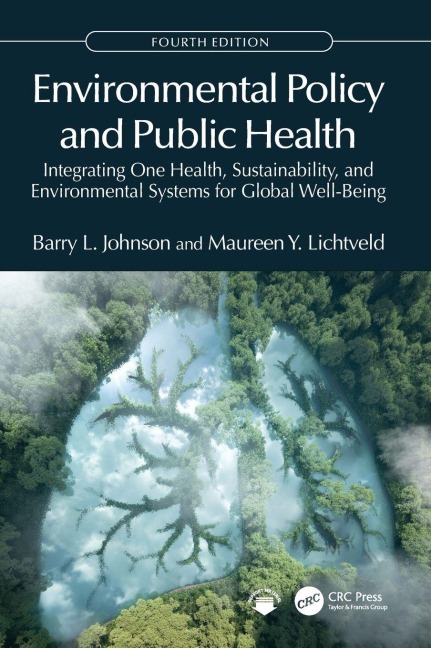
The fourth edition of this textbook integrates contemporary topics shaped by environmental and public health policy with foundational knowledge about key environmental health policies and threats affecting communities locally and globally. Divided into three parts, Part I explores One Health, highlighting the interconnected health of people, animals, plants, and ecosystems, vaccines and preventable infectious diseases, and climate and health risks, emphasizing policy-driven community resilience. It also addresses natural disasters, emergency preparedness, and sustainability, focusing on the role of environmental policy in managing interdependent systems for long-term health. Part II examines the public health implications of foundational environmental policies developed with prevention in mind, including toxicants, air quality, water, and solid and hazardous wastes. Part III addresses persistent environmental health topics requiring renewed attention, such as noise and light pollution, food safety and security, the built environment, and transportation. Features - The only textbook linking environmental policies to the health of people, animals, plants, and ecosystems, authored by experts with extensive teaching experience in policy and public health. - Integrates contemporary topics with foundational knowledge about environmental health policies and threats globally and locally. - Critically evaluates sustainability's role in managing interconnected health systems through policy. - Demonstrates the critical role of policy and the impact of policy gaps on public health and disease prevention. - Includes practice questions in every chapter to support case-based learning and broad application. This is a comprehensive textbook for upper-level undergraduate and graduate students in public health and environmental sciences. It is also a great reference for professional education fostering transdisciplinary collaboration across public health, veterinary sciences, and sustainability systems.
Barry L. Johnson is an adjunct professor at the Rollins School of Public Health, Emory University. Dr. Johnson conducted environmental research at USPHS, USEPA, and CDC. He is an elected Fellow, Collegium Ramazani, and he retired from the USPHS with the rank of Rear Admiral. Dr. Johnson has written for an array of academic published and published numerous books and journal articles on the dangers of hazardous waste including Impact of Hazardous Waste on Human Health and Advances in Neurobehavioral Toxicology, published by CRC Press. Maureen Lichtveld serves as the Dean, Professor of Environmental and Occupational Health, and Jonas Salk Chair in Population Health at the University of Pittsburgh's Graduate School of Public Health. Previously, she held the position of Professor and Freeport McMoRan Chair of Environmental Policy at Tulane University's School of Public Health and Tropical Medicine. A member of the National Academy of Medicine, Dr. Lichtveld brings decades of expertise in environmental public health, with research focusing on environmentally induced diseases, health disparities, environmental health policy, disaster preparedness, climate and health, and community resilience. She is also a board member of the Consortium of Universities for Global Health and has been recognized with prestigious honors, including induction into Johns Hopkins' Society of Scholars and being named the CDC's Environmental Health Scientist of the Year.
Part I. 1. One Health: Policies, Gaps, Framework for Action. 2. Vaccines and Public Health Policy. 3. Environmental Policy in an Era of Climate and Health Risk. 4. Natural Disasters and Preparedness. 5. Sustainability, Public Health, and Environmental Policy: Managing Interdependent Systems for Long-Term Health. Part II. 6. Environmental Toxicants. 7. Air Quality and Public Health. 8. Water Quality and Security. 9. Solid and Hazardous Wastes. Part III. 10. Noise and Light Pollution. 11. Food Safety and Security. 12. The Built Environment. 13. Transportation.