Und dann auf "Zum Home-Bildschirm [+]".

Stöbern
genialokal zum Startbildschirm hinzufügen
Installieren Sie die genialokal App auf Ihrem Startbildschirm für einen schnellen Zugriff und eine komfortable Nutzung.
Installieren Sie die genialokal App auf Ihrem Startbildschirm für einen schnellen Zugriff und eine komfortable Nutzung.

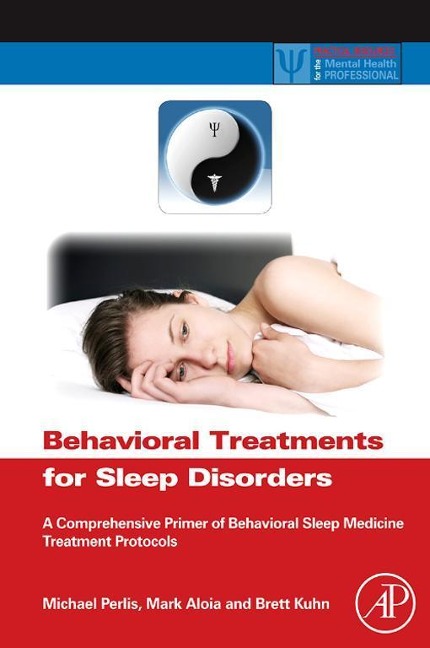
Sleep is a major component of good mental and physical health, yet over 40 million Americans suffer from sleep disorders. Edited by three prominent clinical experts, Behavioral Treatments for Sleep Disorders is the first reference to cover all of the most common disorders (insomnia, sleep apnea, restless legs syndrome, narcolepsy, parasomnias, etc) and the applicable therapeutic techniques. The volume adopts a highly streamlined and practical approach to make the tools of the trade from behavioral sleep medicine accessible to mainstream psychologists as well as sleep disorder specialists. Organized by therapeutic technique, each chapter discusses the various sleep disorders to which the therapy is relevant, an overall rationale for the intervention, step-by-step instructions for how to implement the technique, possible modifications, the supporting evidence base, and further recommended readings. Treatments for both the adult and child patient populations are covered, and each chapter is authored by an expert in the field.
- Offers more coverage than any volume on the market, with discussion of virtually all sleep disorders and numerous treatment types
- Addresses treatment concerns for both adult and pediatric population
- Outstanding scholarship, with each chapter written by an expert in the topic area
- Each chapter offers step-by-step description of procedures and covers the evidence-based data behind those procedures
Part I. BSM Treatment Protocols for Insomia1. Sleep Restriction Therapy2. Stimulus Control Therapy3. Sleep Hygiene4. Relaxation for Insomnia5. Sleep Compression6. Paradoxical Intention Therapy7. Behavioral Experiments8. Intervention to Reduce Unhelpful Beliefs about Sleep9. Intervention to Reduce Misperception10. Intervention to Reduce Use of Safety Behaviors11. Cognitive Therapy for Dysfunctional Beliefs about Sleep and Insomnia12. Cognitive Restructuring: Cognitive Therapy for Catastrophic Sleep Beliefs13. Intensive Sleep Retraining: Conditioning Treatment for Primary Insomnia14. Mindfulness-Based Therapy for Insomnia15. Brief Behavioral Treatment of Insomnia16. Using Bright Light and Melatonin to Reduce Jet Lag17. Using Bright Light and Melatonin to Adjust to Night Work Part II. BSM Protocols for Adherence and Treatment of Intrinsic Sleep Disorders18. Motivational Enhancement Therapy19. Exposure Therapy for Claustrophobic Reactions to Continuous Positive Airway Pressure20. Sleep Apnea Self-Management Program21. Cognitive Behavioral Therapy to Increase Adherence to Continuous Positive Airway22. Cognitive Behavioral Therapy to Increase Adherence to Continuous Positive Airway23. The Avoidance of the Supine Posture during Sleep for Patients with Supine-related Sleep Apnea24. Scheduled Sleep Periods as an Adjuvant Treatment for Narcolepsy Part III. BSM Protocols for Pediatric Sleep Disorders25. Brief Parent Consultation to Prevent Infant/Toddler Sleep Disturbance26. Unmodified Extinction for Childhood Sleep Disturbance27. Graduated Extinction: Behavioral Treatment for Bedtime Problems and Night Wakings in Young Children28. Extinction with Parental Presence29. Bedtime Fading with Response Cost for Children with Multiple Sleep Problems30. The Bedtime Pass31. The Excuse-Me Drill: A Behavioral protocol to Promote Independent Sleep Initiation Skills and Reduce Bedtime Problems in Young Children32. Day Correction of Pediatric Bedtime Problems33. Graduated Exposure Games to Reduce Children's Fear of the Dark34. Scheduled Awakenings: A Behavioral Protocol for Treating Sleepwalking and Sleep Terrors in Children35. Imagery Rehearsal Therapy for Adolescents36. Moisture Alarm Therapy for Primary Nocturnal Enuresis37. Promoting Positive Airway Pressure Adherence in Children Using Escape Extinction within a Multi-Component Behavior Therapy Approach38. Using Motivational Interviewing to Facilitate Healthier Sleep-Related Behaviors in Adolescents