Und dann auf "Zum Home-Bildschirm [+]".

Stöbern
genialokal zum Startbildschirm hinzufügen
Installieren Sie die genialokal App auf Ihrem Startbildschirm für einen schnellen Zugriff und eine komfortable Nutzung.
Installieren Sie die genialokal App auf Ihrem Startbildschirm für einen schnellen Zugriff und eine komfortable Nutzung.
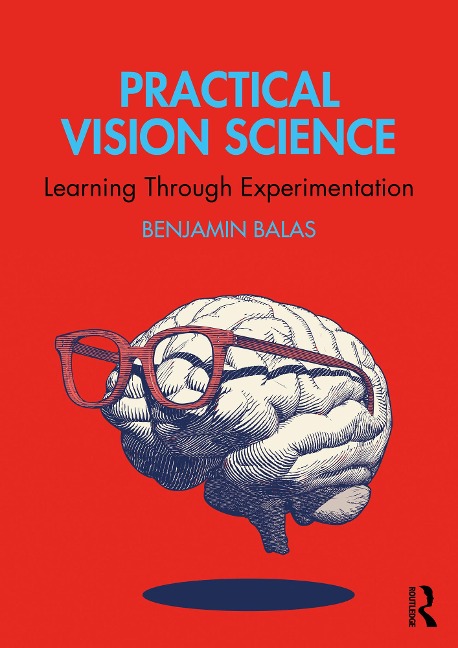
This workbook provides a collection of experiments and observations that use physical materials (rather than digital displays or resources) to reveal fundamental properties of the human visual system. Practical Vision Science centers discovery, observation, and critical thinking. By observing and manipulating visual phenomena, readers gain insights regarding visual processing from the outside world into high-level areas of the visual cortex. The text covers geometric optics, image formation, early stages of visual processing, and inferences regarding brightness, color, depth, motion, and form. The goal is to highlight the critical role that observation of one's own sensory experiences plays in vision science, while introducing phenomena that provide clues about the computations and constraints that shape our experience of the visual world. Each exercise can be completed with everyday materials, and the text includes discussion of key phenomena readers should be able to observe and the implications of these effects for underlying mechanisms that support visual experience in each case. Practical Vision Science is an essential text for upper undergraduate and postgraduate students of Sensation and Perception, providing the opportunity to learn by doing things rather than reading facts about the visual system on the page.
Benjamin Balas is a Professor of Psychology at North Dakota State University, USA. He received both his SB and PhD from MIT's Department of Brain and Cognitive Sciences and completed post-doctoral work at Children's Hospital Boston.
1. What is Light and What Does It Do? 2. Image Formation in the Eye 3. Measuring Light with the Retina 4. Spatial Vision in the LGN and V1 5. Perceptual Organization and Gestalt Principles 6. Brightness and Color Constancy 7. Depth Perception 8. Motion Perception 9. Face Perception
Dieses eBook wird im PDF-Format geliefert und ist mit einem Adobe Kopierschutz (DRM) versehen. Sie können dieses eBook mit allen Geräten lesen, die das PDF-Format und den Adobe Kopierschutz (DRM) unterstützen.
Zum Beispiel mit den folgenden Geräten:
• tolino Reader
Laden Sie das eBook direkt über den Reader-Shop auf dem tolino herunter oder übertragen Sie das eBook auf Ihren tolino mit einer kostenlosen Software wie beispielsweise Adobe Digital Editions.
• Sony Reader & andere eBook Reader
Laden Sie das eBook direkt über den Reader-Shop herunter oder übertragen Sie das eBook mit der kostenlosen Software Sony READER FOR PC/Mac oder Adobe Digital Editions auf ein Standard-Lesegeräte mit epub- und Adobe DRM-Unterstützung.
• Tablets & Smartphones
Möchten Sie dieses eBook auf Ihrem Smartphone oder Tablet lesen, finden Sie hier unsere kostenlose Lese-App für iPhone/iPad und Android Smartphone/Tablets.
• PC & Mac
Lesen Sie das eBook direkt nach dem Herunterladen mit einer kostenlosen Lesesoftware, beispielsweise Adobe Digital Editions, Sony READER FOR PC/Mac oder direkt über Ihre eBook-Bibliothek in Ihrem Konto unter „Meine eBooks“ - „online lesen“.
Schalten Sie das eBook mit Ihrer persönlichen Adobe ID auf bis zu sechs Geräten gleichzeitig frei.
Bitte beachten Sie, dass die Kindle-Geräte das Format nicht unterstützen und dieses eBook somit nicht auf Kindle-Geräten lesbar ist.