Und dann auf "Zum Home-Bildschirm [+]".

Stöbern
genialokal zum Startbildschirm hinzufügen
Installieren Sie die genialokal App auf Ihrem Startbildschirm für einen schnellen Zugriff und eine komfortable Nutzung.
Installieren Sie die genialokal App auf Ihrem Startbildschirm für einen schnellen Zugriff und eine komfortable Nutzung.
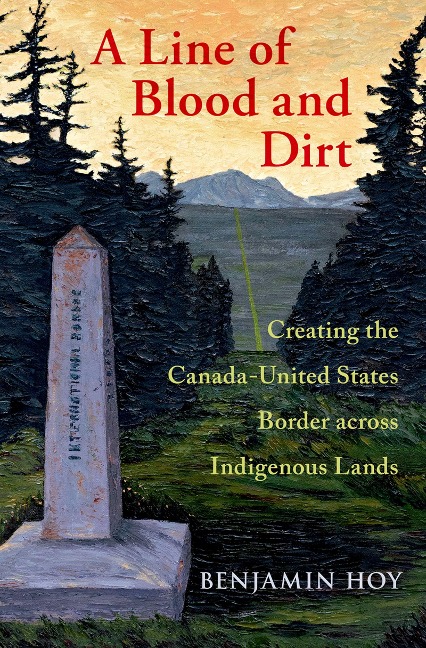
The untold history of the multiracial making of the border between Canada and the United States. Often described as the longest undefended border in the world, the Canada-United States border was born in blood, conflict, and uncertainty. At the end of the American Revolution, Britain and the United States imagined a future for each of their nations that stretched across a continent. They signed treaties with one another dividing lands neither country could map, much less control. A century and a half later, they had largely fulfilled those earlier ambitions. Both countries had built nations that stretched from the Atlantic to the Pacific and had created an expansive international border that restricted movement. The vision that seemed so clear in the minds of diplomats and politicians was never so well-defined on the ground. As A Line of Blood and Dirt argues, both countries built their border across Indigenous lands using hunger, violence, and coercion to displace existing communities and to disrupt their ideas of territory and belonging. Drawing on oral histories, map visualizations, and archival sources, Benjamin Hoy reveals the role Indigenous people played in the development of the international boundary, as well as the impact the border had on Indigenous people, European settlers, Chinese migrants, and African Americans. Unable to prevent movement at the border's physical location for over a century, Canada and the United States instead found ways to project fear across international lines. Bringing together the histories of tribes, immigration, economics, and the relationship of neighboring nations, A Line of Blood and Dirt offers a new history of Indigenous peoples and the borderland.
Benjamin Hoy is an assistant professor of history at University of Saskatchewan, where he directs the Historical GIS Lab.
Acknowledgments Terminology Introduction Chapter 1 Building Borders Chapter 2 The Civil and Dakota War Chapter 3 New Countries, Old Problems Chapter 4 Borders of Stones, Guns, and Grass Chapter 5 Where it All Went Wrong Chapter 6 Borders of Salt and Rock Chapter 7 Blood and Bones Chapter 8 The Chaos of Control Chapter 9 Higher Than Sight Can Reach Chapter 10 The Borders of Everyday Life Epilogue Appendix Notes Bibliography Index
Dieses eBook wird im PDF-Format geliefert und ist mit einem Adobe Kopierschutz (DRM) versehen. Sie können dieses eBook mit allen Geräten lesen, die das PDF-Format und den Adobe Kopierschutz (DRM) unterstützen.
Zum Beispiel mit den folgenden Geräten:
• tolino Reader
Laden Sie das eBook direkt über den Reader-Shop auf dem tolino herunter oder übertragen Sie das eBook auf Ihren tolino mit einer kostenlosen Software wie beispielsweise Adobe Digital Editions.
• Sony Reader & andere eBook Reader
Laden Sie das eBook direkt über den Reader-Shop herunter oder übertragen Sie das eBook mit der kostenlosen Software Sony READER FOR PC/Mac oder Adobe Digital Editions auf ein Standard-Lesegeräte mit epub- und Adobe DRM-Unterstützung.
• Tablets & Smartphones
Möchten Sie dieses eBook auf Ihrem Smartphone oder Tablet lesen, finden Sie hier unsere kostenlose Lese-App für iPhone/iPad und Android Smartphone/Tablets.
• PC & Mac
Lesen Sie das eBook direkt nach dem Herunterladen mit einer kostenlosen Lesesoftware, beispielsweise Adobe Digital Editions, Sony READER FOR PC/Mac oder direkt über Ihre eBook-Bibliothek in Ihrem Konto unter „Meine eBooks“ - „online lesen“.
Schalten Sie das eBook mit Ihrer persönlichen Adobe ID auf bis zu sechs Geräten gleichzeitig frei.
Bitte beachten Sie, dass die Kindle-Geräte das Format nicht unterstützen und dieses eBook somit nicht auf Kindle-Geräten lesbar ist.