Und dann auf "Zum Home-Bildschirm [+]".

Stöbern
genialokal zum Startbildschirm hinzufügen
Installieren Sie die genialokal App auf Ihrem Startbildschirm für einen schnellen Zugriff und eine komfortable Nutzung.
Installieren Sie die genialokal App auf Ihrem Startbildschirm für einen schnellen Zugriff und eine komfortable Nutzung.
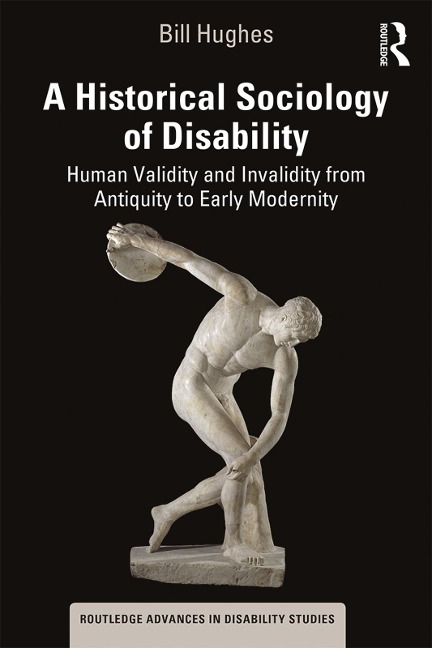
Covering the period from Antiquity to Early Modernity, A Historical Sociology of Disability argues that disabled people have been treated in Western society as good to mistreat and - with the rise of Christianity - good to be good to. It examines the place and role of disabled people in the moral economy of the successive cultures that have constituted 'Western civilisation'. This book is the story of disability as it is imagined and re-imagined through the cultural lens of ableism. It is a story of invalidation; of the material habituations of culture and moral sentiment that paint pictures of disability as 'what not to be'. The author examines the forces of moral regulation that fall violently in behind the dehumanising, ontological fait accompli of disability invalidation, and explores the ways in which the normate community conceived of, narrated and acted in relation to disability. A Historical Sociology of Disability will be of interest to all scholars, students and activists working in the field of Disability Studies, as well as sociology, education, philosophy, theology and history. It will appeal to anyone who is interested in the past, present and future of the 'last civil rights movement'.
Bill Hughes is Professor of Sociology at Glasgow Caledonian University. He was co-editor of Disability and Social Theory (2012), a regular contributor to and member of the Editorial Board of Disability & Society and, formerly, Editor of the Scandinavian Journal of Disability Research.
List of figures; List of tables; Acknowledgements; INTRODUCTION; Violating disability; Chapter outlines; Concluding remarks; PART 1: Method and Theory; CHAPTER 1: Thinking through disability history: An act of recovery; Introduction; Methodological self-consciousness: The author in the confessional; New Historicism; The place of Proprium and moral economy in a historical sociology of disability; History of disability or a history of impairment; Concluding remarks; CHAPTER 2: Modelling disability theory: A contemporary history of the disability idea; Introduction; First wave radicalism: The social model of disability; The second wave: Conceptual proliferation, Critical Disability Studies and the growth of the cultural model of disability; Concluding remarks; CHAPTER 3: Conceptualising property and propriety, validity and invalidation; Introduction; Recognition: Moral economy of propriety; Ableism: the cloak of validity; Invalidation; Concluding remarks; Part 1: Concluding remarks; PART 2: Disability in History: Antiquity, the Middle Ages and Early Modernity; Part 2: Introductory remarks; CHAPTER 4: Disability in ancient Greece and Rome; Introduction; Arete: The contours of classical propriety; 'And those of the worst': Disposable bodies; Pharmakos: The disabled scapegoat; An ocular-centric culture of light and appearance: being blind in Greco-Roman society; Concluding Remarks; CHAPTER 5: Disability in the Christian Middle Ages; Introduction; Eristic Christianity; God, Church and state: Normate power triangulated; Theological invalidations: The others of the unscathed; Ambiguous God, ambiguous scripture, ambiguous testaments of sin and disability; God's tease: Saints and sinners; No ears to hear, no eyes to see ... the wonders of God; The era of ridicule; From monsters to demons; Merciful conduct: A stairway to heaven; Concluding remarks; CHAPTER 6: Renaissance and Reformation: Disability invalidation in Early Modernity; Introduction; Interregnum; Aesthetics and classical revivalism; Demons and witches; Monsters; Dark subjects; Savages and heathens; Social dislocation: Vagabonds and beggars; Fools and folly; 'Each to his own': The closed Protestant body; Concluding remarks; CONCLUSION: A banquet of indignities; Index
Dieses eBook wird im PDF-Format geliefert und ist mit einem Adobe Kopierschutz (DRM) versehen. Sie können dieses eBook mit allen Geräten lesen, die das PDF-Format und den Adobe Kopierschutz (DRM) unterstützen.
Zum Beispiel mit den folgenden Geräten:
• tolino Reader
Laden Sie das eBook direkt über den Reader-Shop auf dem tolino herunter oder übertragen Sie das eBook auf Ihren tolino mit einer kostenlosen Software wie beispielsweise Adobe Digital Editions.
• Sony Reader & andere eBook Reader
Laden Sie das eBook direkt über den Reader-Shop herunter oder übertragen Sie das eBook mit der kostenlosen Software Sony READER FOR PC/Mac oder Adobe Digital Editions auf ein Standard-Lesegeräte mit epub- und Adobe DRM-Unterstützung.
• Tablets & Smartphones
Möchten Sie dieses eBook auf Ihrem Smartphone oder Tablet lesen, finden Sie hier unsere kostenlose Lese-App für iPhone/iPad und Android Smartphone/Tablets.
• PC & Mac
Lesen Sie das eBook direkt nach dem Herunterladen mit einer kostenlosen Lesesoftware, beispielsweise Adobe Digital Editions, Sony READER FOR PC/Mac oder direkt über Ihre eBook-Bibliothek in Ihrem Konto unter „Meine eBooks“ - „online lesen“.
Schalten Sie das eBook mit Ihrer persönlichen Adobe ID auf bis zu sechs Geräten gleichzeitig frei.
Bitte beachten Sie, dass die Kindle-Geräte das Format nicht unterstützen und dieses eBook somit nicht auf Kindle-Geräten lesbar ist.