Und dann auf "Zum Home-Bildschirm [+]".

Stöbern
genialokal zum Startbildschirm hinzufügen
Installieren Sie die genialokal App auf Ihrem Startbildschirm für einen schnellen Zugriff und eine komfortable Nutzung.
Installieren Sie die genialokal App auf Ihrem Startbildschirm für einen schnellen Zugriff und eine komfortable Nutzung.
Ihr gewünschter Artikel ist in 0 Buchhandlungen vorrätig - wählen Sie hier eine Buchhandlung in Ihrer Nähe aus:

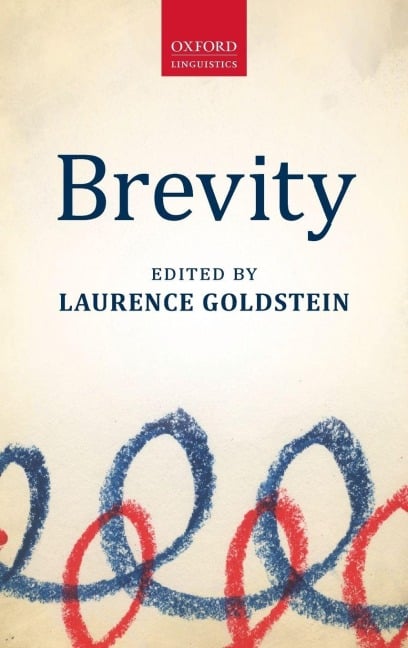
Brevity in conversation is a window to the workings of the mind. People use ellipsis and various kinds of pragmatic enrichment, keyed to the particular conversational setting, to express concisely what they mean. Distinguished linguists, philosophers, and cognitive scientists here say how.
Laurence Goldstein is Professor of Philosophy and Head of the School of European Culture and Languages at the University of Kent. His books include Logic (Continuum 2005), Clear and Queer Thinking: Wittgenstein's Philosophy and his Relevance to Modern Thought (Rowman & Littlefield and Duckworth 1999) and The Philosopher's Habitat (Routledge 1990).
- Part I: Brevity in Language and Thought
- 1: Jason Merchant, Lyn Frazier, Thomas Weskott, and Charles Clifton, Jr.: Fragment Answers to Questions: a case of inaudible syntax
- 2: Anne Bezuidenhout: Structuring Silence Versus the Structure of Silence
- 3: Eleni Gregoromichelaki, Ronnie Cann, and Ruth Kempson: On Coordination in Conversational Dialogue: subsentential talk and its implications
- 4: Christopher Gauker: Inexplicit Thoughts
- 5: Reinaldo Elugardo: Sub-Sentential Speech Acts, Reflexive Content, and Pragmatic Enrichment
- 6: Michael Glanzberg: A New Puzzle About Discourse-Initial Contexts
- 7: François Recanati and Anouch Bourmayan: Transitive Meanings for Intransitive Verbs
- 8: Matthew Stone: Economy in Embodied Utterances
- Part II: THe Philosophy of Brevity
- 9: Laurence Goldstein: Some Consequences of "Speaking Loosely"
- 10: Jeff Pelletier: COntext, Compositionality, and Brevity
- 11: Andreas Stokke: nd and And*
- 12: Manuel García-Carpintero: Insinuating Information and Accommodating Presupposition
- Part III: Experimenting with Brevity
- 13: Eve V. Clark and Chigusa Kurumada: "Be Brief": from necessity to choice
- 14: Julie Sedivy: Sizing up the Speaker: using speaker-specific information to detect the nature of children's inferences about meaning
- 15: Dan Grodner and Rachel Adler: The Influence of Perspective and Communicative Goals on How Speakers Choose to Refer
- 16: Ira Noveck and Nicola Spotornp: Narrowing
- Part IV: Prolixity
- 17: Friedrich Christoph Doerge: Relevance Theory and Prolixity
- References
- Index