Und dann auf "Zum Home-Bildschirm [+]".

Stöbern
genialokal zum Startbildschirm hinzufügen
Installieren Sie die genialokal App auf Ihrem Startbildschirm für einen schnellen Zugriff und eine komfortable Nutzung.
Installieren Sie die genialokal App auf Ihrem Startbildschirm für einen schnellen Zugriff und eine komfortable Nutzung.
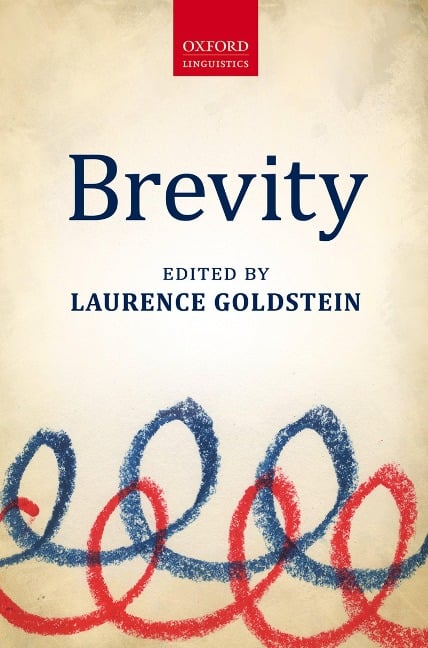
Brevity in conversation is a window to the workings of the mind. This book brings it into prominence as both a multifaceted topic of deep philosophical importance and a phenomenon that serves as a testing ground for theories in linguistics, psycholinguistics, and computer modeling. Brevity is achieved in a variety of ways. Speakers use elliptical constructions and exploit salient features of the conversational environment in a process of pragmatic enrichment so as to pack as much as possible into a few words. They take account of what has already been said in the current and previous conversations, and tailor their words to what they know about the beliefs and personalities of the people they're talking to. Most of the time they do all this with no obvious mental effort.
The book, which brings together distinguished linguists, philosophers, and cognitive scientists, is the product of an interactive multidisciplinary research project that extended over four years. The questions dealt with concern how speakers secure understanding of what they mean when what they mean far outstrips the literal or compositional meanings of the sentences or sentence fragments that they use.
Brevity sheds new light on economy in discourse. It will appeal to linguists, philosophers, and psychologists at advanced undergraduate level and above.
Laurence Goldstein is Professor of Philosophy and Head of the School of European Culture and Languages at the University of Kent. His books include Logic (Continuum 2005), Clear and Queer Thinking: Wittgenstein's Philosophy and his Relevance to Modern Thought (Rowman & Littlefield and Duckworth 1999) and The Philosopher's Habitat (Routledge 1990).
- Part I: Brevity in Language and Thought - 1: Jason Merchant, Lyn Frazier, Thomas Weskott, and Charles Clifton, Jr.: Fragment Answers to Questions: a case of inaudible syntax - 2: Anne Bezuidenhout: Structuring Silence Versus the Structure of Silence - 3: Eleni Gregoromichelaki, Ronnie Cann, and Ruth Kempson: On Coordination in Conversational Dialogue: subsentential talk and its implications - 4: Christopher Gauker: Inexplicit Thoughts - 5: Reinaldo Elugardo: Sub-Sentential Speech Acts, Reflexive Content, and Pragmatic Enrichment - 6: Michael Glanzberg: A New Puzzle About Discourse-Initial Contexts - 7: François Recanati and Anouch Bourmayan: Transitive Meanings for Intransitive Verbs - 8: Matthew Stone: Economy in Embodied Utterances - Part II: THe Philosophy of Brevity - 9: Laurence Goldstein: Some Consequences of "Speaking Loosely" - 10: Jeff Pelletier: COntext, Compositionality, and Brevity - 11: Andreas Stokke: nd and And* - 12: Manuel García-Carpintero: Insinuating Information and Accommodating Presupposition - Part III: Experimenting with Brevity - 13: Eve V. Clark and Chigusa Kurumada: "Be Brief": from necessity to choice - 14: Julie Sedivy: Sizing up the Speaker: using speaker-specific information to detect the nature of children's inferences about meaning - 15: Dan Grodner and Rachel Adler: The Influence of Perspective and Communicative Goals on How Speakers Choose to Refer - 16: Ira Noveck and Nicola Spotornp: Narrowing - Part IV: Prolixity - 17: Friedrich Christoph Doerge: Relevance Theory and Prolixity - References - Index
Dieses eBook wird im PDF-Format geliefert und ist mit einem Adobe Kopierschutz (DRM) versehen. Sie können dieses eBook mit allen Geräten lesen, die das PDF-Format und den Adobe Kopierschutz (DRM) unterstützen.
Zum Beispiel mit den folgenden Geräten:
• tolino Reader
Laden Sie das eBook direkt über den Reader-Shop auf dem tolino herunter oder übertragen Sie das eBook auf Ihren tolino mit einer kostenlosen Software wie beispielsweise Adobe Digital Editions.
• Sony Reader & andere eBook Reader
Laden Sie das eBook direkt über den Reader-Shop herunter oder übertragen Sie das eBook mit der kostenlosen Software Sony READER FOR PC/Mac oder Adobe Digital Editions auf ein Standard-Lesegeräte mit epub- und Adobe DRM-Unterstützung.
• Tablets & Smartphones
Möchten Sie dieses eBook auf Ihrem Smartphone oder Tablet lesen, finden Sie hier unsere kostenlose Lese-App für iPhone/iPad und Android Smartphone/Tablets.
• PC & Mac
Lesen Sie das eBook direkt nach dem Herunterladen mit einer kostenlosen Lesesoftware, beispielsweise Adobe Digital Editions, Sony READER FOR PC/Mac oder direkt über Ihre eBook-Bibliothek in Ihrem Konto unter „Meine eBooks“ - „online lesen“.
Schalten Sie das eBook mit Ihrer persönlichen Adobe ID auf bis zu sechs Geräten gleichzeitig frei.
Bitte beachten Sie, dass die Kindle-Geräte das Format nicht unterstützen und dieses eBook somit nicht auf Kindle-Geräten lesbar ist.