Und dann auf "Zum Home-Bildschirm [+]".

Stöbern
genialokal zum Startbildschirm hinzufügen
Installieren Sie die genialokal App auf Ihrem Startbildschirm für einen schnellen Zugriff und eine komfortable Nutzung.
Installieren Sie die genialokal App auf Ihrem Startbildschirm für einen schnellen Zugriff und eine komfortable Nutzung.
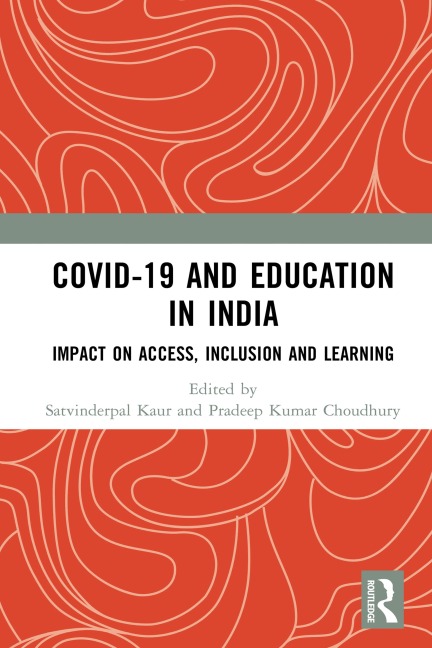
Written from an interdisciplinary lens, this book presents a nuanced and contextual understanding of how COVID-19 (re)shapes the education sector in India, a country that got its new education policy at the peak of the pandemic to revamp and restructure its educational landscape. This volume discusses three crucial issues connecting the COVID-19 pandemic and education in India - learning and opportunity losses in the COVID-19 pandemic; access, inclusivity, and the idea of education in the online pedagogy market; and the neo-liberal agenda of education and the pandemic. It problematises the state's response to the educational inequality crisis which the pandemic has laid bare. With both theoretical and data evidence, this book outlines the important strategies and plans needed to minimise the long-term cascading effect of the pandemic on human capital development in developing countries, and more specifically in India. Readers will find this compellingly written volume engaging and interesting as it offers new micro-level insights on the threat of the pandemic on education and outlines a few pragmatic policy options to address them. This book would be useful to students, teachers, researchers, and public policy analysts working in the field of Education, Economics, Psychology, Development Studies, Social Work, Sociology and anyone with an interest in education and development discourse, particularly in the context of crises and emergencies. It would also find a place in the reading material of policymakers, professionals and leaders from government and non-government organisations engaged in looking at education and learning inequalities.
Satvinderpal Kaur is presently working as a professor and chairperson in the Department of Education, Panjab University Chandigarh. She is also a coordinator at the Centre for Academic Leadership and Educational Management, Panjab University. Her areas of teaching and research centre around pedagogic studies, educational policies and contemporary concerns of equity and quality in education, studies on exclusion versus inclusion with reference to minority groups such as Muslims, women, rural inhabitants, slum dwellers, tribal women, and other marginalized sections of the society. Pradeep Kumar Choudhury is an assistant professor of economics at Zakir Husain Centre for Educational Studies, School of Social Sciences, Jawaharlal Nehru University (JNU), New Delhi, India. In 2023-24, he was a Research Fellow at Harvard University, USA where he continues as an Affiliate Associate. Pradeep was the recipient of China-India Visiting Scholar Fellow of the Ashoka University in 2021-22. His research spans the field of development economics, with a focus on education. In his work, he focuses on the measurement and explanation of educational and learning inequalities, its interaction with climate, technology, and early life decisions. His co-edited volume titled Contextualising Educational Studies in India: Research, Policy and Practices was published by Routledge in 2021.
Introduction: COVID-19 Pandemic and Disruptions in India's Education Sector 1. Adolescent Girls' Education and Impact of Lockdown 2. Disruptions and Education: Assessing the Effect of Demonetisation, Goods and Service Tax (GST) and COVID-19 Pandemic on Loss of Learning Opportunities - (LOLO) in Indian Schools 3. Reimagining Mathematics Education for a Post-Pandemic World 4. Universalising Access: Knowledge, Knowing and Online Education 5. Inclusive Education: Emerging Challenges amid Covid-19 Pandemic and Way Forward 6. Education, Technology, and the COVID-19 Pandemic: Meeting Educational Goals or Drifting Away? 7. The academic environment in higher education institutions: Post Pandemic Challenges 8. Online education during COVID-19 Pandemic: Experiences from urban poor children 9. Upshots of COVID-19 Pandemic on Elementary Schoolchildren in Rural India: A Case of North-Western States
Dieses eBook wird im PDF-Format geliefert und ist mit einem Adobe Kopierschutz (DRM) versehen. Sie können dieses eBook mit allen Geräten lesen, die das PDF-Format und den Adobe Kopierschutz (DRM) unterstützen.
Zum Beispiel mit den folgenden Geräten:
• tolino Reader
Laden Sie das eBook direkt über den Reader-Shop auf dem tolino herunter oder übertragen Sie das eBook auf Ihren tolino mit einer kostenlosen Software wie beispielsweise Adobe Digital Editions.
• Sony Reader & andere eBook Reader
Laden Sie das eBook direkt über den Reader-Shop herunter oder übertragen Sie das eBook mit der kostenlosen Software Sony READER FOR PC/Mac oder Adobe Digital Editions auf ein Standard-Lesegeräte mit epub- und Adobe DRM-Unterstützung.
• Tablets & Smartphones
Möchten Sie dieses eBook auf Ihrem Smartphone oder Tablet lesen, finden Sie hier unsere kostenlose Lese-App für iPhone/iPad und Android Smartphone/Tablets.
• PC & Mac
Lesen Sie das eBook direkt nach dem Herunterladen mit einer kostenlosen Lesesoftware, beispielsweise Adobe Digital Editions, Sony READER FOR PC/Mac oder direkt über Ihre eBook-Bibliothek in Ihrem Konto unter „Meine eBooks“ - „online lesen“.
Schalten Sie das eBook mit Ihrer persönlichen Adobe ID auf bis zu sechs Geräten gleichzeitig frei.
Bitte beachten Sie, dass die Kindle-Geräte das Format nicht unterstützen und dieses eBook somit nicht auf Kindle-Geräten lesbar ist.