Und dann auf "Zum Home-Bildschirm [+]".

Stöbern
genialokal zum Startbildschirm hinzufügen
Installieren Sie die genialokal App auf Ihrem Startbildschirm für einen schnellen Zugriff und eine komfortable Nutzung.
Installieren Sie die genialokal App auf Ihrem Startbildschirm für einen schnellen Zugriff und eine komfortable Nutzung.
Ihr gewünschter Artikel ist in 0 Buchhandlungen vorrätig - wählen Sie hier eine Buchhandlung in Ihrer Nähe aus:

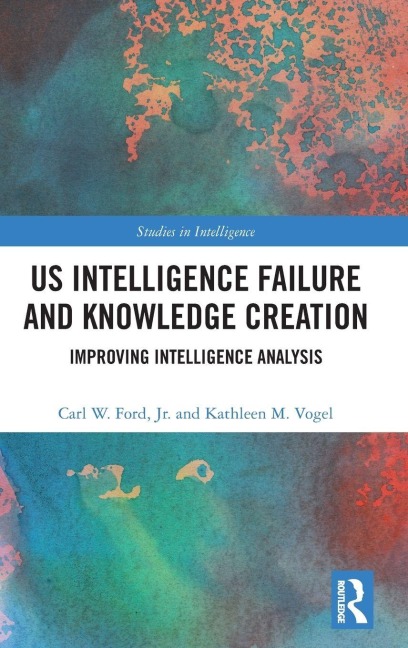
This book examines the roots and elements of the research and knowledge-generation problems in US intelligence.
Carl W. Ford, Jr. is a 40-year veteran of US intelligence and policy work. He began his intelligence career as a HUMINT case officer in Vietnam and worked as an analyst following the Chinese military at both the DIA and CIA. After serving as the NIO for East Asia at the National Intelligence Council, he was put on loan by the CIA to the Office of the Secretary of Defense, where he served as the Principal Deputy Secretary of Defense, ISA, and concurrently as the Deputy Secretary of Defense for East Asia, and, after the Gulf War, as the Deputy Secretary of Defense for the Middle East and South Asia. President George W. Bush selected him to be the Assistant Secretary of State for the Bureau of Intelligence and Research. He currently is an independent researcher focused on intelligence analysis and consults on Asian and Middle Eastern affairs. Kathleen M. Vogel is Professor in the School for the Future of Innovation in Society, Associate Dean in the College of Global Futures, and Senior Global Futures Scientist, Julie Ann Wrigley Global Futures Laboratory at Arizona State University. She is author of Phantom Menace or Looming Danger? A New Framework for Assessing Bioweapons Threats (2013).
Chapter 1: Introduction Chapter 2: What is Intelligence Analysis? Chapter 3: Analysis is broken in the IC: How did we get here? Chapter 4: Different types of data used for knowledge creation Chapter 5: Going Beyond Current Intelligence Reporting Chapter 6: Lack of Expertise Chapter 7: Will AI save us?: The role of artificial intelligence in intelligence analysis Chapter 8: Politicization of intelligence Chapter 9: Fixing the Problem: Recommendations Chapter 10: Epilogue