Und dann auf "Zum Home-Bildschirm [+]".

Stöbern
genialokal zum Startbildschirm hinzufügen
Installieren Sie die genialokal App auf Ihrem Startbildschirm für einen schnellen Zugriff und eine komfortable Nutzung.
Installieren Sie die genialokal App auf Ihrem Startbildschirm für einen schnellen Zugriff und eine komfortable Nutzung.

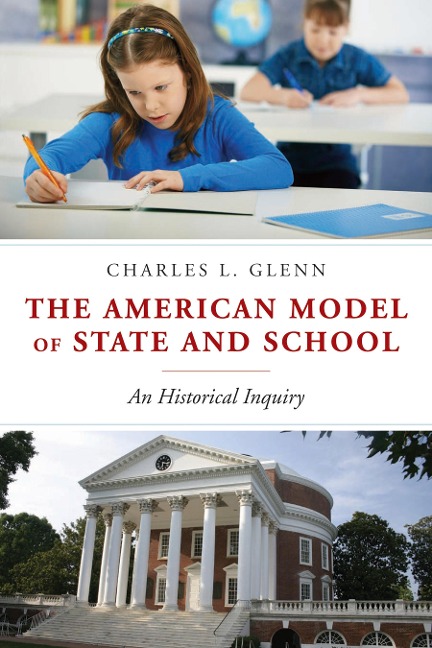
State and Schools argues that the American educational model represents a third way of organizing the provision of schooling, and that this accounts for some of its strengths as well as some of its weaknesses. Charles L. Glenn looks closely at the tradition of democratic localism in the management of schooling, and the powerful and anti-democratic effect of the emerging education 'profession,' which has in some respects the characteristics of a religious movement more than of a true profession.
A sweeping chronological survey, State and Schools includes chapters on the colonial background, schooling in the New Republic, the creation of an education profession, and the progressive education movement, among others. Glenn's primary purpose, in this authoritative and thoroughly researched book, is to illustrate the deep roots of ways of thinking about schools that have made it difficult for policy-makers and the public to do what needs to be done to enable schools to function as they should, for our society and for future generations.
Charles L. Glenn is Professor of Educational Leadership at Boston University. He is the author of nine books including The Myth of the Common School (published also in Italian and Spanish), Educational Freedom in Eastern Europe, and Educating Immigrant Children, and co-author of a multi-volume study of educational policies in forty countries. From 1970 to 1991 Professor Glenn served as director of urban education and equity efforts for the Massachusetts Department of Education, and he has served as a consultant to Russian and Chinese education authorities, and to states and major cities across the United States.
Introduction: Weakness and Strengths of the American Model of Schooling
Chapter 1: Colonial Background
Chapter 2: The Idea of Forming Citizens
Chapter 3: Religion as Source of Cooperation
Chapter 4: Schooling and Local Democracy
Chapter 5: Schooling as Protection for Society
Chapter 6: Toward the Educator-State
Chapter 7: Religion as Source of Conflict
Chapter 8: Re-defining the Teacher
Chapter 9: The Educators Find Their Prophet
Chapter 10: Concluding ReflectionsBibliography