Und dann auf "Zum Home-Bildschirm [+]".

Stöbern
genialokal zum Startbildschirm hinzufügen
Installieren Sie die genialokal App auf Ihrem Startbildschirm für einen schnellen Zugriff und eine komfortable Nutzung.
Installieren Sie die genialokal App auf Ihrem Startbildschirm für einen schnellen Zugriff und eine komfortable Nutzung.
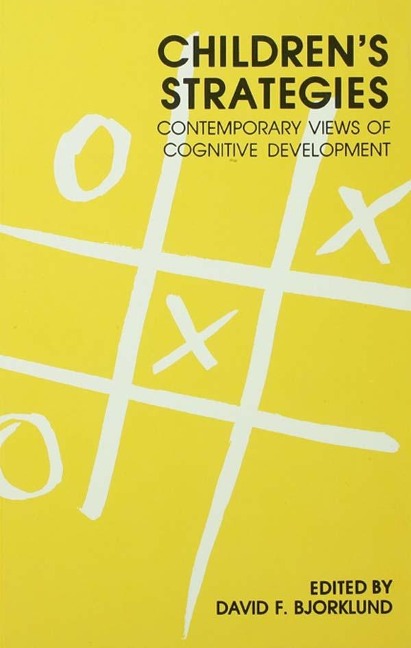
One of the issues central to both classic and contemporary theories of cognitive development is children's goal-directed behavior, which is typically investigated in terms of strategies. This book brings together in one volume the latest research and theory regarding the development of children's strategies for a variety of cognitive tasks.
Opening with a history of strategy development research and concluding with a chapter that integrates the diversity of ideas expressed by the contributors, Children's Strategies offers intervening chapters that examine strategy development for attention, analogical reasoning, mathematics, memory, reading, and problem solving in infancy.
Although there is much common ground shared by the various contributors to this volume, there is no consensus concerning what exactly a strategy is. This mixture of consensus and disagreement reflects both the explosion of research in this area since the late 1960's and the complexity of the issues involved. It also reflects the fact that this is a topic that is very much alive in cognitive circles, one that will continue to stimulate research for years to come.
The papers in this volume describe current research and theory concerning the development of children's strategies for handling a variety of cognitive tasks. After providing a historical view of the concept of strategies in cognitive development, the book highlights many of the issues of concern to contemporary developmental psychologists interested in strategies. The issues discussed include problem solving in infancy, memory, selective attention, mathematics, analogical reasoning, and reading.
David F. Bjorklund
Contents: K.K. Harnishfeqer, D.F. Bjorklund, Children's Strategies: A Brief History. P. Willatts, Development of Problem-Solving Strategies in Infancy. T.H. Folds, M. Footo, R.E. Guttentag, P.A. Ornstein, When Children Mean to Remember: Issues of Context Specificity, Strategy Effectiveness, and Intentionality in the Development of Memory. D.F. Bjorklund, J.E. Muir, W. Schneider, The Role of Knowledge in the Development of Children's Strategies. M.L. Howe, J.T. O'Sullivan, The Development of Strategic Memory: Coordinating Knowledge, Metamemory, and Resources. P.H. Miller, The Development of Strategies of Selective Atten- tion. M.H. Ashcraft, Strategic Processing in Children's Mental Arithmetic. J. Bisanz, J. LeFevre, Strategic and Nonstrategic Processing in the Development of Mathematical Cognition. B. Gholson, D. Morgan, A.R. Danel, The Development of Analogical Problem Solving: Strategic Processes in Schema Acquisition and Transfer R. Garner, Children's Use of Strategies in Reading D.F. Bjorklund, K.K. Harnishfeger, Children's Strategies: Their Definition and Origins.
Dieses eBook wird im PDF-Format geliefert und ist mit einem Adobe Kopierschutz (DRM) versehen. Sie können dieses eBook mit allen Geräten lesen, die das PDF-Format und den Adobe Kopierschutz (DRM) unterstützen.
Zum Beispiel mit den folgenden Geräten:
• tolino Reader
Laden Sie das eBook direkt über den Reader-Shop auf dem tolino herunter oder übertragen Sie das eBook auf Ihren tolino mit einer kostenlosen Software wie beispielsweise Adobe Digital Editions.
• Sony Reader & andere eBook Reader
Laden Sie das eBook direkt über den Reader-Shop herunter oder übertragen Sie das eBook mit der kostenlosen Software Sony READER FOR PC/Mac oder Adobe Digital Editions auf ein Standard-Lesegeräte mit epub- und Adobe DRM-Unterstützung.
• Tablets & Smartphones
Möchten Sie dieses eBook auf Ihrem Smartphone oder Tablet lesen, finden Sie hier unsere kostenlose Lese-App für iPhone/iPad und Android Smartphone/Tablets.
• PC & Mac
Lesen Sie das eBook direkt nach dem Herunterladen mit einer kostenlosen Lesesoftware, beispielsweise Adobe Digital Editions, Sony READER FOR PC/Mac oder direkt über Ihre eBook-Bibliothek in Ihrem Konto unter „Meine eBooks“ - „online lesen“.
Schalten Sie das eBook mit Ihrer persönlichen Adobe ID auf bis zu sechs Geräten gleichzeitig frei.
Bitte beachten Sie, dass die Kindle-Geräte das Format nicht unterstützen und dieses eBook somit nicht auf Kindle-Geräten lesbar ist.