Und dann auf "Zum Home-Bildschirm [+]".

Stöbern
genialokal zum Startbildschirm hinzufügen
Installieren Sie die genialokal App auf Ihrem Startbildschirm für einen schnellen Zugriff und eine komfortable Nutzung.
Installieren Sie die genialokal App auf Ihrem Startbildschirm für einen schnellen Zugriff und eine komfortable Nutzung.
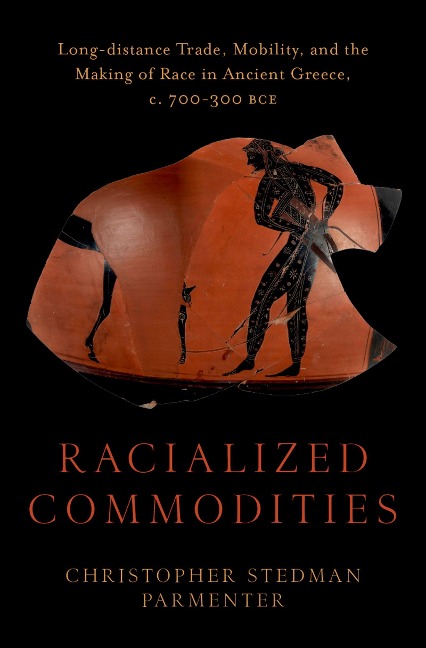
Between c. 700-300 BCE, the ancient Greeks developed a vivid imaginary of the world's peoples. Ranging from the light-skinned, "gray-eyed Thracians" of the distant north to the "dark-skinned Ethiopians" of the far south, as the poet Xenophanes described them around 540 BCE, Greeks envisioned a world populated by human groups with distinct physiognomies. Racialized Commodities traces how Greece's "racial imaginary"--a confluence of thinking about cultural geography, commodity production, and human physiognomy--emerged from cross-cultural trade between Greece and its Mediterranean neighbors during the Archaic and Classical Periods. It adopts the model of a "commodity biography" to investigate how trade led to the entanglement of cultures, bodies, and things in Archaic and Classical Greece. For merchants, the racial imaginary might be used to play up the "exotic" provenance of their goods to consumers. It might also circulate practical information about customs, pricing, navigation, and doing business in foreign ports. Archaic Greek attempts to explain foreign bodies were rarely pejorative, and Racialized Commodities begins with some of their earliest images of African peoples, described by Greeks as Egyptians or Ethiopians, before seeking to explain what changed in the early Classical Period. As the Persian Empire loomed and Greek cities became increasingly dependent on enslaved labor, negative stereotypes of Thracians and Scythians became widespread and coalesced into the charged idea of the barbarous--the "barbarian."
Christopher Stedman Parmenter is Assistant Professor of Classics at The Ohio State University.
Introduction
Part I: The world of the Elephantine papyrus
Chapter 1: A short history of natron Chapter 2: Egypt in your hand Chapter 3: From ancestor to 'Other'
Part II: Letters from the Pontus
Chapter 4: Journeys into slavery Chapter 5: Slavery and the balance of trade Chapter 6: Inventing whiteness
Postscript Appendices Bibliography
Dieses eBook wird im PDF-Format geliefert und ist mit einem Adobe Kopierschutz (DRM) versehen. Sie können dieses eBook mit allen Geräten lesen, die das PDF-Format und den Adobe Kopierschutz (DRM) unterstützen.
Zum Beispiel mit den folgenden Geräten:
• tolino Reader
Laden Sie das eBook direkt über den Reader-Shop auf dem tolino herunter oder übertragen Sie das eBook auf Ihren tolino mit einer kostenlosen Software wie beispielsweise Adobe Digital Editions.
• Sony Reader & andere eBook Reader
Laden Sie das eBook direkt über den Reader-Shop herunter oder übertragen Sie das eBook mit der kostenlosen Software Sony READER FOR PC/Mac oder Adobe Digital Editions auf ein Standard-Lesegeräte mit epub- und Adobe DRM-Unterstützung.
• Tablets & Smartphones
Möchten Sie dieses eBook auf Ihrem Smartphone oder Tablet lesen, finden Sie hier unsere kostenlose Lese-App für iPhone/iPad und Android Smartphone/Tablets.
• PC & Mac
Lesen Sie das eBook direkt nach dem Herunterladen mit einer kostenlosen Lesesoftware, beispielsweise Adobe Digital Editions, Sony READER FOR PC/Mac oder direkt über Ihre eBook-Bibliothek in Ihrem Konto unter „Meine eBooks“ - „online lesen“.
Schalten Sie das eBook mit Ihrer persönlichen Adobe ID auf bis zu sechs Geräten gleichzeitig frei.
Bitte beachten Sie, dass die Kindle-Geräte das Format nicht unterstützen und dieses eBook somit nicht auf Kindle-Geräten lesbar ist.