Und dann auf "Zum Home-Bildschirm [+]".

Stöbern
genialokal zum Startbildschirm hinzufügen
Installieren Sie die genialokal App auf Ihrem Startbildschirm für einen schnellen Zugriff und eine komfortable Nutzung.
Installieren Sie die genialokal App auf Ihrem Startbildschirm für einen schnellen Zugriff und eine komfortable Nutzung.
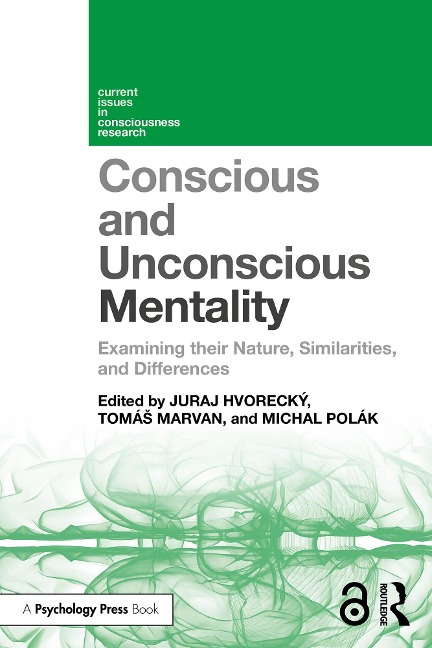
In this collection of essays, experts in the field of consciousness research shed light on the intricate relationship between conscious and unconscious states of mind. Advancing the debate on consciousness research, this book puts centre stage the topic of commonalities and differences between conscious and unconscious contents of the mind. The collection of cutting-edge chapters offers a breadth of research perspectives, with some arguing that unconscious states have been unjustly overlooked and deserve recognition for their richness and wide scope. Others contend that significant differences between conscious and unconscious states persist, highlighting the importance of their distinct characteristics. Explorations into the nature of the transition from unconscious to conscious mind further complicate the picture, with some authors questioning whether a sharp divide between unconscious and conscious states truly exists. Delving into ontological, epistemological, and methodological issues, this thought-provoking text challenges established paradigms and paves the way for a reimagining of consciousness research. It does so in an understandable and accessible way, making this a perfect companion for both experts and students of philosophy, psychology, and related fields. Chapters 2, 4, 9, 10, 14 and 16 of this book are freely available as downloadable Open Access PDFs at http://www.taylorfrancis.com under a Creative Commons Attribution-Non Commercial-No Derivatives (CC-BY-NC-ND) 4.0 license.
Juraj Hvorecký is a researcher at the Department of Applied Philosophy and Ethics at the Institute of Philosophy of the Czech Academy of Sciences in Prague. He also teaches at the Undergraduate Program in Central European Studies (UPCES) in the Czech capital. He combines his interests in philosophy of mind with applied ethics, especially in the domain of disruptive technologies. TomáS Marvan is the head of the Department of Analytic Philosophy at the Institute of Philosophy of the Czech Academy of Sciences in Prague. Marvan is a philosopher of mind working at the intersection of philosophy, neuroscience, and psychology. He works on mental qualities, and on the differences between conscious and unconscious perceptual processing. Michal Polák is Professor of Philosophy at the University of West Bohemia, Pilsen, Czech Republic, where he is responsible for teaching and research in the field of philosophy of mind and cognitive sciences. He explores various aspects of phenomenal consciousness from a naturalistic perspective, the neural basis of consciousness, mind-brain identity, and selfhood.
Foreword 1. Introduction: Mapping the contrasts and parallels between conscious and unconscious mind Part I. Conceptual issues 2. Conscious and unconscious qualities: Conceptual relations between phenomenality, what-it's-likeness, and consciousness 3. Blindsight is unconscious perception 4. Against unconscious volition 5. On the alleged misrepresentation problem. (Not a problem for HOT theories. Not a problem for anyone, really.) Part II. Methodological issues 6. Methodological considerations for the study of mental qualities 7. Can structuralist theories be general theories of consciousness? 8. The old and new criterion problems Part III. Unconscious qualities in perception and emotion 9. The Brain-based argument for unconscious sensory qualities 10. Troubles with the orthogonality thesis 11. Unconsciously smelling the self and others 12. A feeling theory of unconscious emotions Part IV. Attention, degrees of consciousness, and graduality 13. Degrees of attention and degrees of consciousness 14. Template tuning and graded consciousness 15. Colour bit-by-bit: The puzzle of colour development 16. (Un)conscious perspectival shape and attention guidance in visual search: A reply to Morales, Bax, and Firestone (2020)
Dieses eBook wird im PDF-Format geliefert und ist mit einem Adobe Kopierschutz (DRM) versehen. Sie können dieses eBook mit allen Geräten lesen, die das PDF-Format und den Adobe Kopierschutz (DRM) unterstützen.
Zum Beispiel mit den folgenden Geräten:
• tolino Reader
Laden Sie das eBook direkt über den Reader-Shop auf dem tolino herunter oder übertragen Sie das eBook auf Ihren tolino mit einer kostenlosen Software wie beispielsweise Adobe Digital Editions.
• Sony Reader & andere eBook Reader
Laden Sie das eBook direkt über den Reader-Shop herunter oder übertragen Sie das eBook mit der kostenlosen Software Sony READER FOR PC/Mac oder Adobe Digital Editions auf ein Standard-Lesegeräte mit epub- und Adobe DRM-Unterstützung.
• Tablets & Smartphones
Möchten Sie dieses eBook auf Ihrem Smartphone oder Tablet lesen, finden Sie hier unsere kostenlose Lese-App für iPhone/iPad und Android Smartphone/Tablets.
• PC & Mac
Lesen Sie das eBook direkt nach dem Herunterladen mit einer kostenlosen Lesesoftware, beispielsweise Adobe Digital Editions, Sony READER FOR PC/Mac oder direkt über Ihre eBook-Bibliothek in Ihrem Konto unter „Meine eBooks“ - „online lesen“.
Schalten Sie das eBook mit Ihrer persönlichen Adobe ID auf bis zu sechs Geräten gleichzeitig frei.
Bitte beachten Sie, dass die Kindle-Geräte das Format nicht unterstützen und dieses eBook somit nicht auf Kindle-Geräten lesbar ist.