Und dann auf "Zum Home-Bildschirm [+]".

Stöbern
genialokal zum Startbildschirm hinzufügen
Installieren Sie die genialokal App auf Ihrem Startbildschirm für einen schnellen Zugriff und eine komfortable Nutzung.
Installieren Sie die genialokal App auf Ihrem Startbildschirm für einen schnellen Zugriff und eine komfortable Nutzung.
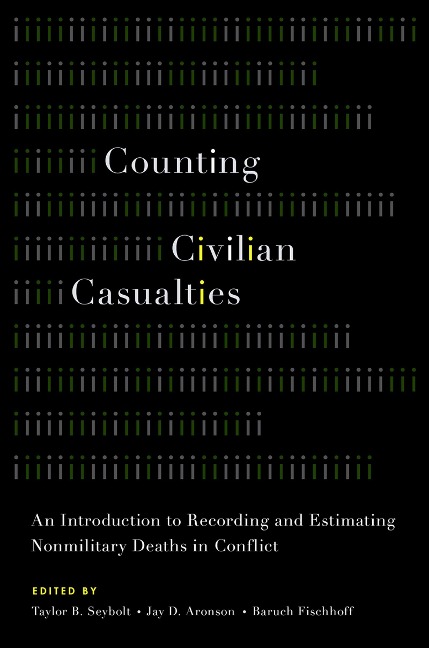
A popular myth emerged in the late 1990s: in 1900, wars killed one civilian for every eight soldiers, while contemporary wars were killing eight civilians for every one soldier. The neat reversal of numbers was memorable, and academic publications and UN documents regularly cited it. The more it was cited, the more trusted it became. In fact, however, subsequent research found no empirical evidence for the idea that the ratio of civilians to soldiers killed in war has changed dramatically. But while the ratios may not have changed, the political significance of civilian casualties has risen tremendously. Over the past century, civilians in war have gone from having no particular rights to having legal protections and rights that begin to rival those accorded to states. The concern for civilians in conflict has become so strong that governments occasionally undertake humanitarian interventions, at great risk and substantial cost, to protect strangers in distant lands. I n the early 1990s, the UN Security Council authorized military interventions to help feed and protect civilians in the Kurdish area of Iraq, Somalia, and Bosnia. And in May 2011 , Barack Obama 's National Security Advisor explained the United States' decision to support NATO's military intervention in these terms "When the president made this decision, there was an immediate threat to 700,000 Libyan civilians in the town of Benghazi. We've had a success here in terms of being able to protect those civilians." Counting Civilian Casualties aims to promote open scientific dialogue by high lighting the strengths and weaknesses of the most commonly used casualty recording and estimation techniques in an understandable format. Its thirteen chapters, each authoritative but accessible to nonspecialists, explore a variety of approaches, from direct recording to statistical estimation and sampling, to collecting data on civilian deaths caused by conflict. The contributors also discuss their respective advantages and disadvantages, and analyze how figures are used (and misused) by governments, rebels, human rights advocates, war crimes tribunals, and others. In addition to providing analysts with a broad range of tools to produce accurate data, this will be an in valuable resource for policymakers, military officials, jou rnalists, human rights activists, courts, and ordinary people who want to be more informed--and skeptical--consumers of casualty counts.
TS: Assistant Professor of International and Human Security in the Graduate School of Public and International Affairs at the University of Pittsburgh and author of Humanitarian Military Intervention: the Conditions for Success and Failure (Oxford, 2007)JA: Associate Professor of Science, Technology, and Society at Carnegie Mellon UniversityBF: Howard Heinz University Professor of Social and Decision Sciences and Engineering and Public Policy at Carnegie Mellon University
Preface and Acknowledgments Contributors Glossary Part I Who Counts? 1 Introduction, Taylor B. Seybolt, Jay D. Aronson, and Baruch Fischhoff 2 Significant Numbers: Civilian Casualties and Strategic Peacebuilding Taylor B. Seybolt 3 The Politics of Civilian Casualty Counts Jay D. Aronson Part II Recording Violence: Incident-Based Data 4 Iraq Body Count: A Case Study in the Uses of Incident-based Conflict Casualty Data Aggregate Conflict Casualty Data John Sloboda, Hamit Dardagan, Michael Spagat, and Madelyn Hsiao-Rei Hicks 5 A Matter of Convenience: Challenges of Non-Random Data in Analyzing Human Rights Violations in Peru and Sierra Leone Todd Landman and Anita Gohdes Part III Estimating Violence: Surveys 6 Using Surveys to Estimate Casualties Post-Conflict: Developments for the Developing World Jana Asher 7 Collecting Data on Violence: Scientific Challenges and Ethnographic Solutions Meghan Foster Lynch Part IV Estimating Violence: Multiple-Systems Estimation 8 Combining Found Data and Surveys to Measure Conflict Mortality Jeff Klingner and Romesh Silva 9 Multiple-Systems Estimation Techniques for Estimating Casualties in Armed Conflicts Daniel Manrique-Vallier, Megan E. Price, and Anita Gohdes Part V Mixed Methods 10 MSE and Casualty Counts: Assumptions, Interpretation, and Challenges Nicholas P. Jewell, Michael Spagat, and Britta L. Jewell 11 A Review of Estimation Methods for Victims of the Bosnian War and the Khmer Rouge Regime Ewa Tabeau and Jan Zwierzchowski Part VI The Complexity of Casualty Numbers 12 It Doesn't Add Up: Methodological and Policy Implications of Conflicting Casualty Data Jule Krüger, Patrick Ball, Megan Price, and Amelia Hoover Green 13 Challenges to Counting and Classifying Victims of Violence in Conflict, Post-Conflict, and Non-Conflict Settings Keith Krause Part VII Conclusion 14 Moving toward More Accurate Casualty Counts Jay D. Aronson, Baruch Fischhoff, and Taylor B. Seybolt Index
Dieses eBook wird im PDF-Format geliefert und ist mit einem Adobe Kopierschutz (DRM) versehen. Sie können dieses eBook mit allen Geräten lesen, die das PDF-Format und den Adobe Kopierschutz (DRM) unterstützen.
Zum Beispiel mit den folgenden Geräten:
• tolino Reader
Laden Sie das eBook direkt über den Reader-Shop auf dem tolino herunter oder übertragen Sie das eBook auf Ihren tolino mit einer kostenlosen Software wie beispielsweise Adobe Digital Editions.
• Sony Reader & andere eBook Reader
Laden Sie das eBook direkt über den Reader-Shop herunter oder übertragen Sie das eBook mit der kostenlosen Software Sony READER FOR PC/Mac oder Adobe Digital Editions auf ein Standard-Lesegeräte mit epub- und Adobe DRM-Unterstützung.
• Tablets & Smartphones
Möchten Sie dieses eBook auf Ihrem Smartphone oder Tablet lesen, finden Sie hier unsere kostenlose Lese-App für iPhone/iPad und Android Smartphone/Tablets.
• PC & Mac
Lesen Sie das eBook direkt nach dem Herunterladen mit einer kostenlosen Lesesoftware, beispielsweise Adobe Digital Editions, Sony READER FOR PC/Mac oder direkt über Ihre eBook-Bibliothek in Ihrem Konto unter „Meine eBooks“ - „online lesen“.
Schalten Sie das eBook mit Ihrer persönlichen Adobe ID auf bis zu sechs Geräten gleichzeitig frei.
Bitte beachten Sie, dass die Kindle-Geräte das Format nicht unterstützen und dieses eBook somit nicht auf Kindle-Geräten lesbar ist.