Und dann auf "Zum Home-Bildschirm [+]".

Stöbern
genialokal zum Startbildschirm hinzufügen
Installieren Sie die genialokal App auf Ihrem Startbildschirm für einen schnellen Zugriff und eine komfortable Nutzung.
Installieren Sie die genialokal App auf Ihrem Startbildschirm für einen schnellen Zugriff und eine komfortable Nutzung.
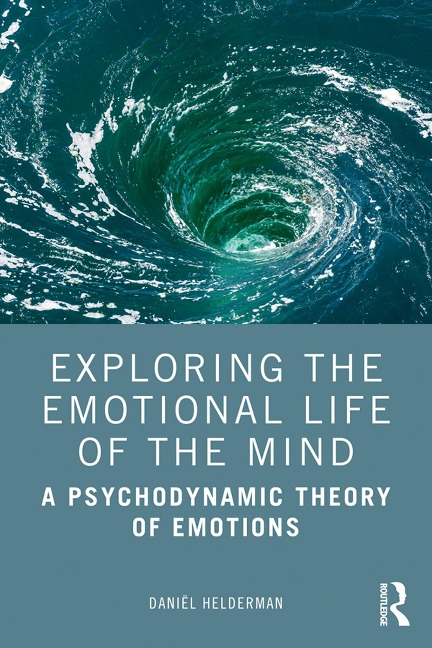
This highly innovative new book reconsiders the structure of basic emotions, the self and the mind. It clinically covers mental disorders, therapeutic interventions, defense mechanisms, consciousness and personality and results in a comprehensive discussion of human responses to the environmental crisis. For openers, a novel psychodynamic model of happiness, sadness, fear and anger is presented that captures their object relational features. It offers a look through the eyes of these specific emotions and delineates how they influence the interaction with other persons. As regulation of the emotional state is the core task of the self, dysregulation can lead to mental disorders. Clinical cases of post-traumatic stress disorder, obsessive compulsive disorder and depression are discussed, using the model to outline the emotional turbulence underneath. Finally, the elaborated theory is used to analyse personal responses to the environmental crisis and political strategies that capitalise on them. This book will appeal to scholars, psychotherapists and psychiatrists with an interest in emotions and who wish to challenge their own implicit theory of emotion with an explicit new model. It will also be of interest for academic researchers and professionals in fields where emotional processes play a pivotal role.
Daniël Helderman has a background in therapeutic work as a clinical psychologist, psychotherapist and psychoanalyst. He teaches psychoanalytic theory at RINO Utrecht and RINO Amsterdam as well as supervising healthcare psychologists in the Royal Netherlands Army and speaking professionally on emotion-related issues. His ambition is to use psychodynamic insight to amplify environmental awareness and (inter)action.
Inflow; Part I: What to think of something that is subjective, multifaceted and fluid; 1. Recurring themes in rivalling theories of emotion; 2. Constructing the Maelstrom model and enjoying the view; 3. Cartography for psychotherapy; 4. To turn a blind eye; Part II: Emotional turbulence; 5. The interpretation of repetitive nightmares; 6. On obsessive compulsive behaviour: losing control of the need to feel in control; 7. On depression: when the emotional Maelstrom grinds to a halt; Part III: No emotion, no sense; 8. On emotions, the self and the mind: how personality is organised by integrating emotions; 9. Why it is so hard to talk about what matters most; Outflow
Dieses eBook wird im PDF-Format geliefert und ist mit einem Adobe Kopierschutz (DRM) versehen. Sie können dieses eBook mit allen Geräten lesen, die das PDF-Format und den Adobe Kopierschutz (DRM) unterstützen.
Zum Beispiel mit den folgenden Geräten:
• tolino Reader
Laden Sie das eBook direkt über den Reader-Shop auf dem tolino herunter oder übertragen Sie das eBook auf Ihren tolino mit einer kostenlosen Software wie beispielsweise Adobe Digital Editions.
• Sony Reader & andere eBook Reader
Laden Sie das eBook direkt über den Reader-Shop herunter oder übertragen Sie das eBook mit der kostenlosen Software Sony READER FOR PC/Mac oder Adobe Digital Editions auf ein Standard-Lesegeräte mit epub- und Adobe DRM-Unterstützung.
• Tablets & Smartphones
Möchten Sie dieses eBook auf Ihrem Smartphone oder Tablet lesen, finden Sie hier unsere kostenlose Lese-App für iPhone/iPad und Android Smartphone/Tablets.
• PC & Mac
Lesen Sie das eBook direkt nach dem Herunterladen mit einer kostenlosen Lesesoftware, beispielsweise Adobe Digital Editions, Sony READER FOR PC/Mac oder direkt über Ihre eBook-Bibliothek in Ihrem Konto unter „Meine eBooks“ - „online lesen“.
Schalten Sie das eBook mit Ihrer persönlichen Adobe ID auf bis zu sechs Geräten gleichzeitig frei.
Bitte beachten Sie, dass die Kindle-Geräte das Format nicht unterstützen und dieses eBook somit nicht auf Kindle-Geräten lesbar ist.