Und dann auf "Zum Home-Bildschirm [+]".

Stöbern
genialokal zum Startbildschirm hinzufügen
Installieren Sie die genialokal App auf Ihrem Startbildschirm für einen schnellen Zugriff und eine komfortable Nutzung.
Installieren Sie die genialokal App auf Ihrem Startbildschirm für einen schnellen Zugriff und eine komfortable Nutzung.
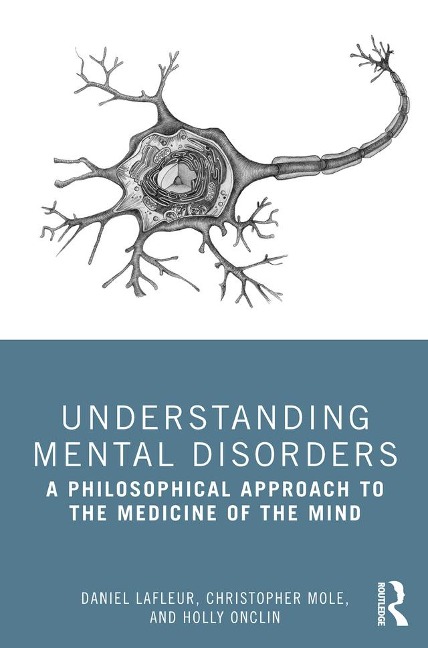
Understanding Mental Disorders aims to help current and future psychiatrists, and those who work with them, to think critically about the ethical, conceptual, and methodological questions that are raised by the theory and practice of psychiatry. It considers questions that concern the mind's relationship to the brain, the origins of our norms for thinking and behavior, and the place of psychiatry in medicine, and in society more generally. With a focus on the current debates around psychiatry's diagnostic categories, the authors ask where these categories come from, if psychiatry should be looking to find new categories that are based more immediately on observations of the brain, and whether psychiatrists need to employ any diagnostic categories at all. The book is a unique guide for readers who want to think carefully about the mind, mental disorders, and the practice of psychiatric medicine.
Daniel Lafleur, MD, CM, FRCPC is a clinical associate professor in the Department of Psychiatry at the University of British Columbia, Vancouver. Christopher Mole, BA (Hons), PhD is a professor of philosophy, and chair of the Cognitive Systems Program, at the University of British Columbia, Vancouver. Holly Onclin, BA (Hons) is a graduate of the Honours in Philosophy program at the University of British Columbia and a freelance illustrator in Vancouver.
Part I: Mental disorder 1.1 What is mental disorder? 1.2. What makes a mental disorder mental? 1.3. What makes a mental disorder disordered? Part II: Psychiatry and society 2.1. Two ways in which social factors can contribute to mental disorder 2.2 Are we changing people when we should be changing societies? 2.3 Sexuality and disobedience Part III: Dodging nosology 3.1 Psychiatric diagnosis 3.2 Psychiatry without diagnostic categories? 3.3 Categories unlike chemistry's 3.4 Giving the brain no more than its due
Dieses eBook wird im PDF-Format geliefert und ist mit einem Adobe Kopierschutz (DRM) versehen. Sie können dieses eBook mit allen Geräten lesen, die das PDF-Format und den Adobe Kopierschutz (DRM) unterstützen.
Zum Beispiel mit den folgenden Geräten:
• tolino Reader
Laden Sie das eBook direkt über den Reader-Shop auf dem tolino herunter oder übertragen Sie das eBook auf Ihren tolino mit einer kostenlosen Software wie beispielsweise Adobe Digital Editions.
• Sony Reader & andere eBook Reader
Laden Sie das eBook direkt über den Reader-Shop herunter oder übertragen Sie das eBook mit der kostenlosen Software Sony READER FOR PC/Mac oder Adobe Digital Editions auf ein Standard-Lesegeräte mit epub- und Adobe DRM-Unterstützung.
• Tablets & Smartphones
Möchten Sie dieses eBook auf Ihrem Smartphone oder Tablet lesen, finden Sie hier unsere kostenlose Lese-App für iPhone/iPad und Android Smartphone/Tablets.
• PC & Mac
Lesen Sie das eBook direkt nach dem Herunterladen mit einer kostenlosen Lesesoftware, beispielsweise Adobe Digital Editions, Sony READER FOR PC/Mac oder direkt über Ihre eBook-Bibliothek in Ihrem Konto unter „Meine eBooks“ - „online lesen“.
Schalten Sie das eBook mit Ihrer persönlichen Adobe ID auf bis zu sechs Geräten gleichzeitig frei.
Bitte beachten Sie, dass die Kindle-Geräte das Format nicht unterstützen und dieses eBook somit nicht auf Kindle-Geräten lesbar ist.