Und dann auf "Zum Home-Bildschirm [+]".

Stöbern
genialokal zum Startbildschirm hinzufügen
Installieren Sie die genialokal App auf Ihrem Startbildschirm für einen schnellen Zugriff und eine komfortable Nutzung.
Installieren Sie die genialokal App auf Ihrem Startbildschirm für einen schnellen Zugriff und eine komfortable Nutzung.
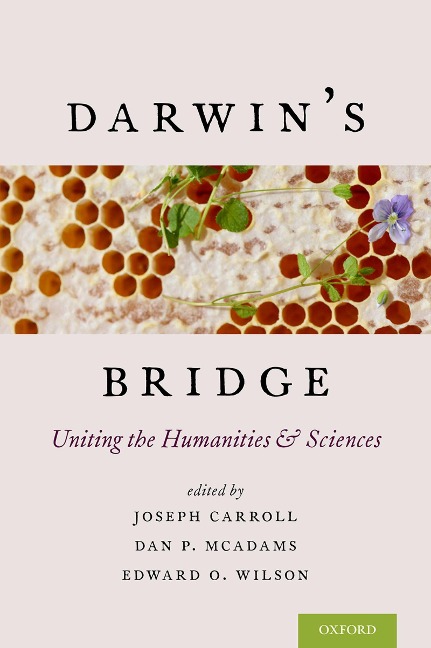
In its modern usage, the term "consilience" was first established by Edward O. Wilson in his 1998 book, Consilience: The Unity of Knowledge. Wilson's original thesis contained two parts: that nature forms a unitary order of causal forces, hierarchically organized, and that scientific knowledge, because it delineates nature, also forms a unitary order, promising consensus among diverse fields. Bringing together cutting-edge scientists and scholars across this range, Darwin's Bridge gives an expert account of consilience and makes it possible to see how far we have come toward unifying knowledge about the human species, what major issues are still in contention, and which areas of research are likely to produce further progress. Readers will be delighted as they, along with the work's contributing authors, explore the deeper meaning of consilience and consider the harmony of human evolution, human nature, social dynamics, art, and narrative.
Joseph Carroll is Curators' Professor of English at the University of Missouri-St. Louis. His books include Evolution and Literary Theory, Literary Darwinism, Reading Human Nature, and (co-authored) Graphing Jane Austen. He produced an edition of Darwin's Origin of Species. He is the leading figure in the movement known as "literary Darwinism," that is, the effort to integrate evolutionary social science and literary scholarship. Dan P. McAdams is the Henry Wade Rogers Professor of Psychology and Chair of the Psychology Department at Northwestern University. His research focuses on personality development across the human life course. Most recently, he is the author of The Redemptive Self: Stories Americans Live By and George W. Bush and the Redemptive Dream: A Psychological Portrait. Edward O. Wilson is Curator in Entomology and University Research Professor Emeritus at Harvard University. He has received more than 100 awards for his research and writing, including the U.S. National Medal of Science, the Crafoord Prize and two Pulitzer Prizes in non-fiction. He is considered one of the world's foremost biologists and naturalists today.
Foreword by Alice Dreger Introduction: Joseph Carroll Part I. Transforming Our Vision of the Human Story Chapter 1. Edward O. Wilson, "The Meaning of Human Existence" Part II. The Evolution of Human Sociality Chapter 2. Christopher Boehm, "Bullies: Redefining the Human Free-Rider Problem" Chapter 3. Herbert Gintis, "The Structure and Evolution of Morality: Public and Private Persona" Chapter 4. Henry Harpending & Nathan Harris, "Human Kinship as a Green Beard" Chapter 5. Michael Rose, "Darwinian Evolution of Free Will and Spiritual Experience" Part III. Ancient Markings Chapter 6. John Hawks, "Neandertal Humanities" Chapter 7. Ellen Dissanayake, "Mark-Making as a Human Behavior" Part IV. Integrative Psychology Chapter 8. Barbara Oakley, "Consilience through the Integration of Engineering and Social Science" Chapter 9. Dan P. McAdams, "From Actor to Agent to Author: Human Evolution and the Development of Personality" Part V. A Biocultural Perspective on Literature Chapter 10. Catherine Salmon, "What Do Romance Novels, Pro-Wrestling, and Mack Bolan Have in Common? Consilience and the Pop Culture of Storytelling" Chapter 11. Mathias Clasen, "Terrifying Monsters, Malevolent Ghosts, and Evolved Danger-Management Architecture: A Consilient Approach to Horror Fiction" Chapter 12. Joseph Carroll, Jonathan Gottschall, John Johnson, & Daniel Kruger, "Agonistic Structure in Canonical British Novels of the Nineteenth Century" Chapter 13. Brian Boyd, "Experiments with Experience: Consilient Multilevel Explanations of Art and Literature" Part VI. A Challenge Chapter 14. Massimo Pigliucci, "The Limits of Consilience and the Problem of Scientism" Afterwords David Sloan Wilson Jonathan Gottschall
Dieses eBook wird im PDF-Format geliefert und ist mit einem Adobe Kopierschutz (DRM) versehen. Sie können dieses eBook mit allen Geräten lesen, die das PDF-Format und den Adobe Kopierschutz (DRM) unterstützen.
Zum Beispiel mit den folgenden Geräten:
• tolino Reader
Laden Sie das eBook direkt über den Reader-Shop auf dem tolino herunter oder übertragen Sie das eBook auf Ihren tolino mit einer kostenlosen Software wie beispielsweise Adobe Digital Editions.
• Sony Reader & andere eBook Reader
Laden Sie das eBook direkt über den Reader-Shop herunter oder übertragen Sie das eBook mit der kostenlosen Software Sony READER FOR PC/Mac oder Adobe Digital Editions auf ein Standard-Lesegeräte mit epub- und Adobe DRM-Unterstützung.
• Tablets & Smartphones
Möchten Sie dieses eBook auf Ihrem Smartphone oder Tablet lesen, finden Sie hier unsere kostenlose Lese-App für iPhone/iPad und Android Smartphone/Tablets.
• PC & Mac
Lesen Sie das eBook direkt nach dem Herunterladen mit einer kostenlosen Lesesoftware, beispielsweise Adobe Digital Editions, Sony READER FOR PC/Mac oder direkt über Ihre eBook-Bibliothek in Ihrem Konto unter „Meine eBooks“ - „online lesen“.
Schalten Sie das eBook mit Ihrer persönlichen Adobe ID auf bis zu sechs Geräten gleichzeitig frei.
Bitte beachten Sie, dass die Kindle-Geräte das Format nicht unterstützen und dieses eBook somit nicht auf Kindle-Geräten lesbar ist.