Und dann auf "Zum Home-Bildschirm [+]".

Stöbern
genialokal zum Startbildschirm hinzufügen
Installieren Sie die genialokal App auf Ihrem Startbildschirm für einen schnellen Zugriff und eine komfortable Nutzung.
Installieren Sie die genialokal App auf Ihrem Startbildschirm für einen schnellen Zugriff und eine komfortable Nutzung.
Ihr gewünschter Artikel ist in 0 Buchhandlungen vorrätig - wählen Sie hier eine Buchhandlung in Ihrer Nähe aus:

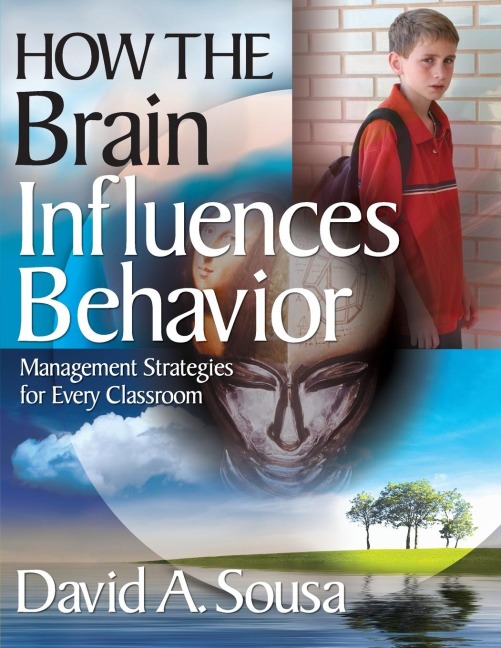
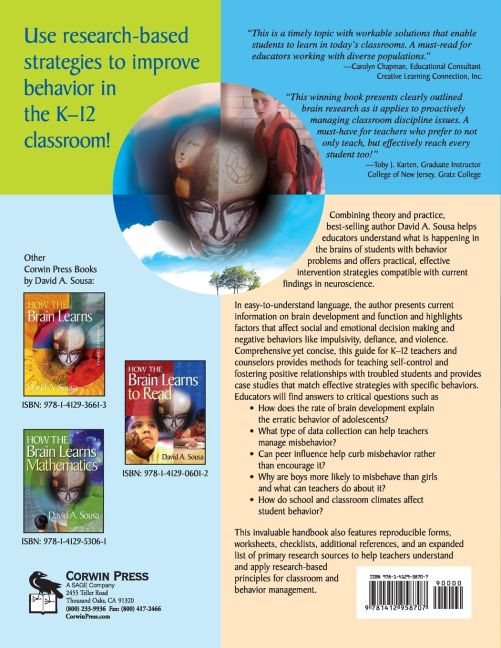
Top-selling Corwin Press author David Sousa presents a new book that offers research-based insights about brain research and classroom management. How the Brain Influences Behavior helps teachers turn information on brain functions into practical classroom management strategies and activities. This resource includes basic brain facts that can help teachers assist students in behaving, information on how the brain's processes impact behavior, and tips on deterring inappropriate behaviour in the classroom.
DR. David A. Sousa is an international consultant in educational neuroscience and author of more than twenty books that suggest ways educators and parents can translate current brain research into strategies for improving learning. A member of the Cognitive Neuroscience Society, he has conducted workshops in hundreds of school districts on brain research, instructional skills, and science education at the preK-12 and university levels. He has made presentations to more than two hundred thousand educators at national conventions of educational organizations and to regional and local school districts across the United States, Canada, Europe, Australia, New Zealand, and Asia. Dr. Sousa has a bachelor's degree in chemistry from Bridgewater State University in Massachusetts, a master of arts in teaching degree in science from Harvard University, and a doctorate from Rutgers University. His teaching experience covers all levels. He has taught senior high school science and served as a K-12 director of science, supervisor of instruction, and district superintendent in New Jersey schools. He was an adjunct professor of education at Seton Hall University for ten years and a visiting lecturer at Rutgers University. Prior to his career in New Jersey, Dr. Sousa taught at the American School of Paris (France) and served for five years as a foreign service officer and science advisor at the US diplomatic missions in Geneva (Switzerland) and Vienna (Austria). Dr. Sousa has edited science books and published dozens of articles in leading journals on professional development, science education, and educational research. His most popular books for educators include How the Brain Learns, now in its sixth edition; How the Special Needs Brain Learns, second edition; How the Gifted Brain Learns; How the Brain Learns to Read, second edition; How the Brain Influences Behavior; How the ELL Brain Learns; Differentiation and the Brain, second edition (with Carol Tomlinson); and How the Brain Learns Mathematics, second edition, which was selected by the Independent Book Publishers Association as one of the best professional development books. The Leadership Brain suggests ways for educators to lead today's schools more effectively. Dr. Sousa's books have been published in French, Spanish, Chinese, Arabic, Korean, Russian, and several other languages. His book Brainwork: The Neuroscience Behind How We Lead Others is written for business and organizational leaders. Dr. Sousa is past president of the National Staff Development Council (now called Learning Forward). He has received numerous awards from professional associations, school districts, and educational foundations for his commitment to research, staff development, and science education. He received the Distinguished Alumni Award and an honorary doctorate from Bridgewater State University and an honorary doctorate in humane letters from Gratz College in Philadelphia. Dr. Sousa has been interviewed on the NBC Today show, by other television programs, and by National Public Radio about his work with schools using brain research. He makes his home in south Florida.
About the Author
Acknowledgments
Introduction
Are Behavior Problems on the Rise?
Can Neuroscience Help?
About This Book
Questions This Book Will Answer
Chapter Contents
Other Helpful Tools
1. Handling Social Misbehavior
The Social and Emotional Brain
Emotional Processing
Pathways of Emotional Signals
What Leads to Social Misbehavior?
The Teacher Is the Key
Interventions for Handling Social Misbehavior
Dealing With Social Anxieties
Using Social Stories to Modify Behavior
A Case Study: Using a Social Story for a Verbally Aggressive Student
A Social Story for Angry Students
Summary
2. Dealing With Impulsive Behavior
What Leads to Impulsivity and Violent Behavior?
Genetic Variations
Prenatal Exposure to Cocaine
Cerebral Lesions
An Important Word About Testosterone
Ignorance of Rules of Behavior
Some Strategies for Controlling Impulsive Behavior
Cognitive and Cognitive-Behavioral Interventions
Putting Impulsive Problem Behavior in a Social Context
Using Picture Books to Curb Impulsive Anger or Anxiety
Other Suggested Strategies
Summary
3. Teaching Self-Control Through Self-Verbalization
Examining Self-Control
What Is Self-Control?
Are Children Learning Self-Control?
Brain Structures for Self-Control
Do Mirror Neurons Play a Role in Self-Control?
Losing Self-Control
Helping Students Regain Self-Control
Verbal Self-Contol of Aggressive, Defiant, or Other Behavior
The Power of Self-Talk
The ZIPPER Strategy
"Say No and Walk Away" to Resist Peer Pressure
Self-Control Through Self-Talk and Self-Monitoring
The Nature of Attention
Self-Monitoring for Other Problem Behaviors
Self-Control Through Self-Rating of Emotional Intensity
The Anger Thermometer
Summary
4. Managing the Behavior of Boys
Why a Concern With Boys?
Gender Differences in Behavior
Genetic and Environmental Factors
Impact of Biology
Some Research Findings on Behavioral Differences
Using Research-Based Strategies
Movement-Based Instruction and Classroom Management
Boy-Friendly Instruction and Discipline
The Responsibility Strategy
And What About Girls?
The Rise of Cyberbullying
Bullying Versus Cyberbullying
Dealing With Cyberbullying
Summary
5. Building Positive Relationships With Troubled Students
Relationships and Research
Insights From Neuroscience
Some Research Findings
Developing Teacher-Student Relationships
The Importance of Positive Relationships With and for Students
Reaching Unreachable Students With Dialogue Journals
The Lunch Bunch: An Educator-s Idea
Managing Serious Behavior Problems Through Adult Mentoring
Summary
6. Using Peer Relationships to Modify Behavior
Examining Peer Relationships
Dealing With Peer Influence: A Two-Edged Sword
The Desire to Be Liked
Peer-Mediated Behavior Management Strategies
Peer-Mediated Anger Management
Factors to Consider in Peer Mediation
Peer Confrontation to Curb Misbehavior
The Mystery Motivator/Mystery Character Intervention to Decrease Inappropriate Behavior
Group Contingency Interventions
Summary
7. Managing Oppositional Behavior
What Is Oppositional Behavior?
Causes of Oppositional Behavior
Students With Oppositional Behavior in the Classroom
Teacher Knowledge of Oppositional Behavior
Teacher Frustration and Countercontrol
Defiant Students: Explosions Waiting to Happen
Avoiding Triggers for Misbehavior in the Classroom
Teaching Students to Relax
Other Strategies
What About Oppositional Defiant Disorder? (ODD)
Development of ODD
Treatment of ODD
Summary
8. Developing Positive Self-Esteem
The Nature of Self-Esteem
The Power of Self-Esteem
Research on Self-Esteem
Guidelines for Building Self-Esteem
Building a New Perspective on the Troubled Student: The Strength-Based Assessment
What Is Strength-Based Assessment?
Motivation and Attribution Retraining
Motivation Research and Attribution Theory
The "Shine My Light" Strategy
Summary
9. Putting It All Together
Educational Climate: Are We Happy Here?
What Is Classroom Climate?
The Biology of Happiness
Successful Behavior Management in the Classroom
Assessing Classroom Climate
Classrom Management and Cultural Diversity
Guidelines for Managing Diverse Classes
Positive Behavioral Supports in the Classroom
What Are Positive Behavioral Supports?
The Functional Assessment of Behavior
The Behavioral Improvement Plan
Multitiered Interventions and the Student Support Team
Summary
Conclusion
Appendix
Glossary
References
Resources
Index