Und dann auf "Zum Home-Bildschirm [+]".

Stöbern
genialokal zum Startbildschirm hinzufügen
Installieren Sie die genialokal App auf Ihrem Startbildschirm für einen schnellen Zugriff und eine komfortable Nutzung.
Installieren Sie die genialokal App auf Ihrem Startbildschirm für einen schnellen Zugriff und eine komfortable Nutzung.
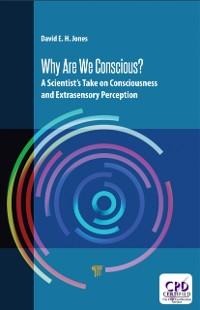
There are two huge gaps in scientific theory. One, the contradiction between classical and quantum mechanics, is discussed in many publications. The other, the total failure to explain why anything made of atoms (such as ourselves) can be conscious, has little acknowledgement. The main thesis of this book is that to be conscious at all, you need an unconscious mind. The author explores the idea that this mind sometimes makes contact with a whole unknown world, sporadically revealed by paranormal effects, but perhaps discoverable by hitherto uninvented scientific instruments. The book looks at the notion of the unconscious mind, one of the most important hypotheses of the twentieth century. Psychiatrists often deploy it rather informally, but there is no accepted theory of it. No region of the human brain seems to hold it. The author delves into the notion that the unknown world exists and is very weakly coupled to the physical world. He ponders the properties it may have to allow this coupling, looks at several paranormal effects scientifically and points out that many of them seem to imply brief but dramatic changes of the forces between atoms-a possible effect of the unknown world, unexamined by physical science. No existing publication seeks to talk both about paranormal mysteries and scientific theory. If scientists know about the gaps in existing knowledge, they might initiate research into such gaps, or notice experimental oddities they now gloss over. If the general public was aware of the gaps in physical theory, they would be less overwhelmed by the intellectual diktats of some scientists.
David E. H. Jones is a British chemist and author, best known for his columns starting in the mid-1960s under the pen name Daedalus in New Scientist. He also continued to write for Nature and the Guardian for many years. He published two books with columns from these magazines, along with additional comments and implementation sketches: The Inventions of Daedalus: A Compendium of Plausible Schemes (1982) and The Further Inventions of Daedalus (1999). He has worked in academia, industry and television. Jones's most notable scientific contribution as Daedalus is possibly his prediction of hollow carbon molecules before buckminsterfullerene was made, and long before its synthesizers won the Nobel Prize for the discovery of fullerenes. Beyond Daedalus, in scientific circles he is perhaps best known for his study of bicycle stability, his determination of arsenic in Napoleon's wallpaper, and for having designed and flown an experiment to grow a chemical garden in microgravity. In 2009 a documentary film about his work and inventions, Perpetual Motion Machine, was made and shown at the Newcastle Science Festival, 2010.
Introduction. The Physical World. Life and Its Information. The Unconscious Mind. Methods in Physical Science: Feelings Don't Matter. Methods in Paranormal Science: Feelings Do Matter. The Physical Properties of the Unknown World Outside Our Diving Bell. Physical Effects of the Unconscious Mind and the Unknown World 1. Observed Effects of the Unconscious Mind and the Unknown World 2. Observed Effects of the Unconscious Mind and the Unknown World 3. Observed Effects of the Unconscious Mind and the Unknown World 4. Unscientific but Widespread Human Beliefs. Organizations and Unusual People Mediumship, the Societies for Psychical Research, and Star Guessers. Getting Information from the Unknown World by Insight and by Writing. Getting Information from AI. Technical Questions from AI. Concluding Remarks.
Dieses eBook wird im PDF-Format geliefert und ist mit einem Adobe Kopierschutz (DRM) versehen. Sie können dieses eBook mit allen Geräten lesen, die das PDF-Format und den Adobe Kopierschutz (DRM) unterstützen.
Zum Beispiel mit den folgenden Geräten:
• tolino Reader
Laden Sie das eBook direkt über den Reader-Shop auf dem tolino herunter oder übertragen Sie das eBook auf Ihren tolino mit einer kostenlosen Software wie beispielsweise Adobe Digital Editions.
• Sony Reader & andere eBook Reader
Laden Sie das eBook direkt über den Reader-Shop herunter oder übertragen Sie das eBook mit der kostenlosen Software Sony READER FOR PC/Mac oder Adobe Digital Editions auf ein Standard-Lesegeräte mit epub- und Adobe DRM-Unterstützung.
• Tablets & Smartphones
Möchten Sie dieses eBook auf Ihrem Smartphone oder Tablet lesen, finden Sie hier unsere kostenlose Lese-App für iPhone/iPad und Android Smartphone/Tablets.
• PC & Mac
Lesen Sie das eBook direkt nach dem Herunterladen mit einer kostenlosen Lesesoftware, beispielsweise Adobe Digital Editions, Sony READER FOR PC/Mac oder direkt über Ihre eBook-Bibliothek in Ihrem Konto unter „Meine eBooks“ - „online lesen“.
Schalten Sie das eBook mit Ihrer persönlichen Adobe ID auf bis zu sechs Geräten gleichzeitig frei.
Bitte beachten Sie, dass die Kindle-Geräte das Format nicht unterstützen und dieses eBook somit nicht auf Kindle-Geräten lesbar ist.