Und dann auf "Zum Home-Bildschirm [+]".

Stöbern
genialokal zum Startbildschirm hinzufügen
Installieren Sie die genialokal App auf Ihrem Startbildschirm für einen schnellen Zugriff und eine komfortable Nutzung.
Installieren Sie die genialokal App auf Ihrem Startbildschirm für einen schnellen Zugriff und eine komfortable Nutzung.

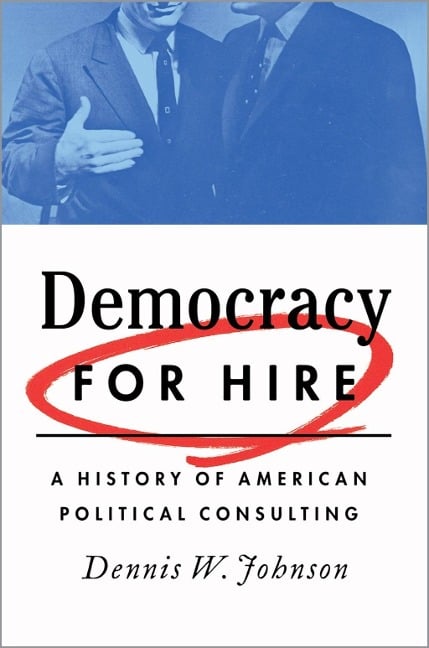
Though they work largely out of the public eye, political consultants-"image merchants" and "kingmakers" to candidates-play a crucial role in shaping campaigns. They persuaded Barry Goldwater to run for president, groomed former actor Ronald Reagan for the California governorship, helped derail Bill Clinton's health care initiative, and carried out the swiftboating of John Kerry. As Dennis Johnson argues in this sweeping history of political consulting in the United States, they are essential to modern campaigning, often making positive contributions to democratic discourse, and yet they have also polarized the electorate with their biting messages. During the nineteenth and early twentieth centuries, political campaigns were run by local political parties, volunteers, and friends of candidates; but as party loyalties among voters began to weaken, and political parties declined as sources of manpower and strategy, professional consultants swept in to fill the void. Political consulting emerged as a profession in the 1930s with publicists Leone Baxter and Clem Whitaker, the husband and wife team who built their business, in part, with a successful campaign to destroy Upton Sinclair's 1934 bid for governor of California. With roots in advertising and public relations, political consulting has since developed into a highly professionalized business generating hundreds of millions of dollars. In fact, some of the top campaign consulting firms have merged with others to form multinational public relations conglomerates, serving not just candidates but also shaping public advocacy campaigns for businesses and nonprofits. Johnson, an academic who has also worked on campaigns alongside the likes of James Carville and pollster Paul Begala, suffuses his history with the stories of the colorful characters who have come to define the profession of consulting, from its beginning to the present. More than just the story of the making of a political business, Democracy for Hire's wide-ranging history helps us to better understand the very contours of modern American politics.
Dennis W. Johnson is Professor Emeritus of Political Management at George Washington University. He is the author of "No Place for Amateurs: How Political Consultants are Reshaping America."
List of Tables Preface and Acknowledgments
Introduction
PART 1: EARLY BUSINESS OF POLITICAL CONSULTING, 1930s-1960s
Ch. 1 In the Beginning, Whitaker & Baxter Ch. 2 Measuring Public Opinion, Private and Public Pollsters Ch. 3 Radio, Television and Campaigning, 1920s-1960 Ch. 4 The Pioneers Ch. 5 Consultants and Presidential Campaigns, 1964 and 1968, and Consulting Abroad
PART 2: THE EXPANSION AND GROWTH OF CONSULTING, 1970s-1980s
Ch. 6 Money, Campaigns and the Next Generation of Consultants Ch. 7 Evolution of Polling Ch. 8 The Media Revolution Ch. 9 Voter Contact: Targeting, Direct Mail, and Phone Banks Ch. 10 Consultants and Presidential Campaigns, 1972, 1976, and 1980 Ch. 11 Consulting, Ballot Issues and Local Government Ch. 12 Consultants and Presidential Campaigns, 1984 and 1988
PART 3: TRANSFORMATION OF CONSULTING AND THE CHALLENGES AHEAD, 1990 - PRESENT
Ch. 13 New Generation of Consultants Ch. 14 Consultants and Presidential Campaigns, 1992 and 1996 Ch. 15 Technological Advances Ch. 16 Issue Campaigns and Government Affairs; Consultants Going Corporate Ch. 17 Consultants and Presidential Campaigns, 2000 and 2004 Ch. 18 Consulting Internationally Ch. 19 Consultants and Presidential Campaigns, 2008 and 2012 Ch. 20 Outside Groups, Plutocrats and Dark Money; Consultants and the 2016 Presidential Campaign Ch. 21 Political Consulting Today
Appendix A: Key Consultants and Senior Advisers for Presidential Candidates, 1952-2016 Appendix B: American Association of Political Consultants Hall of Fame Inductees Notes Index