Und dann auf "Zum Home-Bildschirm [+]".

Stöbern
genialokal zum Startbildschirm hinzufügen
Installieren Sie die genialokal App auf Ihrem Startbildschirm für einen schnellen Zugriff und eine komfortable Nutzung.
Installieren Sie die genialokal App auf Ihrem Startbildschirm für einen schnellen Zugriff und eine komfortable Nutzung.
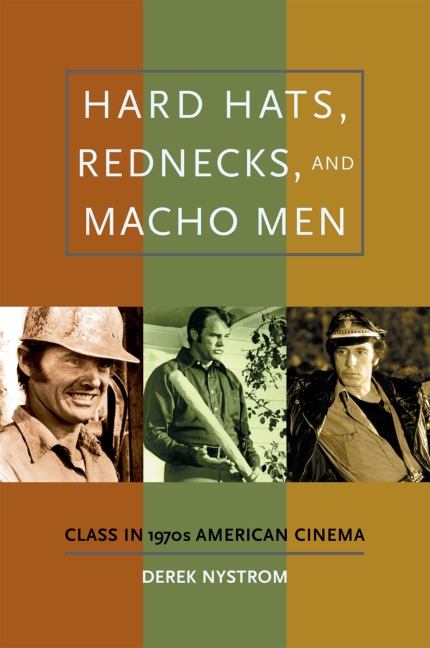
Everywhere you look in 1970s American cinema, you find white working-class men. They bring a violent conclusion to Easy Rider, murdering the film's representatives of countercultural alienation and disaffection. They lurk in the Georgia woods of Deliverance, attacking outsiders in a manner that evokes the South's recent history of racial violence and upheaval. They haunt the singles nightclubs of Looking for Mr. Goodbar, threatening the film's newly liberated heroine with patriarchal violence. They strut through the disco clubs of Saturday Night Fever, dancing to music whose roots in post-Stonewall homosexuality invite ambiguity that the men ignore. Hard Hats, Rednecks, and Macho Men argues that the persistent appearance of working-class characters in these and other films of the 1970s reveals the powerful role class played in the key social and political developments of the decade, such as the decline of the New Left and counterculture, the re-emergence of the South as the Sunbelt, and the rise of the women's and gay liberation movements. Examining the "youth cult" film, the neo-Western "southern," and the "new nightlife" film, Nystrom shows how these cinematic renderings of white working-class masculinity actually tell us more about the crises facing the middle class during the 1970s than about working-class experience itself. Hard Hats thus demonstrates how these representations of the working class serve as fantasies about a class Other-fantasies that offer imaginary resolutions to middle-class anxieties provoked by the decade's upheavals. Drawing on examples of iconic films from the era-Saturday Night Fever, Cruising, Five Easy Pieces, and Walking Tall, among others-Nystrom presents an incisive, evocative study of class and American cinema during one of the nation's most tumultuous decades.
Derek Nystrom was educated at the University of Wisconsin and the University of Virginia. He has published essays in Cinema Journal and Postmodern Culture, and co-authored, with Kent Puckett, Against Bosses, Against Oligarchies: A Conversation with Richard Rorty. He teaches film and cultural studies in the English Department of McGill University.
Dieses eBook wird im PDF-Format geliefert und ist mit einem Adobe Kopierschutz (DRM) versehen. Sie können dieses eBook mit allen Geräten lesen, die das PDF-Format und den Adobe Kopierschutz (DRM) unterstützen.
Zum Beispiel mit den folgenden Geräten:
• tolino Reader
Laden Sie das eBook direkt über den Reader-Shop auf dem tolino herunter oder übertragen Sie das eBook auf Ihren tolino mit einer kostenlosen Software wie beispielsweise Adobe Digital Editions.
• Sony Reader & andere eBook Reader
Laden Sie das eBook direkt über den Reader-Shop herunter oder übertragen Sie das eBook mit der kostenlosen Software Sony READER FOR PC/Mac oder Adobe Digital Editions auf ein Standard-Lesegeräte mit epub- und Adobe DRM-Unterstützung.
• Tablets & Smartphones
Möchten Sie dieses eBook auf Ihrem Smartphone oder Tablet lesen, finden Sie hier unsere kostenlose Lese-App für iPhone/iPad und Android Smartphone/Tablets.
• PC & Mac
Lesen Sie das eBook direkt nach dem Herunterladen mit einer kostenlosen Lesesoftware, beispielsweise Adobe Digital Editions, Sony READER FOR PC/Mac oder direkt über Ihre eBook-Bibliothek in Ihrem Konto unter „Meine eBooks“ - „online lesen“.
Schalten Sie das eBook mit Ihrer persönlichen Adobe ID auf bis zu sechs Geräten gleichzeitig frei.
Bitte beachten Sie, dass die Kindle-Geräte das Format nicht unterstützen und dieses eBook somit nicht auf Kindle-Geräten lesbar ist.