Und dann auf "Zum Home-Bildschirm [+]".

Stöbern
genialokal zum Startbildschirm hinzufügen
Installieren Sie die genialokal App auf Ihrem Startbildschirm für einen schnellen Zugriff und eine komfortable Nutzung.
Installieren Sie die genialokal App auf Ihrem Startbildschirm für einen schnellen Zugriff und eine komfortable Nutzung.
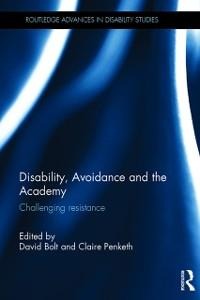
Disability is a widespread phenomenon, indeed a potentially universal one as life expectancies rise. Within the academic world, it has relevance for all disciplines yet is often dismissed as a niche market or someone else's domain. This collection explores how academic avoidance of disability studies and disability theory is indicative of social prejudice and highlights, conversely, how the academy can and does engage with disability studies. This innovative book brings together work in the humanities and the social sciences, and draws on the riches of cultural diversity to challenge institutional and disciplinary avoidance. Divided into three parts, the first looks at how educational institutions and systems implicitly uphold double standards, which can result in negative experiences for staff and students who are disabled. The second part explores how disability studies informs and improves a number of academic disciplines, from social work to performance arts. The final part shows how more diverse cultural engagement offers a way forward for the academy, demonstrating ways in which we can make more explicit the interdisciplinary significance of disability studies - and, by extension, disability theory, activism, experience, and culture. Disability, Avoidance and the Academy: Challenging Resistance will interest students and scholars of disability studies, education studies and cultural studies.
Dr David Bolt is Associate Professor of Disability and Education at Liverpool Hope University, United Kingdom. He completed his PhD in 2004 at the University of Staffordshire. He has authored, edited, and guest edited numerous works about disability, literary representation, culture, language, and education. Dr Claire Penketh is Principal lecturer in Disability and Education at Liverpool Hope University, United Kingdom. She completed her PhD in 2010 at Goldsmiths College, University of London. She has authored work on disability, art education, policy, and culture.
Introduction Part 1: Challenging Institutional Avoidance: Systems and Education 1. Disability, Diversity and Diversion: Normalization and Avoidance in Higher Education 2. Disabling Policies and Exclusionary Infrastructures: A Critique of the AAUP Report 3. 'Crippled Inside?': Metaphors of Organisational Learning Difficulty 4. Avoiding New Literacies: Ideology, Dyslexia, and Perceived Deficits 5. School Textbooks and the Avoidance of Disability: Emptied of Representation Part 2: Challening Disciplinary Avoidance: The Case for Curricular Reform 6. Lessons in Critical Avoidance: Disability Studies and 'Special Educational Needs' 7. Words for Dignity: From Budapest to Berkeley and Back 8. Validating Critical Avoidance: Professional Social Work, Mental Health Service Users/Survivors, and the Academy 9. Servicescapes, People, Brands, and Marketing Management: Looking to the Future of Consumer Disability Research Through Disability Studies 10. Literary Disability Studies in Creative Writing: A Practical Approach to Theory 11. Fabulous Invalids Together: Why Disability in Mainstream Theater Matters 12. Ahimsa and the Ethics of Caring: Gandhi's Spiritual Experiments with Truth via an Idea of a Vulnerable Human Body Part 3: Challenging Critical Avoidance: Culture, Place, and Modernity 13. Disability Studies and Modern Responses to Stefan Zweig's Beware of Pity: Critics' Avoidance 14. Avoiding Disability in Scottish Literary Studies? Scottish Studies, Ablenationalism, and Beyond 15. How I Can Go On: Embracing Modernity's Displeasure with Beckett's Murphy 16. Signifying Otherness in Modernity: The Subject of Disability in The Sun Also Rises and The Sound and the Fury 17. Epilogue
Dieses eBook wird im PDF-Format geliefert und ist mit einem Adobe Kopierschutz (DRM) versehen. Sie können dieses eBook mit allen Geräten lesen, die das PDF-Format und den Adobe Kopierschutz (DRM) unterstützen.
Zum Beispiel mit den folgenden Geräten:
• tolino Reader
Laden Sie das eBook direkt über den Reader-Shop auf dem tolino herunter oder übertragen Sie das eBook auf Ihren tolino mit einer kostenlosen Software wie beispielsweise Adobe Digital Editions.
• Sony Reader & andere eBook Reader
Laden Sie das eBook direkt über den Reader-Shop herunter oder übertragen Sie das eBook mit der kostenlosen Software Sony READER FOR PC/Mac oder Adobe Digital Editions auf ein Standard-Lesegeräte mit epub- und Adobe DRM-Unterstützung.
• Tablets & Smartphones
Möchten Sie dieses eBook auf Ihrem Smartphone oder Tablet lesen, finden Sie hier unsere kostenlose Lese-App für iPhone/iPad und Android Smartphone/Tablets.
• PC & Mac
Lesen Sie das eBook direkt nach dem Herunterladen mit einer kostenlosen Lesesoftware, beispielsweise Adobe Digital Editions, Sony READER FOR PC/Mac oder direkt über Ihre eBook-Bibliothek in Ihrem Konto unter „Meine eBooks“ - „online lesen“.
Schalten Sie das eBook mit Ihrer persönlichen Adobe ID auf bis zu sechs Geräten gleichzeitig frei.
Bitte beachten Sie, dass die Kindle-Geräte das Format nicht unterstützen und dieses eBook somit nicht auf Kindle-Geräten lesbar ist.