Und dann auf "Zum Home-Bildschirm [+]".

Stöbern
genialokal zum Startbildschirm hinzufügen
Installieren Sie die genialokal App auf Ihrem Startbildschirm für einen schnellen Zugriff und eine komfortable Nutzung.
Installieren Sie die genialokal App auf Ihrem Startbildschirm für einen schnellen Zugriff und eine komfortable Nutzung.
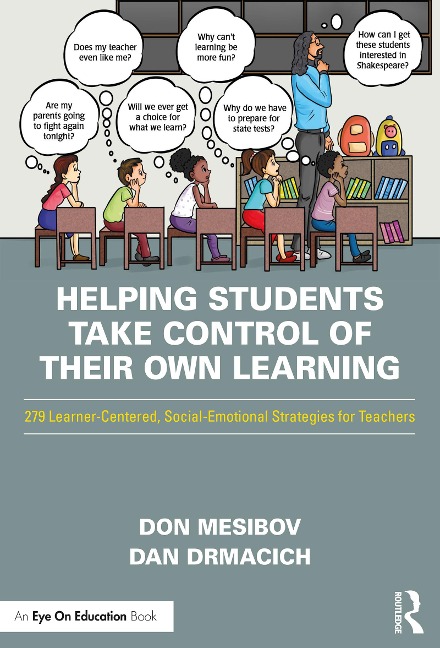
What does learner-centered education look like, and how can we best put it into practice? This helpful book by experienced educators Don Mesibov and Dan Drmacich answers those questions and provides a wide variety of strategies, activities, and examples to help you with implementation. Chapters address topics such as positioning students at the center of the lesson and teachers as coaches, making tasks relevant and engaging, incorporating the affective domain and social-emotional learning, assessing learning, and more. Appropriate for new and experienced teachers of all grades and subjects, this book will leave you feeling ready to help students take control of their own learning so they can reach higher levels of success.
Don Mesibov has worked at a school for emotionally disturbed children, been a middle school English teacher, taught courses on constructivism at local colleges for 22 years, and worked for a teacher's union. Additionally, he is director of the Institute for Learning Centered Education, an organization he founded in 1995. Dan Drmacich was principal of the nationally renowned School Without Walls in Rochester, New York, a public school, and a member of the New York State Performance Standards Consortium, which requires performance-based assessments and a yearlong project to demonstrate competency for graduation rather than standardized tests. Dan is currently cofounder and coordinator of the Rochester Coalition for Public Education, an organization focused on research-based, progressive school reform and social justice.
Section One Why Do Schools Need To Change? Chapter 1 Learner-Centered Education (LCE) And Social-Emotional Learning (SEL): You Can't Have One Without The Other Chapter 2 The Iron Is Hot Chapter 3 Research Supports The Need For Change Chapter 4 Best Practices Are For All Students Chapter 5 Many Students Are Bored And Unmotivated Section Two How Do The Teachers' And Students' Roles Change? Chapter 6 It All Starts With The Teacher Chapter 7 Prioritize What Impacts Student Learning Chapter 8 Student Needs, Interests, And Learning Styles Should Be At The Center Of A Lesson Chapter 9 Motivation Is Derived From What Students Find Interesting, Relevant, Or Just Plain Fun Chapter 10 Teachers Are Classroom Coaches Chapter 11 Critical Thinking Is The Main Focus For Student Learning Chapter 12 Advisories, Journaling And Conferencing Are Essential Chapter 13 Music And Art Facilitate Learning In All Disciplines Chapter 14 Students Need A Vision Chapter 15 Introverted (Or Quiet) Children Require Special Strategies Chapter 16 Educators Can Make Use Of Lectures And Be Effective Section Three Is There Room For The Affective Domain? Chapter 17 Content And Social-Emotional Learning Are Compatible Chapter 18 Let All Students Know They Are Liked As Individuals: The Classroom Culture Sends A Message To Students Chapter 19 Teaching Good Citizenship Prepares Students For Life And Raises Student Achievement Chapter 20 More Activities To Start The Year Or To Use Any Time Section Four Do Students Find School Relevant? Chapter 21 Classroom Tasks Must Be Meaningful And Authentic Chapter 22 9/11 And Covid-19: Opportunities For Student Learning Section Five How Do We Test What Students Should Be Learning? Chapter 23 Assessment Practices Drive Instruction Chapter 24 Standardized Tests Directly Impact What Teachers Teach, What Students Learn, And How Students Learn Section Six What Should All Teachers Understand? Chapter 25 How To Interact With Disruptive Students Chapter 26 Schools Must Be Trauma-Sensitive Chapter 27 Social Justice Is A Critical Element Of Good Citizenship Chapter 28 Addressing Controversial Issues With Civil Discourse Through Effective Use Of Student-Centered Practices Chapter 29 Lessons From Covid-19: Online Instruction And Utilizing Technology Can Support, Not Replace, Good Teaching Chapter 30 Change How Student Progress Is Reported Section Seven Is Meaningful School Reform Possible? Chapter 31 Agents Of Change, Please Step Forward Chapter 32 There Can Be Major School Reform At Minimal Cost Epilogue Opportunities For Students Are Inequitable Appendix A Resources For Advocacies And Journaling Appendix B Resources For Teaching Good Citizenship Appendix C Resources For Teaching Social Justice
Dieses eBook wird im PDF-Format geliefert und ist mit einem Adobe Kopierschutz (DRM) versehen. Sie können dieses eBook mit allen Geräten lesen, die das PDF-Format und den Adobe Kopierschutz (DRM) unterstützen.
Zum Beispiel mit den folgenden Geräten:
• tolino Reader
Laden Sie das eBook direkt über den Reader-Shop auf dem tolino herunter oder übertragen Sie das eBook auf Ihren tolino mit einer kostenlosen Software wie beispielsweise Adobe Digital Editions.
• Sony Reader & andere eBook Reader
Laden Sie das eBook direkt über den Reader-Shop herunter oder übertragen Sie das eBook mit der kostenlosen Software Sony READER FOR PC/Mac oder Adobe Digital Editions auf ein Standard-Lesegeräte mit epub- und Adobe DRM-Unterstützung.
• Tablets & Smartphones
Möchten Sie dieses eBook auf Ihrem Smartphone oder Tablet lesen, finden Sie hier unsere kostenlose Lese-App für iPhone/iPad und Android Smartphone/Tablets.
• PC & Mac
Lesen Sie das eBook direkt nach dem Herunterladen mit einer kostenlosen Lesesoftware, beispielsweise Adobe Digital Editions, Sony READER FOR PC/Mac oder direkt über Ihre eBook-Bibliothek in Ihrem Konto unter „Meine eBooks“ - „online lesen“.
Schalten Sie das eBook mit Ihrer persönlichen Adobe ID auf bis zu sechs Geräten gleichzeitig frei.
Bitte beachten Sie, dass die Kindle-Geräte das Format nicht unterstützen und dieses eBook somit nicht auf Kindle-Geräten lesbar ist.