Und dann auf "Zum Home-Bildschirm [+]".

Stöbern
genialokal zum Startbildschirm hinzufügen
Installieren Sie die genialokal App auf Ihrem Startbildschirm für einen schnellen Zugriff und eine komfortable Nutzung.
Installieren Sie die genialokal App auf Ihrem Startbildschirm für einen schnellen Zugriff und eine komfortable Nutzung.
Ihr gewünschter Artikel ist in 0 Buchhandlungen vorrätig - wählen Sie hier eine Buchhandlung in Ihrer Nähe aus:

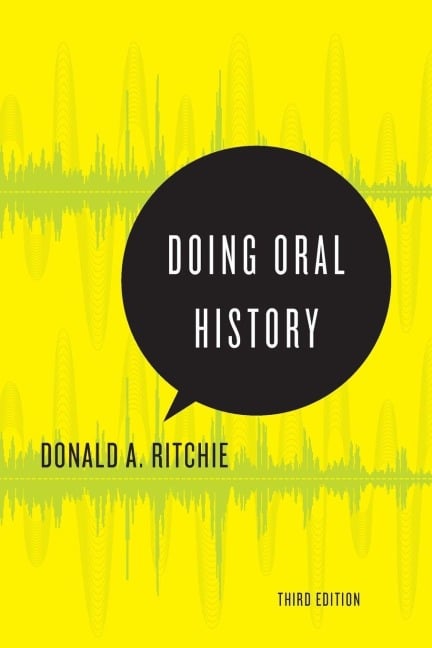
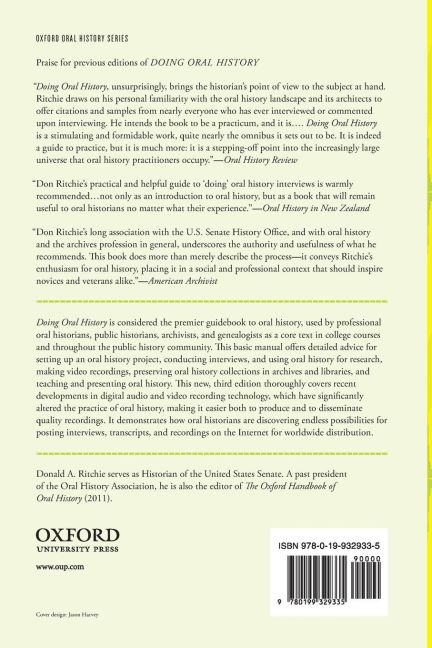
Doing Oral History: A Practical Guide is considered the premier guidebook to oral history, used by professional oral historians, public historians, archivists, and genealogists as a core text in college courses and throughout the public history community. The recent development of digital audio and video recording technology has continued to alter the practice of oral history, making it even easier to produce and disseminate quality recordings. At the sametime, digital technology has complicated the preservation of the recordings, past and present.
Historian, U.S. Senate Historical Office; past president, Oral History Association; editor, The Oxford Handbook of Oral History; author, Press Gallery: Congress and the Washington Correspondents (Harvard U. Press, 1991, OAH Richard Leopold Prize), Reporting from Washington (OUP, 2005), et al.
Introduction and Acknowledgments
Chapter 1. An Oral History of Our Time
Memory and Oral History
Public History and Oral History
Chapter 2. Setting Up An Oral History Project
Funding and Staffing
Equipment
Processing
Legal Concerns
Archiving and the Internet
Chapter 3. Conducting Interviews
Preparing for the Interview
Setting up the Interview
Conducting the Interview
Concluding the Interview
Chapter 4. Using Oral History for Research
Oral Evidence
Theory
Publishing Oral History
Chapter 5. Videotaping Oral History
Setting and Equipment
Processing and Preserving Video Recordings
Video Documentaries, Exhibits, and the Internet
Chapter 6. Preserving Oral History in Archives and Libraries
Managing Oral History Collections
Sound Recordings
Digital Oral Archives
Donated Interviews
Legal Considerations
Public Outreach
Chapter 7. Teaching Oral History
Oral History in Elementary and Secondary Schools
Oral History in Undergraduate and Graduate Education
Institutional Review Boards
Chapter 8. Presenting Oral History
Oral History Web Sites
Community History
Family Interviewing
Therapeutic Uses of Oral History
Museum Exhibits
Radio and Television
Performance
Appendix 1: Best Practices of the Oral History Association.
Appendix 2: Sample Legal Release Forms
Notes and References
Bibliography
Internet Resources
Index