Und dann auf "Zum Home-Bildschirm [+]".

Stöbern
genialokal zum Startbildschirm hinzufügen
Installieren Sie die genialokal App auf Ihrem Startbildschirm für einen schnellen Zugriff und eine komfortable Nutzung.
Installieren Sie die genialokal App auf Ihrem Startbildschirm für einen schnellen Zugriff und eine komfortable Nutzung.
Ihr gewünschter Artikel ist in 0 Buchhandlungen vorrätig - wählen Sie hier eine Buchhandlung in Ihrer Nähe aus:

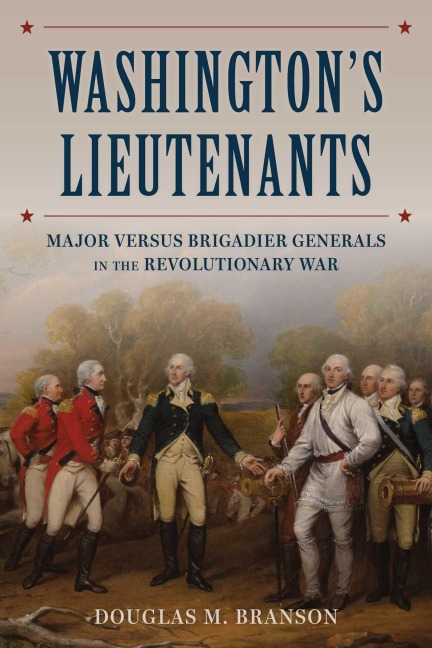
Meet the bold, the brilliant, and the blundering—Washington’s Lieutenants tells the untold story of the generals who won and lost the Revolutionary War. As commander-in-chief of the Continental Army, George Washington developed the strategy that won the Revolutionary War, but while Washington directed some battles, his strategy for the most part was carried out—and most battles were won or lost—by his subordinates, major and brigadier generals of varying background, experience, and ability. In the spirit of the best military history and biography, Washington’s Lieutenants tells the story of the generals who served under Washington from 1775 to 1781. Based on extensive research in a variety of sources, the book finds the brigadier generals a laudable group of commanders. Hugh Mercer, for instance, played a pivotal role in the surprise crossing of the Delaware in December 1776 and was bayoneted during the Battle of Princeton a week later. Clergyman-turned-soldier Peter Muhlenberg led a Virginia Line brigade at Brandywine, Germantown, Monmouth, and Yorktown. A quarter of all brigadiers died in the service of the new nation. Although some stood out for their military skill, battlefield bravery, and loyalty to Washington, the major generals as a whole were disappointing, marked by the pursuit of their own military and political ambitions and by a penchant for infighting and bickering. Only three served for the war’s duration, including the great Nathanael Greene and Henry Knox. Ten resigned. Benedict Arnold turned coat. At least three were involved in the so-called Conway Cabal of 1777–78 to oust General Washington. In the southern theater, Robert Howe womanized, argued with local leaders to the point of dueling, and ultimately botched the defense of Savannah. The controversial Horatio Gates, self-proclaimed victor of Saratoga, was accused of cowardice at the Battle of Camden, South Carolina. At once entertaining reading about some of the Revolutionary War’s most colorful military commanders and an insightful analysis of how the young nation fought for its independence, Washington’s Lieutenants will be essential reading during the war’s 250th anniversary and beyond.
By Douglas M. Branson
Chapter 1: Overview PartI:Arthur St. Clair Chapter 2: Banned from Combat Duty Chapter 3: Credit Was Not Due Chapter 4: St. Clair's Generalship: Battle of a Thousand Slain PartII:Adam Stephen Chapter 5: A Second Scottish Physician Chapter 6 : Business over Generalship Chapter 7: Egregious Sins PartIII:Hugh Mercer: A Brigadier Chapter 8: Yet Another Scottish Physician Chapter 9: "Give Me Liberty or Give Me Death" PartIV:Robert Howe Chapter 10: A Philanderer? Chapter 11: Howe's Downward Spiral Chapter 12: Partial Redemption Chapter 13: Addendum: Intoxicating Beverages PartV:William Lee Davidson: A Brigadier Chapter 14: Piedmont Partisan: Tall Tree Davidson Chapter 15: Cowan's Ford PartVI:Charles Lee Chapter 16: Professional Soldier Lee Chapter 17: Lee's Privileged Background Chapter 18: Lee's Fall from Grace PartVII:Horatio Gates Chapter 19: Genuine Battle Experience? Chapter 20: Gates's Cowardice at Camden Chapter 21: A Gates Roadmap of What Not to Do PartVIII:Peter Gabriel Muhlenberg Chapter 22: Another Tall Tree: Fighting Parson Muhlenberg Chapter 23: Muhlenberg the Brigadier General PartIX:Thomas Mifflin Chapter 24: A Political General Chapter 25: Dereliction of Duty and Abandonment of His Post Chapter 26: Thomas Mifflin's Greatest Sin PartX:William Woodford Chapter 27: Virginia Planter: A Brigadier as a Bent Tree Chapter 28: Monmouth Courthouse and Charles Town PartXI:Thomas Conway Chapter 29: Sedition Afloat Chapter 30: Final Thoughts and Conclusions Notes Bibliography Index