Und dann auf "Zum Home-Bildschirm [+]".

Stöbern
genialokal zum Startbildschirm hinzufügen
Installieren Sie die genialokal App auf Ihrem Startbildschirm für einen schnellen Zugriff und eine komfortable Nutzung.
Installieren Sie die genialokal App auf Ihrem Startbildschirm für einen schnellen Zugriff und eine komfortable Nutzung.
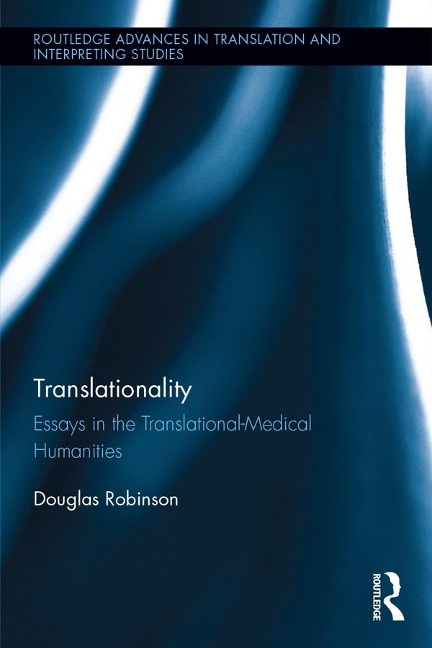
This book defines "translationality" by weaving a number of sub- and interdisciplinary interests through the medical humanities: medicine in literature, the translational history of medical literature, a medical (neuroscience) approach to literary translation and translational hermeneutics, and a humanities (phenomenological/performative) approach to translational medicine. It consists of three long essays: the first on the traditional medicine-in-literature side of the medical humanities, with a close look at a recent novel built around the Capgras delusion and other neurological misidentification disorders; the second beginning with the traditional history-of-medicine side of the medical humanities, but segueing into literary history, translation history, and translation theory; the third on the social neuroscience of translational hermeneutics. The conclusion links the discussion up with a humanistic (performative/phenomenological) take on translational medicine.
Douglas Robinson is Chair Professor of English at Hong Kong Baptist University, and most recently authored Critical Translation Studies (Routledge).
Preface0.1 Translationality 0.2 Medical humanities 0.3 Translational-medical humanities 0.4 Acknowledgments Essay 1 The medical humanities: the creation of the (un)real as fiction 1.1 Capgras fictions 1: The Echo Maker 1.2 Capgras fictions 2: simulacra in Baudrillard and humanistic applications 1.3 Capgras fictions 3: back to The Echo Maker 1.4 Conclusion: icosis Essay 2 The translational humanities of medicine: literary history as performed translationality 2.1 Translationality vs. cloning 2.2 Translations of medicine as/in literature 2.3 Rethinking translationality 2.4 Conclusion: icosis again Essay 3 The medical humanities of translation: the social neuroscience of hermeneutics 3.1 Neurocognitive translation studies 3.2 The social neuroscience of hermeneutics 3.3 Translation as foreignization, estrangement, and alienation 3.4 Chinese philosophy 3.5 The icosis/ecosis of hermeneutics Conclusion: the humanities of translational medicine: the performative phenomenology of (self)care
Dieses eBook wird im PDF-Format geliefert und ist mit einem Adobe Kopierschutz (DRM) versehen. Sie können dieses eBook mit allen Geräten lesen, die das PDF-Format und den Adobe Kopierschutz (DRM) unterstützen.
Zum Beispiel mit den folgenden Geräten:
• tolino Reader
Laden Sie das eBook direkt über den Reader-Shop auf dem tolino herunter oder übertragen Sie das eBook auf Ihren tolino mit einer kostenlosen Software wie beispielsweise Adobe Digital Editions.
• Sony Reader & andere eBook Reader
Laden Sie das eBook direkt über den Reader-Shop herunter oder übertragen Sie das eBook mit der kostenlosen Software Sony READER FOR PC/Mac oder Adobe Digital Editions auf ein Standard-Lesegeräte mit epub- und Adobe DRM-Unterstützung.
• Tablets & Smartphones
Möchten Sie dieses eBook auf Ihrem Smartphone oder Tablet lesen, finden Sie hier unsere kostenlose Lese-App für iPhone/iPad und Android Smartphone/Tablets.
• PC & Mac
Lesen Sie das eBook direkt nach dem Herunterladen mit einer kostenlosen Lesesoftware, beispielsweise Adobe Digital Editions, Sony READER FOR PC/Mac oder direkt über Ihre eBook-Bibliothek in Ihrem Konto unter „Meine eBooks“ - „online lesen“.
Schalten Sie das eBook mit Ihrer persönlichen Adobe ID auf bis zu sechs Geräten gleichzeitig frei.
Bitte beachten Sie, dass die Kindle-Geräte das Format nicht unterstützen und dieses eBook somit nicht auf Kindle-Geräten lesbar ist.