Und dann auf "Zum Home-Bildschirm [+]".

Stöbern
genialokal zum Startbildschirm hinzufügen
Installieren Sie die genialokal App auf Ihrem Startbildschirm für einen schnellen Zugriff und eine komfortable Nutzung.
Installieren Sie die genialokal App auf Ihrem Startbildschirm für einen schnellen Zugriff und eine komfortable Nutzung.
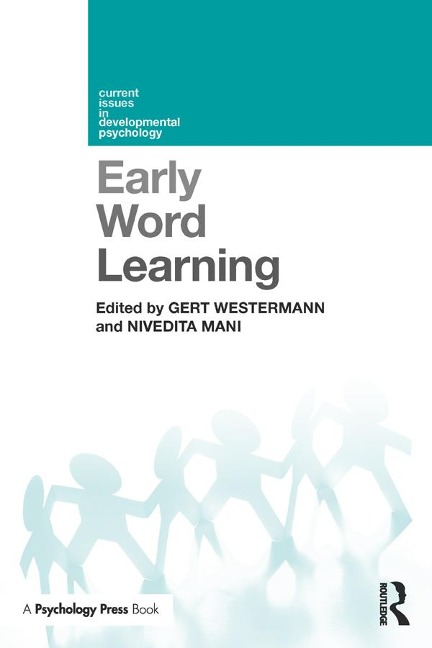
Early Word Learning explores the processes leading to a young child learning words and their meanings. Word learning is here understood as the outcome of overlapping and interacting processes, starting with an infant's learning of native speech sounds to segmenting proto-words from fluent speech, mapping individual words to meanings in the face of natural variability and uncertainty, and developing a structured mental lexicon. Experts in the field review the development of early lexical acquisition from empirical, computational and theoretical perspectives to examine the development of skilled word learning as the outcome of a process that begins even before birth and spans the first two years of life. Drawing on cutting-edge research in infant eye-tracking, neuroimaging techniques and computational modelling, this book surveys the field covering both established results and the most recent advances in word learning research. Featuring chapters from international experts whose research approaches the topic from these diverse perspectives using different methodologies, this book provides a comprehensive yet coherent and unified representation of early word learning. It will be invaluable for both undergraduate and postgraduate courses in early language development as well as being of interest to researchers interested in lexical development.
Gert Westermann is Professor of Psychology at Lancaster University. He is the Director of the Leverhulme Doctoral Scholarship Programme in Interdisciplinary Research on Infant Development and currently holds a British Academy/Leverhulme Trust Senior Research Fellowship. Nivedita Mani is Professor of Psychology at Georg-August-Universität Göttingen in Germany. In 2014 she won the Fritz-Behrens Stiftung's Science Prize and became a Member of Göttingen Academy of Sciences and Humanities in 2017.
Preface, 1. Before the word: Acquiring a phoneme inventory, Titia Benders and Nicole Altvater-Mackensen, 2.The proto-lexicon: Segmenting word-like units from the speech stream, Caroline Junge, 3.Intrinsic and extrinsic cues to word learning, Padraic Monaghan, Marina Kalashnikova, and Karen Mattock, 4. Mapping words to objects, Jessica S. Horst, 5. Building a lexical network, Nivedita Mani and Arielle Borovsky, 6. Verbs: Learning how speakers use words to refer to actions, Jane B. Childers, Angeline Bottera, and Tyler Howard, 7. Listening to (and listening through) variability during word learning, Katherine White, 8. Individual differences in early word learning, Meredith L. Rowe and Kathryn A. Leech, 9. Early bilingual word learning, Christopher Fennell and Casey Lew-Williams, 10. ERP indices of word learning: What do they reflect and what do they tell us about the neural representations of early words?, Manuela Friedrich, 11. Computational models of word learning, Gert Westermann and Katherine Twomey
Dieses eBook wird im PDF-Format geliefert und ist mit einem Adobe Kopierschutz (DRM) versehen. Sie können dieses eBook mit allen Geräten lesen, die das PDF-Format und den Adobe Kopierschutz (DRM) unterstützen.
Zum Beispiel mit den folgenden Geräten:
• tolino Reader
Laden Sie das eBook direkt über den Reader-Shop auf dem tolino herunter oder übertragen Sie das eBook auf Ihren tolino mit einer kostenlosen Software wie beispielsweise Adobe Digital Editions.
• Sony Reader & andere eBook Reader
Laden Sie das eBook direkt über den Reader-Shop herunter oder übertragen Sie das eBook mit der kostenlosen Software Sony READER FOR PC/Mac oder Adobe Digital Editions auf ein Standard-Lesegeräte mit epub- und Adobe DRM-Unterstützung.
• Tablets & Smartphones
Möchten Sie dieses eBook auf Ihrem Smartphone oder Tablet lesen, finden Sie hier unsere kostenlose Lese-App für iPhone/iPad und Android Smartphone/Tablets.
• PC & Mac
Lesen Sie das eBook direkt nach dem Herunterladen mit einer kostenlosen Lesesoftware, beispielsweise Adobe Digital Editions, Sony READER FOR PC/Mac oder direkt über Ihre eBook-Bibliothek in Ihrem Konto unter „Meine eBooks“ - „online lesen“.
Schalten Sie das eBook mit Ihrer persönlichen Adobe ID auf bis zu sechs Geräten gleichzeitig frei.
Bitte beachten Sie, dass die Kindle-Geräte das Format nicht unterstützen und dieses eBook somit nicht auf Kindle-Geräten lesbar ist.