Und dann auf "Zum Home-Bildschirm [+]".

Stöbern
genialokal zum Startbildschirm hinzufügen
Installieren Sie die genialokal App auf Ihrem Startbildschirm für einen schnellen Zugriff und eine komfortable Nutzung.
Installieren Sie die genialokal App auf Ihrem Startbildschirm für einen schnellen Zugriff und eine komfortable Nutzung.
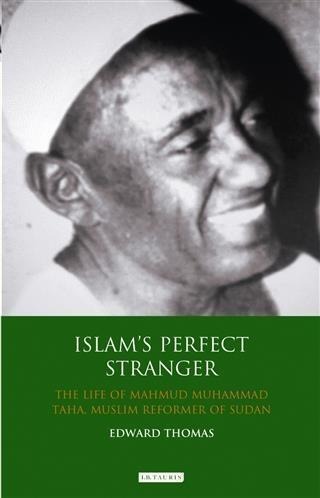

Can Sudan, one of Africa's most diverse countries, function as an Islamic state? Mahmud Muhammad Taha posed an original answer to this question. Taha was the charismatic leader of the 'Republican Brothers and Sisters', a small group of Sudanese nationalists who called for a mystical, inclusive reinterpretation of Islam. Taha's followers pitched his sometimes controversial mix of law and mysticism on Sudanese street corners in the 1970s. Sudanese Islamist politicians, who used a more divisive version of Islam, opposed him vigorously. When they gained control of the state in the chaotic 1980s, Taha was executed. In Taha's first biography, Edward Thomas reveals how Taha was a legal reformer who creatively reworked Islamic law, abolishing its traditional discriminations against women and non-Muslims. He was also a legal performer, his ideas shaped by Sudan's plural legal systems, jails, judges and police. Sudan's legal pluralism is part of its cultural diversity, and Thomas relates Taha's life to the historical experience of an African country on the edge of the Arab and Muslim world: where the interplay between ethnicity and religion - and a history of slavery - has major consequences for the division of wealth and power. Taha participated enthusiastically in the high-pitched debates on Islam and politics that were at the centre of discourse on state legitimacy in the Sudan of his day. But within his circle, his aspirations were other-worldly, and he preferred the mystical logic of Sudan's Sufi thinkers to the polemical cut and thrust. He thought that life should be aimed at perfection, and that it was a human duty to give perfection one's best shot. Thomas argues that it was Taha's disconcerting pursuit of perfection that made him a thinker and a martyr. Interviews with Taha's contemporaries show that Taha's ideas were linked to his identity and to his privileged place in Sudan's divided society. Taha's ethnicity, class, studies, professional life and migrations all shaped him - and here Thomas draws upon a diverse range of sources to bring to light the life and ideas of an important Sudanese reformer and leader who has become a symbol of resistance, tolerance and human rights.?????
Dieses eBook wird im PDF-Format geliefert und ist mit einem Adobe Kopierschutz (DRM) versehen. Sie können dieses eBook mit allen Geräten lesen, die das PDF-Format und den Adobe Kopierschutz (DRM) unterstützen.
Zum Beispiel mit den folgenden Geräten:
• tolino Reader
Laden Sie das eBook direkt über den Reader-Shop auf dem tolino herunter oder übertragen Sie das eBook auf Ihren tolino mit einer kostenlosen Software wie beispielsweise Adobe Digital Editions.
• Sony Reader & andere eBook Reader
Laden Sie das eBook direkt über den Reader-Shop herunter oder übertragen Sie das eBook mit der kostenlosen Software Sony READER FOR PC/Mac oder Adobe Digital Editions auf ein Standard-Lesegeräte mit epub- und Adobe DRM-Unterstützung.
• Tablets & Smartphones
Möchten Sie dieses eBook auf Ihrem Smartphone oder Tablet lesen, finden Sie hier unsere kostenlose Lese-App für iPhone/iPad und Android Smartphone/Tablets.
• PC & Mac
Lesen Sie das eBook direkt nach dem Herunterladen mit einer kostenlosen Lesesoftware, beispielsweise Adobe Digital Editions, Sony READER FOR PC/Mac oder direkt über Ihre eBook-Bibliothek in Ihrem Konto unter „Meine eBooks“ - „online lesen“.
Schalten Sie das eBook mit Ihrer persönlichen Adobe ID auf bis zu sechs Geräten gleichzeitig frei.
Bitte beachten Sie, dass die Kindle-Geräte das Format nicht unterstützen und dieses eBook somit nicht auf Kindle-Geräten lesbar ist.