Und dann auf "Zum Home-Bildschirm [+]".

Stöbern
genialokal zum Startbildschirm hinzufügen
Installieren Sie die genialokal App auf Ihrem Startbildschirm für einen schnellen Zugriff und eine komfortable Nutzung.
Installieren Sie die genialokal App auf Ihrem Startbildschirm für einen schnellen Zugriff und eine komfortable Nutzung.
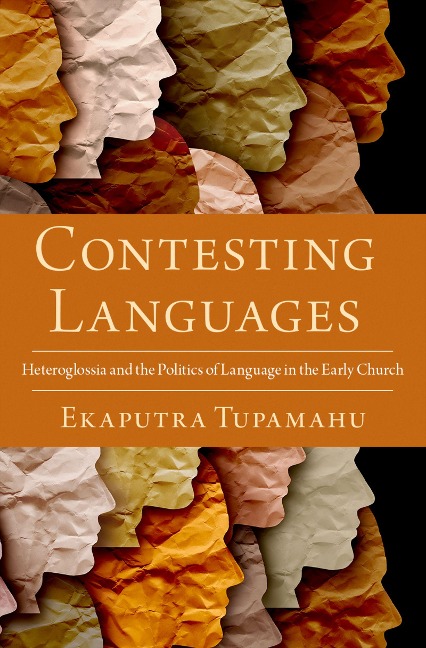
How did the Apostle Paul navigate the language differences in Corinth? In Contesting Languages: Heteroglossia and the Politics of Language in the Early Church, Ekaputra Tupamahu investigates Corinthian tongue-speech as a site of political struggle. Tupamahu demonstrates that conceptualizing speaking in tongues as ecstatic, unintelligible expressions is an interpretive invention of German romantic-nationalist scholarship. Instead, drawing on Mikhail Bakhtin's theories of language, Tupamahu finds two forces of language at work in the New Testament: a centripetalizing force of monolingualism, which attempts to force heterogeneous languages into a singular linguistic form, and a countervailing centrifugal force that diverse languages unleash. The city of Corinth in the Roman period was a multilingual city-a sociolinguistic context that Tupamahu argues should be taken seriously when reading Paul's directives concerning Corinthians "speaking in tongues". Grounding his reading of the texts in the experiences of immigrants who speak minority languages, Tupamahu reads Paul's prohibition against the use of tongues in public gathering as a form of cultural domination. This book offers a competing social imagination, in which tongues as a heteroglossic phenomenon promises a radically hospitable space and a new socio-linguistic vision marked by unending difference.
Ekaputra Tupamahu is Assistant Professor of New Testament and Director of Masters Programs at Portland Seminary. He received his Ph.D. in New Testament and Early Christianity from Vanderbilt University. His other writings have appeared in, among others, the Journal for the Study of the New Testament, Bible and Critical Theory, Pneuma, and Indonesian Journal of Theology. He is the New Testament editor for the Currents in Biblical Research journal.
Acknowledgements Introduction Chapter 1: Why on Earth Does Tongue(s) Become Ecstatic Speech? Chapter 2: Heteroglossia of Corinth in the Roman Period Chapter 3: Tongue(s) as a Heteroglossic Phenomenon Chapter 4: The Constructed Linguistic Stratification: Prophecy vs. Tongue(s) Chapter 5: The Politicization of Language Chapter 6: Early Responses to Paul Conclusion Bibliography
Dieses eBook wird im PDF-Format geliefert und ist mit einem Adobe Kopierschutz (DRM) versehen. Sie können dieses eBook mit allen Geräten lesen, die das PDF-Format und den Adobe Kopierschutz (DRM) unterstützen.
Zum Beispiel mit den folgenden Geräten:
• tolino Reader
Laden Sie das eBook direkt über den Reader-Shop auf dem tolino herunter oder übertragen Sie das eBook auf Ihren tolino mit einer kostenlosen Software wie beispielsweise Adobe Digital Editions.
• Sony Reader & andere eBook Reader
Laden Sie das eBook direkt über den Reader-Shop herunter oder übertragen Sie das eBook mit der kostenlosen Software Sony READER FOR PC/Mac oder Adobe Digital Editions auf ein Standard-Lesegeräte mit epub- und Adobe DRM-Unterstützung.
• Tablets & Smartphones
Möchten Sie dieses eBook auf Ihrem Smartphone oder Tablet lesen, finden Sie hier unsere kostenlose Lese-App für iPhone/iPad und Android Smartphone/Tablets.
• PC & Mac
Lesen Sie das eBook direkt nach dem Herunterladen mit einer kostenlosen Lesesoftware, beispielsweise Adobe Digital Editions, Sony READER FOR PC/Mac oder direkt über Ihre eBook-Bibliothek in Ihrem Konto unter „Meine eBooks“ - „online lesen“.
Schalten Sie das eBook mit Ihrer persönlichen Adobe ID auf bis zu sechs Geräten gleichzeitig frei.
Bitte beachten Sie, dass die Kindle-Geräte das Format nicht unterstützen und dieses eBook somit nicht auf Kindle-Geräten lesbar ist.