Und dann auf "Zum Home-Bildschirm [+]".

Stöbern
genialokal zum Startbildschirm hinzufügen
Installieren Sie die genialokal App auf Ihrem Startbildschirm für einen schnellen Zugriff und eine komfortable Nutzung.
Installieren Sie die genialokal App auf Ihrem Startbildschirm für einen schnellen Zugriff und eine komfortable Nutzung.
Ihr gewünschter Artikel ist in 0 Buchhandlungen vorrätig - wählen Sie hier eine Buchhandlung in Ihrer Nähe aus:

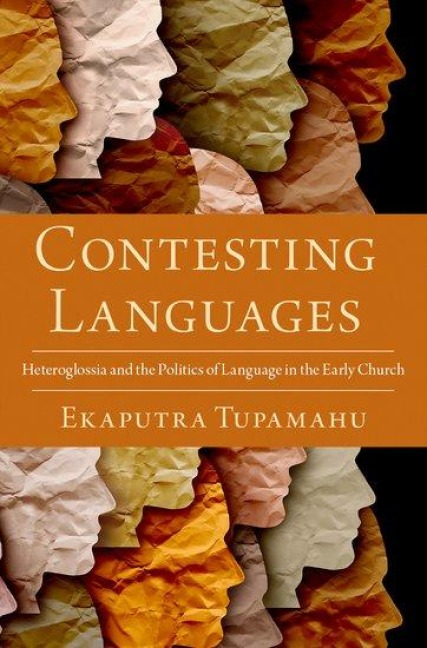
How did the Apostle Paul navigate the language differences in Corinth? In this book, Ekaputra Tupamahu investigates Corinthian tongue-speech as a site of political struggle. Tupamahu demonstrates that conceptualizing speaking in tongues as ecstatic, unintelligible expressions is an interpretive invention of German romantic-nationalist scholarship. Instead, drawing on Mikhail Bakhtin's theories of language, Tupamahu finds two forces of language at work in the New Testament: a centripetalizing force of monolingualism, which attempts to force heterogeneous languages into a singular linguistic form, and a countervailing centrifugal force that diverse languages unleash.
Ekaputra Tupamahu is Assistant Professor of New Testament and Director of Masters Programs at Portland Seminary. He received his Ph.D. in New Testament and Early Christianity from Vanderbilt University. His other writings have appeared in, among others, the Journal for the Study of the New Testament, Bible and Critical Theory, Pneuma, and Indonesian Journal of Theology. He is the New Testament editor for the Currents in Biblical Research journal.
Acknowledgements
Introduction
Chapter 1: Why on Earth Does Tongue(s) Become Ecstatic Speech?
Chapter 2: Heteroglossia of Corinth in the Roman Period
Chapter 3: Tongue(s) as a Heteroglossic Phenomenon
Chapter 4: The Constructed Linguistic Stratification: Prophecy vs. Tongue(s)
Chapter 5: The Politicization of Language
Chapter 6: Early Responses to Paul
Conclusion
Bibliography