Und dann auf "Zum Home-Bildschirm [+]".

Stöbern
genialokal zum Startbildschirm hinzufügen
Installieren Sie die genialokal App auf Ihrem Startbildschirm für einen schnellen Zugriff und eine komfortable Nutzung.
Installieren Sie die genialokal App auf Ihrem Startbildschirm für einen schnellen Zugriff und eine komfortable Nutzung.
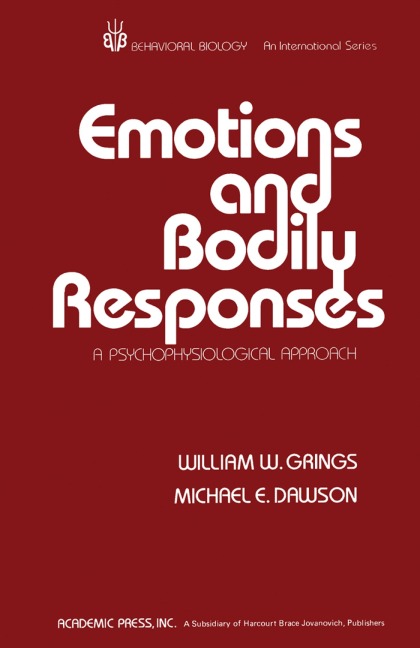
Emotions and Bodily Responses: A Psychophysiological Approach is an introduction to the principles of psychophysiology as they relate to bodily responses and emotions. The emphasis is on the study of human subjects and on those bodily responses (heart rate, blood pressure, blood volume, electrodermal responses, muscle tension, brain waves) that can be measured from the periphery of the body without the use of invasive techniques. Comprised of nine chapters, this book begins with an overview of some basic physiological principles and recording techniques, followed by a discussion on some of the types of stimuli that cause changes in bodily responses. Subsequent chapters explore individual differences in personality and emotional factors and relate them to differences in physiological responses; how differences in bodily responses are related to the major forms of psychopathology; the link between bodily responses and behavioral performance; and general states such as sleep and stress in relation to bodily responses. Bodily responses that accompany psychosomatic illnesses are also considered, along with the modification of bodily responses by various learning techniques, including Pavlovian conditioning and biofeedback training. The final chapter is devoted to the application of bodily responses to the detection of deception. This monograph is written for students, clinicians, and researchers who would like to become familiar with the basic methods, data, and concepts that relate bodily responses to emotional states.
PrefaceA Glossary of Terms and Abbreviations1 Overview of Emotions and Bodily Responses Historical Perspective and Issues Some Basic Physiological Principles Bodily Reactions Accompanying Emotion Conclusions and Outline of This Book2 Stimuli that Cause Bodily Responses Simple Environmental Stimuli Task-Related Stimuli Fear-Producing Stimuli Internal Self-Generated Stimuli Complex Social Stimuli The Effects of Set and Attitude on Responses to Stimuli Conclusion3 Individual Differences and Bodily Responses Autonomic Balance Individual-Response Stereotypy Personality Tests and Bodily Responses Conclusion4 Behavior Disorders Anxiety Depression Psychopathy Hyperkinesis Schizophrenia Summary and Conclusions5 Physiological Arousal and Performance Arousal and Bodily Responses Arousal and Motor Performance Arousal and Sensory Performance Arousal, Learning, and Memory Arousal and Acting Out Aggression Conclusion6 General Behavioral States Sleep Stress Relaxation Desensitization of Fears Conclusion7 Psychosomatic Disorders Necessary Conditions Hypothesis Specific Attitude Hypothesis Response Specificity Hypothesis Other Interpretations Experimental Psychosomatics Conclusion8 Learning of Bodily Responses Types of Learning Pavlovian Conditioning Instrumental Conditioning Biofeedback Training Conclusion9 The Detection of Deception Procedures and Techniques Physiological Measures Test Validity Theories of Bodily Changes During Deception Legal Status ConclusionReferencesAuthor IndexSubject Index