Und dann auf "Zum Home-Bildschirm [+]".

Stöbern
genialokal zum Startbildschirm hinzufügen
Installieren Sie die genialokal App auf Ihrem Startbildschirm für einen schnellen Zugriff und eine komfortable Nutzung.
Installieren Sie die genialokal App auf Ihrem Startbildschirm für einen schnellen Zugriff und eine komfortable Nutzung.

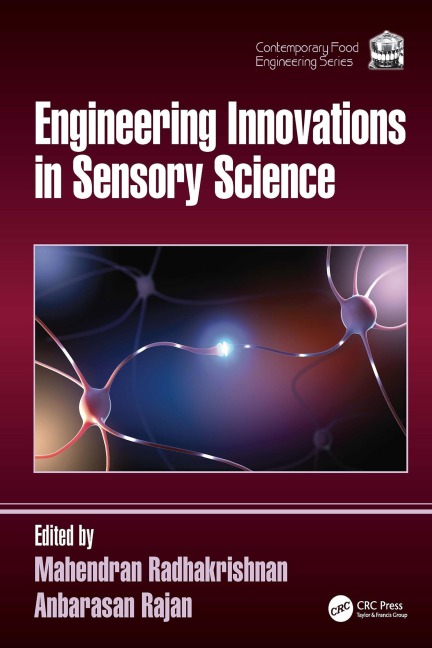
Sensory analysis is significant in food product development, and its importance impacts the maintenance of sensory qualities for food products. While there are many books exploring sensory analysis and its methods, this is the first of its kind to also explore the use of engineering tools and instruments to produce measurable and reliable data. In exploring sensory analysis methods, this book also focuses on the novel computer interface technologies to retrieve human sensory perceptions directly from the human body and convert them into a measurable unit, exploring the present status in computer interface technologies and scope for interventions to overcome obstacles. Mahendran Radhakrishnan attained his PhD in Food Process Engineering from Tamil Nadu Agricultural University, India. Prior to this, he received degrees in Industrial Biotechnology as well as Chemical Engineering. He is presently Professor and Head of Department of Food Process Technology at National Institute of Food Technology, Entrepreneurship and Management, Thanjavur (NIFTEM-T). Dr. Mahendran's research focus includes Advances in Food Processing Technologies, novel non-thermal processing, including Cold Plasma, High Pressure Processing Applications in Agri-Food, Food Structure & Shape Transformation (4D Printing), and Super Critical CO2 Extraction. Mahendran has authored over 150 publications in reputed journals. Anbarasan Rajan is Food Process Engineer who earned his M.Tech and Ph.D. in Food Process Engineering from the National Institute of Food Technology, Entrepreneurship and Management, Thanjavur (NIFTEM-T). His primary research areas include nonthermal food processing, 4D foods/food shape morphing, and sensory science.
Mahendran Radhakrishnan attained his PhD in Food Process Engineering from Tamil Nadu Agricultural University, India. Prior to this, he received degrees in Industrial Biotechnology as well as Chemical Engineering. He is presently Professor and Head of Department of Food Process Technology at National Institute of Food Technology, Entrepreneurship and Management, Thanjavur (NIFTEM-T). Dr. Mahendran's research focus includes Advances in Food Processing Technologies, novel non-thermal processing, including Cold Plasma, High Pressure Processing Applications in Agri-Food, Food Structure & Shape Transformation (4D Printing), and Super Critical CO2 Extraction. Mahendran has authored over 150 publications in reputed journals. Anbarasan Rajan is Food Process Engineer who earned his M.Tech and Ph.D. in Food Process Engineering from the National Institute of Food Technology, Entrepreneurship and Management, Thanjavur (NIFTEM-T). His primary research areas include nonthermal food processing, 4D foods/food shape morphing, and sensory science.
History and Importance of Sensory Science. Conventional Sensory Techniques and Industrial Practices. Science of Objective-Based Sensory Techniques and Their Adaptation in the Food Industry. Advantages and Disadvantages of Conventional and Objective-Based Sensory Techniques. Engineering Advancements in Aroma Detection. Engineering Advancements in Taste Detection. Dynamic Mastication System. Scope for Artificial Mastication Robots to Evolve as a Food Texture Evaluating Systems. Brain-Computer Interface for Aroma Perception. Brain-Computer Interface for Taste Perception. Computer Interface for Human Mastication Analysis. VR, AR and MR in Consumer Behaviour Studies. Scope for Engineering Innovations to Overcome the Current Obstacles in Sensory Perception.
Dieses eBook wird im PDF-Format geliefert und ist mit einem Adobe Kopierschutz (DRM) versehen. Sie können dieses eBook mit allen Geräten lesen, die das PDF-Format und den Adobe Kopierschutz (DRM) unterstützen.
Zum Beispiel mit den folgenden Geräten:
• tolino Reader
Laden Sie das eBook direkt über den Reader-Shop auf dem tolino herunter oder übertragen Sie das eBook auf Ihren tolino mit einer kostenlosen Software wie beispielsweise Adobe Digital Editions.
• Sony Reader & andere eBook Reader
Laden Sie das eBook direkt über den Reader-Shop herunter oder übertragen Sie das eBook mit der kostenlosen Software Sony READER FOR PC/Mac oder Adobe Digital Editions auf ein Standard-Lesegeräte mit epub- und Adobe DRM-Unterstützung.
• Tablets & Smartphones
Möchten Sie dieses eBook auf Ihrem Smartphone oder Tablet lesen, finden Sie hier unsere kostenlose Lese-App für iPhone/iPad und Android Smartphone/Tablets.
• PC & Mac
Lesen Sie das eBook direkt nach dem Herunterladen mit einer kostenlosen Lesesoftware, beispielsweise Adobe Digital Editions, Sony READER FOR PC/Mac oder direkt über Ihre eBook-Bibliothek in Ihrem Konto unter „Meine eBooks“ - „online lesen“.
Schalten Sie das eBook mit Ihrer persönlichen Adobe ID auf bis zu sechs Geräten gleichzeitig frei.
Bitte beachten Sie, dass die Kindle-Geräte das Format nicht unterstützen und dieses eBook somit nicht auf Kindle-Geräten lesbar ist.