Und dann auf "Zum Home-Bildschirm [+]".

Stöbern
genialokal zum Startbildschirm hinzufügen
Installieren Sie die genialokal App auf Ihrem Startbildschirm für einen schnellen Zugriff und eine komfortable Nutzung.
Installieren Sie die genialokal App auf Ihrem Startbildschirm für einen schnellen Zugriff und eine komfortable Nutzung.
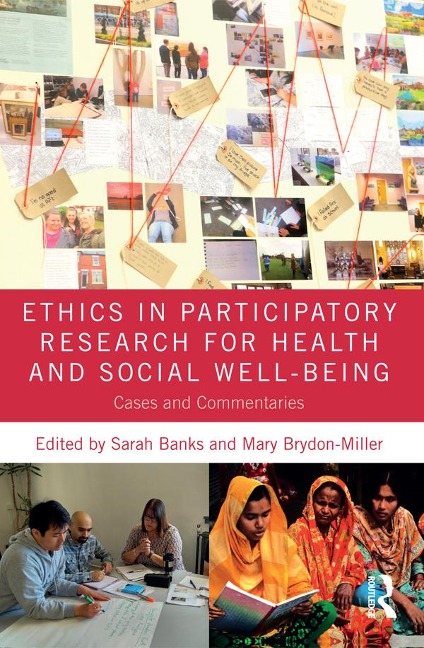
Participatory research is well-established as an approach involving people with a direct interest in, or experience of, the issue being studied in carrying out research. However, it raises unique and challenging ethical issues. Traditional concerns with respect for the rights to confidentiality, consent, privacy and protection of 'research informants' do not translate easily into participatory research. Boundaries between researchers and those researched are often blurred; research trajectories may be emergent and unpredictable; and major ethical issues revolve around partnership, power, equality and respect for diverse knowledges. The book introduces the key ethical issues in participatory research, drawing on ethical theory and relevant literature before presenting seven substantive chapters, each on a different theme, such as power, ownership, confidentiality and boundaries. The chapters feature an introductory overview of the topic with reference to the literature, followed by four real-life case examples written by participatory researchers and short commentaries on each case. Drawn from around the world (from Denmark to Tanzania), the cases illustrate a range of ethical issues, outlining how they were handled and the reflections and feelings of the contributors. Focusing on developing ethical awareness, confidence and courage to act in ethically challenging situations in everyday research practice, this book is an invaluable resource for all participatory researchers.
Sarah Banks is Professor of Applied Social Sciences, Department of Sociology and Co-director, Centre for Social Justice and Community Action, Durham University, UK. Mary Brydon-Miller is Professor of Educational Leadership, Evaluation, and Organizational Development, College of Education and Human Development, University of Louisville, USA.
Chapter 1. Ethics in participatory research Chapter 2. Partnership, collaboration and power Chapter 3. Blurring the boundaries between researcher and researched, academic and activist Chapter 4. Community rights, conflict and democratic representation Chapter 5. Co-ownership, dissemination and impact Chapter 6. Anonymity, privacy, and confidentiality Chapter 7. Institutional ethical review processes Chapter 8. Social action for social change
Dieses eBook wird im PDF-Format geliefert und ist mit einem Adobe Kopierschutz (DRM) versehen. Sie können dieses eBook mit allen Geräten lesen, die das PDF-Format und den Adobe Kopierschutz (DRM) unterstützen.
Zum Beispiel mit den folgenden Geräten:
• tolino Reader
Laden Sie das eBook direkt über den Reader-Shop auf dem tolino herunter oder übertragen Sie das eBook auf Ihren tolino mit einer kostenlosen Software wie beispielsweise Adobe Digital Editions.
• Sony Reader & andere eBook Reader
Laden Sie das eBook direkt über den Reader-Shop herunter oder übertragen Sie das eBook mit der kostenlosen Software Sony READER FOR PC/Mac oder Adobe Digital Editions auf ein Standard-Lesegeräte mit epub- und Adobe DRM-Unterstützung.
• Tablets & Smartphones
Möchten Sie dieses eBook auf Ihrem Smartphone oder Tablet lesen, finden Sie hier unsere kostenlose Lese-App für iPhone/iPad und Android Smartphone/Tablets.
• PC & Mac
Lesen Sie das eBook direkt nach dem Herunterladen mit einer kostenlosen Lesesoftware, beispielsweise Adobe Digital Editions, Sony READER FOR PC/Mac oder direkt über Ihre eBook-Bibliothek in Ihrem Konto unter „Meine eBooks“ - „online lesen“.
Schalten Sie das eBook mit Ihrer persönlichen Adobe ID auf bis zu sechs Geräten gleichzeitig frei.
Bitte beachten Sie, dass die Kindle-Geräte das Format nicht unterstützen und dieses eBook somit nicht auf Kindle-Geräten lesbar ist.