Und dann auf "Zum Home-Bildschirm [+]".

Stöbern
genialokal zum Startbildschirm hinzufügen
Installieren Sie die genialokal App auf Ihrem Startbildschirm für einen schnellen Zugriff und eine komfortable Nutzung.
Installieren Sie die genialokal App auf Ihrem Startbildschirm für einen schnellen Zugriff und eine komfortable Nutzung.
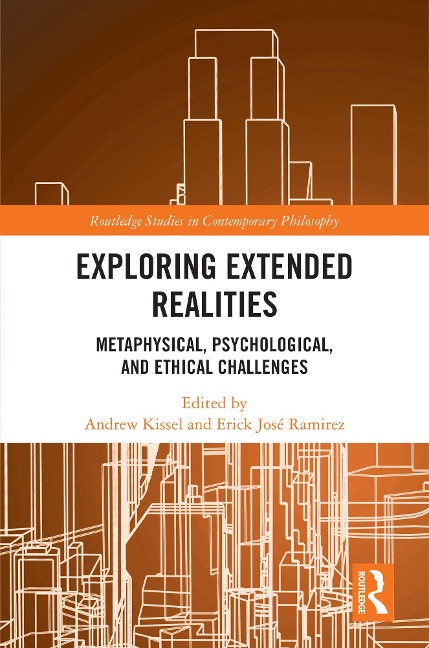
This volume highlights interdisciplinary research on the ethical, metaphysical, and experimental dimensions of extended reality technologies, including virtual and augmented realities. It explores themes connected to the nature of virtual objects, the value of virtual experiences and relationships, experimental ethics, moral psychology in the metaverse, and game/simulation design. Extended reality (XR) refers to a family of technologies aiming to augment (AR) or virtually replace (VR) human experience. The chapters in this volume represent cutting-edge research on XR experiences from a wide range of approaches including philosophy, psychology, Africana studies, and cognitive sciences. They are organized around three guiding questions. Part 1, "What is Extended Reality?", contains a series of chapters examining metaphysical questions about virtual objects, actions, and worlds. Part 2, "Is There an Ethics for Extended Realities?", includes chapters that address ethical questions that arise within XR experiences. Finally, Part 3, "What Can We Do with Extended Realities?", features chapters from a diverse group of social scientists on the potential uses of XR as an investigative and educational tool, including its strengths and pitfalls. Exploring Extended Realities will appeal to scholars and advanced students working in philosophy of technology, metaphysics, moral psychology, applied ethics, and game studies.
Andrew Kissel is Assistant Professor of Philosophy and Religious Studies at Old Dominion University. His research focuses on the foundations of moral responsibility in virtual and non-virtual contexts. With the Virginia Modelling, Analysis, and Simulation Center (VMASC), he develops thought experiments in VR, including work funded by the National Endowment for the Humanities. Erick José Ramirez is Associate Professor of Philosophy at Santa Clara University. He has developed numerous thought experiments for virtual reality, which are available on his personal website: https://www.erickjramirez.com. He is the author of The Ethics of Virtual and Augmented Reality: Building Worlds (Routledge).
Introducing Exploring extended realities: Metaphysical, psychological, and ethical challenges Andrew Kissel and Erick José Ramirez Part 1: What is extended reality? 1. "Back to Reality": The case against Ludo-Fictionalism Espen Aarseth 2. Fictionalism and virtual objects Mark Silcox 3. Against metaphysical interpretations of VR Grant Tavinor 4. The intersecting frontiers of extended reality and neuropsychology Thomas D. Parsons and Joseph Neisser Part 2: Is there an ethics for extended reality? 5. Mediated reality Michael Madary 6. Extended reality, control, and problems of the self: An ethical analysis Erick José Ramirez, Shelby Jennett, Dorian Clay, and Mohit Gandhi 7. Moral narratives in virtual worlds Andrew Kissel Part 3: What can we do with extended realities? 8. Virtual reality in experimental moral psychology: Identifying and understanding judgment-action discrepancy Kathryn. B. Francis 9. Moral behavior in virtual reality Eugy Han and Jeremy N. Bailenson 10. Doing good with virtual reality: The ethics of using virtual simulations for improving human morality Jon Rueda 11. Through a glass virtually: On the future of extended realities Erick José Ramirez and Andrew Kissel
Dieses eBook wird im PDF-Format geliefert und ist mit einem Adobe Kopierschutz (DRM) versehen. Sie können dieses eBook mit allen Geräten lesen, die das PDF-Format und den Adobe Kopierschutz (DRM) unterstützen.
Zum Beispiel mit den folgenden Geräten:
• tolino Reader
Laden Sie das eBook direkt über den Reader-Shop auf dem tolino herunter oder übertragen Sie das eBook auf Ihren tolino mit einer kostenlosen Software wie beispielsweise Adobe Digital Editions.
• Sony Reader & andere eBook Reader
Laden Sie das eBook direkt über den Reader-Shop herunter oder übertragen Sie das eBook mit der kostenlosen Software Sony READER FOR PC/Mac oder Adobe Digital Editions auf ein Standard-Lesegeräte mit epub- und Adobe DRM-Unterstützung.
• Tablets & Smartphones
Möchten Sie dieses eBook auf Ihrem Smartphone oder Tablet lesen, finden Sie hier unsere kostenlose Lese-App für iPhone/iPad und Android Smartphone/Tablets.
• PC & Mac
Lesen Sie das eBook direkt nach dem Herunterladen mit einer kostenlosen Lesesoftware, beispielsweise Adobe Digital Editions, Sony READER FOR PC/Mac oder direkt über Ihre eBook-Bibliothek in Ihrem Konto unter „Meine eBooks“ - „online lesen“.
Schalten Sie das eBook mit Ihrer persönlichen Adobe ID auf bis zu sechs Geräten gleichzeitig frei.
Bitte beachten Sie, dass die Kindle-Geräte das Format nicht unterstützen und dieses eBook somit nicht auf Kindle-Geräten lesbar ist.