Und dann auf "Zum Home-Bildschirm [+]".

Stöbern
genialokal zum Startbildschirm hinzufügen
Installieren Sie die genialokal App auf Ihrem Startbildschirm für einen schnellen Zugriff und eine komfortable Nutzung.
Installieren Sie die genialokal App auf Ihrem Startbildschirm für einen schnellen Zugriff und eine komfortable Nutzung.

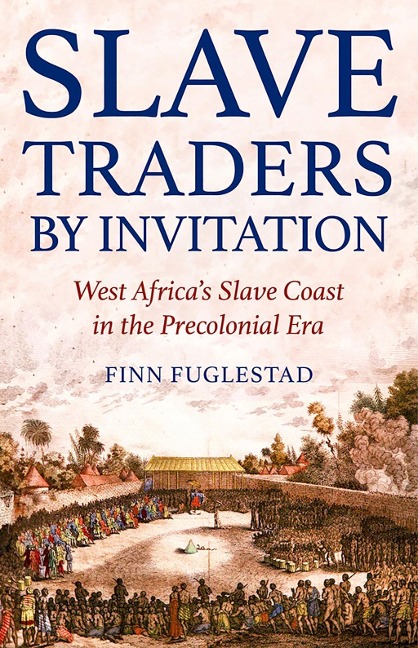
The Slave Coast, situated in what is now the West African state of Benin, was the epicentre of the Atlantic Slave Trade. But it was also an inhospitable, surf-ridden coastline, subject to crashing breakers and devoid of permanent human settlement. Nor was it easily accessible from the interior due to a lagoon which ran parallel to the coast. The local inhabitants were not only sheltered against incursions from the sea, but were also locked off from it. Yet, paradoxically, it was this coastline that witnessed a thriving long-term commercial relation-ship between Europeans and Africans, based on the trans-Atlantic slave trade. How did it come about? How was it all organised? And how did the locals react to the opportunities these new trading relations offered them? The Kingdom of Dahomey is usually cited as the Slave Coast's archetypical slave raiding and slave trading polity. An inland realm, it was a latecomer to the slave trade, and simply incorporated a pre-existing system by dint of military prowess, which ultimately was to prove radically counterproductive. Fuglestad's book seeks to explain the Dahomean 'anomaly' and its impact on the Slave Coast's societies and polities.
Finn Fuglestad is Professor Emeritus of History at the University of Oslo. He is the author of eleven books including A History of Niger, 1850-1960.
Foreword:
Abbreviations:
Prologue:
Part A: Structures and trends I. The Slave Coast- General Presentation II. Historiography, sources and epistemology III.Societal, religious and political structures - a model IV. Some concrete-practical implications V. A few comments on certain economic matters VI. The Database and the slave trade from the Slave Coast
Part B: Chronological overview: Early days to the 1720s I. Focus on the European side II. The African side: early-legendary past III.Allada and its neighbours and vassals - and the Europeans IV. Dahomey - early beginnings and after V. Convulsions further west VI. An overview 1680s-1720s
Part C: Chronological overview: 1720s-1850/1 I. The dramatic and decisive 1720s II. Aftermath and general considerations III.Near-disaster: focus on the first years of the era of Tegbesu IV. More about the era of Tegbesu V. The continuation VI. The long goodbye
Epilogue: