Und dann auf "Zum Home-Bildschirm [+]".

Stöbern
genialokal zum Startbildschirm hinzufügen
Installieren Sie die genialokal App auf Ihrem Startbildschirm für einen schnellen Zugriff und eine komfortable Nutzung.
Installieren Sie die genialokal App auf Ihrem Startbildschirm für einen schnellen Zugriff und eine komfortable Nutzung.
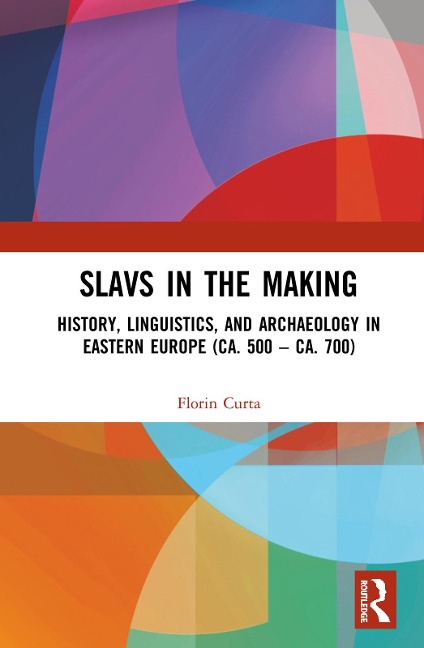
Slavs in the Making takes a fresh look at archaeological evidence from parts of Slavic-speaking Europe north of the Lower Danube, including the present-day territories of the Czech Republic, Slovakia, Poland, Belarus, Ukraine, and Russia. Nothing is known about what the inhabitants of those remote lands called themselves during the sixth century, or whether they spoke a Slavic language. The book engages critically with the archaeological evidence from these regions, and questions its association with the "Slavs" that has often been taken for granted. It also deals with the linguistic evidence-primarily names of rivers and other bodies of water-that has been used to identify the primordial homeland of the Slavs, and from which their migration towards the Lower Danube is believed to have started. It is precisely in this area that sociolinguistics can offer a serious alternative to the language tree model currently favoured in linguistic paleontology. The question of how best to explain the spread of Slavic remains a controversial issue. This book attempts to provide an answer, and not just a critique of the method of linguistic paleontology upon which the theory of the Slavic migration and homeland relies. The book proposes a model of interpretation that builds upon the idea that (Common) Slavic cannot possibly be the result of Slavic migration. It addresses the question of migration in the archaeology of early medieval Eastern Europe, and makes a strong case for a more nuanced interpretation of the archaeological evidence of mobility. It will appeal to scholars and students interested in medieval history, migration, and the history of Eastern and Central Europe.
Florin Curta is Professor of Medieval History and Archaeology at the University of Florida, USA. He is the author of The Making of the Slavs: History and Archaeology of the Lower Danube, ca. 500-700 (2004), Southeastern Europe in the Middle Ages, 500-1250 (2006), The Edinburgh History of the Greeks, ca. 500 to 1050: The Early Middle Ages (2011), and Eastern Europe in the Middle Ages (500-1300) (2019).
Introduction 1. Theoretical framework 2. Approaching the early Slavs 3. Written sources 4. The Carpathian Basin 5. The East German and Czech lands 6. Poland 7. Western (Right-Bank) Ukraine and Belarus 8. Eastern (Left-Bank) Ukraine and western Russia 9. Migration 10. Language 11. Ethnicity Conclusion
Dieses eBook wird im PDF-Format geliefert und ist mit einem Adobe Kopierschutz (DRM) versehen. Sie können dieses eBook mit allen Geräten lesen, die das PDF-Format und den Adobe Kopierschutz (DRM) unterstützen.
Zum Beispiel mit den folgenden Geräten:
• tolino Reader
Laden Sie das eBook direkt über den Reader-Shop auf dem tolino herunter oder übertragen Sie das eBook auf Ihren tolino mit einer kostenlosen Software wie beispielsweise Adobe Digital Editions.
• Sony Reader & andere eBook Reader
Laden Sie das eBook direkt über den Reader-Shop herunter oder übertragen Sie das eBook mit der kostenlosen Software Sony READER FOR PC/Mac oder Adobe Digital Editions auf ein Standard-Lesegeräte mit epub- und Adobe DRM-Unterstützung.
• Tablets & Smartphones
Möchten Sie dieses eBook auf Ihrem Smartphone oder Tablet lesen, finden Sie hier unsere kostenlose Lese-App für iPhone/iPad und Android Smartphone/Tablets.
• PC & Mac
Lesen Sie das eBook direkt nach dem Herunterladen mit einer kostenlosen Lesesoftware, beispielsweise Adobe Digital Editions, Sony READER FOR PC/Mac oder direkt über Ihre eBook-Bibliothek in Ihrem Konto unter „Meine eBooks“ - „online lesen“.
Schalten Sie das eBook mit Ihrer persönlichen Adobe ID auf bis zu sechs Geräten gleichzeitig frei.
Bitte beachten Sie, dass die Kindle-Geräte das Format nicht unterstützen und dieses eBook somit nicht auf Kindle-Geräten lesbar ist.