Und dann auf "Zum Home-Bildschirm [+]".

Stöbern
genialokal zum Startbildschirm hinzufügen
Installieren Sie die genialokal App auf Ihrem Startbildschirm für einen schnellen Zugriff und eine komfortable Nutzung.
Installieren Sie die genialokal App auf Ihrem Startbildschirm für einen schnellen Zugriff und eine komfortable Nutzung.
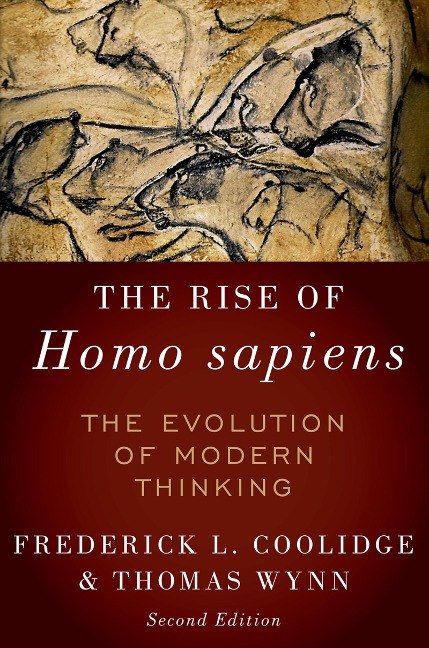
The Rise of Homo sapiens provides an unrivalled interdisciplinary introduction to the subject of hominin cognitive evolution that is appropriate for general audiences and students in psychology, archaeology, and anthropology. The book includes chapters on neural anatomy, working memory, evolutionary methods, and non-human primate cognition, but the bulk of the text reviews major developments in cognition over the span of hominin evolution from the ape-like cognition of Ardipithecus to the final developments that enabled the modern mind. The most provocative chapters of the first edition - the explicit discussion of the role of sleep in hominin evolution and the difference between Neandertal and modern human cognition - incorporate significant developments in both areas since the publication of the first edition. This revised edition updates the former text and adds greater emphasis to the growing fields of epigenetic inheritance, embodied cognition, and neuroaesthetics. The new edition provides greater emphasis on role and status of Homo heidelbergensis.
Frederick L. Coolidge, PhD, is Professor of Psychology at the University of Colorado, Colorado Springs. He focuses primarily on behavioral genetics, paleopsychology, and personality disorders across the lifespan. Thomas Wynn, PhD, is Distinguished Professor of Anthropology at the University of Colorado, Colorado Springs. He has published extensively in Palaeolithic archaeology, with a particular emphasis on cognitive evolution. Both editors are well-known in paleoanthropology as advocates of the enhanced working memory hypothesis for recent cognitive evolution. In 2012, they co-founded the UCCS Center for Cognitive Archaeology. They have also published numerous articles and books together, including How To Think Like a Neandertal (OUP 2012) and Cognitive Models in Palaeolithic Archaeology (OUP 2016).
List of Figures 1. Introduction 2. The Brain 3. Working Memory 4. Brain Evolution 5. Primates 6. Early Hominins 7. Homo erectus 8. The First Major Leap in Cognition: The Tree-to-Ground Sleep Transition 9. Homo heidelbergensis and the Beginnings of Modern Thinking 10. The Rise and Fall of Neandertals 11. Enhanced Working Memory and the Evolution of Modern Thinking Glossary References Index
Dieses eBook wird im PDF-Format geliefert und ist mit einem Adobe Kopierschutz (DRM) versehen. Sie können dieses eBook mit allen Geräten lesen, die das PDF-Format und den Adobe Kopierschutz (DRM) unterstützen.
Zum Beispiel mit den folgenden Geräten:
• tolino Reader
Laden Sie das eBook direkt über den Reader-Shop auf dem tolino herunter oder übertragen Sie das eBook auf Ihren tolino mit einer kostenlosen Software wie beispielsweise Adobe Digital Editions.
• Sony Reader & andere eBook Reader
Laden Sie das eBook direkt über den Reader-Shop herunter oder übertragen Sie das eBook mit der kostenlosen Software Sony READER FOR PC/Mac oder Adobe Digital Editions auf ein Standard-Lesegeräte mit epub- und Adobe DRM-Unterstützung.
• Tablets & Smartphones
Möchten Sie dieses eBook auf Ihrem Smartphone oder Tablet lesen, finden Sie hier unsere kostenlose Lese-App für iPhone/iPad und Android Smartphone/Tablets.
• PC & Mac
Lesen Sie das eBook direkt nach dem Herunterladen mit einer kostenlosen Lesesoftware, beispielsweise Adobe Digital Editions, Sony READER FOR PC/Mac oder direkt über Ihre eBook-Bibliothek in Ihrem Konto unter „Meine eBooks“ - „online lesen“.
Schalten Sie das eBook mit Ihrer persönlichen Adobe ID auf bis zu sechs Geräten gleichzeitig frei.
Bitte beachten Sie, dass die Kindle-Geräte das Format nicht unterstützen und dieses eBook somit nicht auf Kindle-Geräten lesbar ist.