Und dann auf "Zum Home-Bildschirm [+]".

Stöbern
genialokal zum Startbildschirm hinzufügen
Installieren Sie die genialokal App auf Ihrem Startbildschirm für einen schnellen Zugriff und eine komfortable Nutzung.
Installieren Sie die genialokal App auf Ihrem Startbildschirm für einen schnellen Zugriff und eine komfortable Nutzung.
Ihr gewünschter Artikel ist in 0 Buchhandlungen vorrätig - wählen Sie hier eine Buchhandlung in Ihrer Nähe aus:

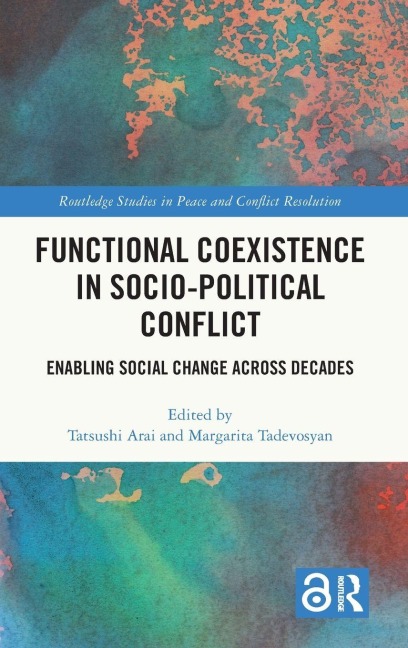

This book introduces the concept of functional coexistence as a context for building practical strategies for long-term conflict intervention and social change.
Tatsushi Arai is Associate Professor of Peace and Conflict Studies at Kent State University, USA, with extensive practitioner experience. He is author or editor of four books, including Creativity and Conflict Resolution: Alternative Pathways to Peace (2009). Margarita Tadevosyan is Research Assistant Professor and the Executive Director of the Center for Peacemaking Practice at the Jimmy and Rosalynn Carter School for Peace and Conflict Resolution at George Mason University, USA.
Part I: Theory of Functional Coexistence Chapter 1: Introduction: Facing Unresolved Conflict Chapter 3: Implications of Functional Coexistence for Conflict Intervention and Peacebuilding Part II: Cases of Enduring Functional Coexistence Introduction to Part II Chapter 4: Functional Coexistence in Local Communities in Post-Khmer Rouge Cambodia Chapter 5: Functional Coexistence in Cyprus: Negotiating the Seemingly Non-negotiable Limits of Mutually Acceptable Actions Across the Intercommunal Divide Chapter 6: Northern Ireland: (Dys)functional Coexistence Chapter 7: Agonistic Democracy: The Way Forward to Sustain Functional Coexistence in the Western Balkans? Part III: Cases of Emerging and/or Transitional States of Coexistence Introduction to Part III Chapter 8: Toward Functional Coexistence in Armenia-Turkey Relations: A Critical Analysis of the Normalization Process Chapter 9: Coexistence and Domination: Arab-Jewish Relations in Israel Chapter 10: Time for a New Approach to the Armenia-Azerbaijan Conflict: Prospects for Functional Coexistence Part Four: Implications for Theory, Practice and Policymaking Chapter 11: A Broader Landscape of Functional Coexistence: Lessons Learned from the Cases and Implications for Future Inquiry Chapter 12: Implications of Functional Coexistence for Peacebuilding Evaluation, Policymaking, and Funding Conclusion On the Journey of Functional Coexistence: Looking Back and Looking Forward