Und dann auf "Zum Home-Bildschirm [+]".

Stöbern
genialokal zum Startbildschirm hinzufügen
Installieren Sie die genialokal App auf Ihrem Startbildschirm für einen schnellen Zugriff und eine komfortable Nutzung.
Installieren Sie die genialokal App auf Ihrem Startbildschirm für einen schnellen Zugriff und eine komfortable Nutzung.
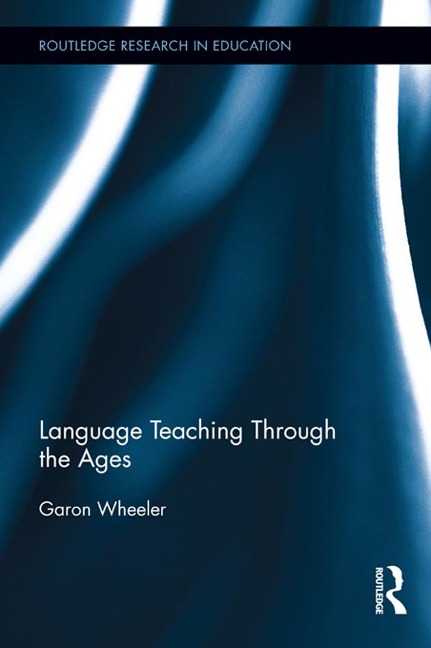
Konrad Koerner, a leading historian of linguistics, has long said that an academic field cannot be considered to have matured until it has history as one of its subfields. The history of linguistics is a growing area, having come into its own in the 1960s, especially after Noam Chomsky looked for historical roots for his work. In contrast, the history of language teaching has been neglected, reflecting the insecurity and youth of the field. Most works on the subject have been written by linguists for other linguists, and typically focus on a specific period or aspect of history. This volume concentrates on the basic issues, events, and threads of the history of the field - from Mesopotamia to the present - showing how a knowledge of this history can inform the practice of language teaching in the present.
Garon Wheeler is Campus Dean at the New York Institute of Technology, Abu Dhabi, UAE.
Introduction: Why Study the History of Language Teaching? Part I: In the Beginning 1. In the Beginning? 2. Mesopotamia: The First Records 3. Egypt: The Effect of Language Change 4. The Greeks: The Foundations of Western Education 5. The Romans: Refining the System 6. The Middle Ages: A Few Bright Spots Part II: The Early Modern World 7. William Lily's Famous Grammar 8. Erasmus's Ideas on Education 9. Roger Ascham and His Double Translation Technique 10. Claudius Holyband: "A Frenchman Which Doth His Dutie" 11. Michel de Montaigne: The Last Native Speaker of Latin? 12. John Brinsley's Advice to Teachers 13. Eilhard Lubinus: A Call for Change 14. Jan Comenius Creates a Full-Scale Science of Education 15. The Port-Royal Community 16. John Wilkins and His Rational Language 17. John Locke: Who Needs Latin? 18. César Chesneau du Marsais, Philosophy, and Grammar 19. Robert Lowth's Prescriptivist Grammar 20. Lindley Murray: "The Father of English Grammar" 21. The Grammar-Translation Method: It's Not What You Think 22. Two Diversions: Prendergast and Gouin 23. Esperanto: A Successful Created Language 24. Natural Methods: Learning Like Children Part III: Modern Times 25. The Reform Movement: The Start of Modern Times 26. Two Reports on the State of Language Teaching 27. Harold Palmer: A Modern Teacher 28. The Controversy of Basic English 29. World War II and the "Army Specialized Training Program" 30. After the War 31. The 1970s and Beyond 32. Conclusion
Dieses eBook wird im PDF-Format geliefert und ist mit einem Adobe Kopierschutz (DRM) versehen. Sie können dieses eBook mit allen Geräten lesen, die das PDF-Format und den Adobe Kopierschutz (DRM) unterstützen.
Zum Beispiel mit den folgenden Geräten:
• tolino Reader
Laden Sie das eBook direkt über den Reader-Shop auf dem tolino herunter oder übertragen Sie das eBook auf Ihren tolino mit einer kostenlosen Software wie beispielsweise Adobe Digital Editions.
• Sony Reader & andere eBook Reader
Laden Sie das eBook direkt über den Reader-Shop herunter oder übertragen Sie das eBook mit der kostenlosen Software Sony READER FOR PC/Mac oder Adobe Digital Editions auf ein Standard-Lesegeräte mit epub- und Adobe DRM-Unterstützung.
• Tablets & Smartphones
Möchten Sie dieses eBook auf Ihrem Smartphone oder Tablet lesen, finden Sie hier unsere kostenlose Lese-App für iPhone/iPad und Android Smartphone/Tablets.
• PC & Mac
Lesen Sie das eBook direkt nach dem Herunterladen mit einer kostenlosen Lesesoftware, beispielsweise Adobe Digital Editions, Sony READER FOR PC/Mac oder direkt über Ihre eBook-Bibliothek in Ihrem Konto unter „Meine eBooks“ - „online lesen“.
Schalten Sie das eBook mit Ihrer persönlichen Adobe ID auf bis zu sechs Geräten gleichzeitig frei.
Bitte beachten Sie, dass die Kindle-Geräte das Format nicht unterstützen und dieses eBook somit nicht auf Kindle-Geräten lesbar ist.