Und dann auf "Zum Home-Bildschirm [+]".

Stöbern
genialokal zum Startbildschirm hinzufügen
Installieren Sie die genialokal App auf Ihrem Startbildschirm für einen schnellen Zugriff und eine komfortable Nutzung.
Installieren Sie die genialokal App auf Ihrem Startbildschirm für einen schnellen Zugriff und eine komfortable Nutzung.
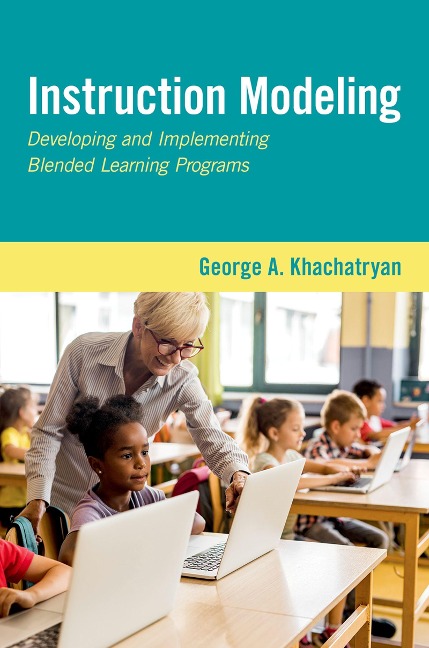
"Blended learning" is an educational approach that combines online and face-to-face components in the classroom, and it is becoming popular in American schools. But the quality of these programs is inconsistent; some are based on scientific findings on how children learn, while others lack such support. In fact, very little reliable information is currently available on how to create, use, and measure the results of blended learning programs. Instruction Modeling is both a practical guide to developing and implementing blended learning programs and a first-hand account of the creation of one such program, Reasoning Mind. As Reasoning Mind cofounder and instructional designer George Khachatryan explains, instruction modeling is a leading method for designing blended learning programs: carefully study high-quality offline instruction and build online programs to recreate it on a larger scale. This book describes in practical terms how to create a blended learning program, exploring a wide range of scientifically-supported approaches. Some programs draw on cognitive psychology, for instance, others on research in gaming, and still others on modern statistical methods such as "big data." Instruction modeling is unique amongst these approaches in that it relies above all on a deep understanding of the techniques and qualities of the world's best teachers. Making a strong case for broader use of instruction modeling, this book will be of special interest to teachers and education researchers, and an indispensable resource for those interested in the technique for its application in new contexts.
George Khachatryan cofounded the non-profit Reasoning Mind, a leading developer of mathematics blended learning programs for elementary and middle schools. He oversaw the instructional design of Reasoning Mind's programs, and is a frequent speaker on education technology theory and practice.
Foreword
Introduction: Grandmothers and Machines
Chapter 1. Good Instruction...What Is It Anyways?
Chapter 2. Good Instruction in Mathematics
Chapter 3. The Beginnings of Instruction Modeling
Chapter 4. In Which the Rubber Meets the Road
Chapter 5. Refining the Method
Chapter 6. The Case for Instruction Modeling
Chapter 7. A Comparison with Other Approaches
Chapter 8. How to Conduct Instruction Modeling
Chapter 9. The Future of Instruction Modeling
Conclusion: What of It?
Notes
References
About the Author
Dieses eBook wird im PDF-Format geliefert und ist mit einem Adobe Kopierschutz (DRM) versehen. Sie können dieses eBook mit allen Geräten lesen, die das PDF-Format und den Adobe Kopierschutz (DRM) unterstützen.
Zum Beispiel mit den folgenden Geräten:
• tolino Reader
Laden Sie das eBook direkt über den Reader-Shop auf dem tolino herunter oder übertragen Sie das eBook auf Ihren tolino mit einer kostenlosen Software wie beispielsweise Adobe Digital Editions.
• Sony Reader & andere eBook Reader
Laden Sie das eBook direkt über den Reader-Shop herunter oder übertragen Sie das eBook mit der kostenlosen Software Sony READER FOR PC/Mac oder Adobe Digital Editions auf ein Standard-Lesegeräte mit epub- und Adobe DRM-Unterstützung.
• Tablets & Smartphones
Möchten Sie dieses eBook auf Ihrem Smartphone oder Tablet lesen, finden Sie hier unsere kostenlose Lese-App für iPhone/iPad und Android Smartphone/Tablets.
• PC & Mac
Lesen Sie das eBook direkt nach dem Herunterladen mit einer kostenlosen Lesesoftware, beispielsweise Adobe Digital Editions, Sony READER FOR PC/Mac oder direkt über Ihre eBook-Bibliothek in Ihrem Konto unter „Meine eBooks“ - „online lesen“.
Schalten Sie das eBook mit Ihrer persönlichen Adobe ID auf bis zu sechs Geräten gleichzeitig frei.
Bitte beachten Sie, dass die Kindle-Geräte das Format nicht unterstützen und dieses eBook somit nicht auf Kindle-Geräten lesbar ist.