Und dann auf "Zum Home-Bildschirm [+]".

Stöbern
genialokal zum Startbildschirm hinzufügen
Installieren Sie die genialokal App auf Ihrem Startbildschirm für einen schnellen Zugriff und eine komfortable Nutzung.
Installieren Sie die genialokal App auf Ihrem Startbildschirm für einen schnellen Zugriff und eine komfortable Nutzung.
Ihr gewünschter Artikel ist in 0 Buchhandlungen vorrätig - wählen Sie hier eine Buchhandlung in Ihrer Nähe aus:

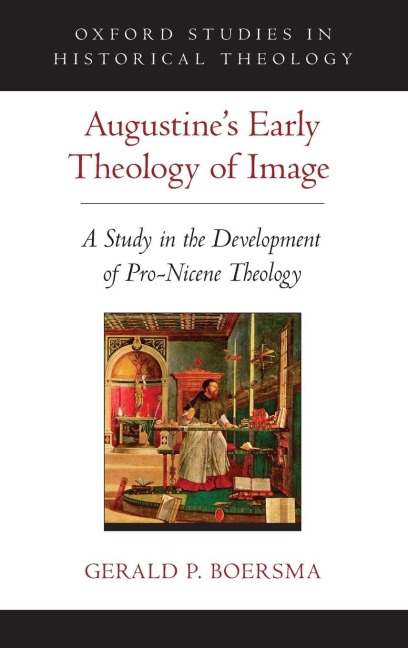
What does it mean for Christ to be the "image of God"? And, if Christ is the "image of God," can the human person also unequivocally be understood to be the "image of God"? Augustine's Early Theology of Image examines Augustine's conception of the imago dei and makes the case that it represents a significant departure from the Latin pro-Nicene theologies of Hilary of Poitiers, Marius Victorinus, and Ambrose of Milan only a generation earlier. Augustine's predecessors understood the imago dei principally as a Christological term designating the unity of divine substance. But, Gerald P. Boersma argues, Augustine affirms that Christ is an image of equal likeness, while the human person is an image of unequal likeness. Boersma's careful study thus argues that a Platonic and participatory evaluation of the nature of "image" enables Augustine's early theology of the image of God to move beyond that of his Latin predecessors and affirm the imago dei both of Christ and of the human person.
Gerald P. Boersma is Assistant Professor of Theology at St. Bonaventure University.
Preface
Abbreviations
Introduction
Part One
I. Hilary of Poitiers
II. Marius Victorinus
III. Ambrose of Milan
Part Two
IV. The Plotinian Image
V. Proteus and Participation
VI. The Analogical and Embodied Imago Dei
VII. The Ascent of the Image in De vera religione
Epilogue: The Imago Dei in De Trinitate
Notes
Bibliography
index