Und dann auf "Zum Home-Bildschirm [+]".

Stöbern
genialokal zum Startbildschirm hinzufügen
Installieren Sie die genialokal App auf Ihrem Startbildschirm für einen schnellen Zugriff und eine komfortable Nutzung.
Installieren Sie die genialokal App auf Ihrem Startbildschirm für einen schnellen Zugriff und eine komfortable Nutzung.

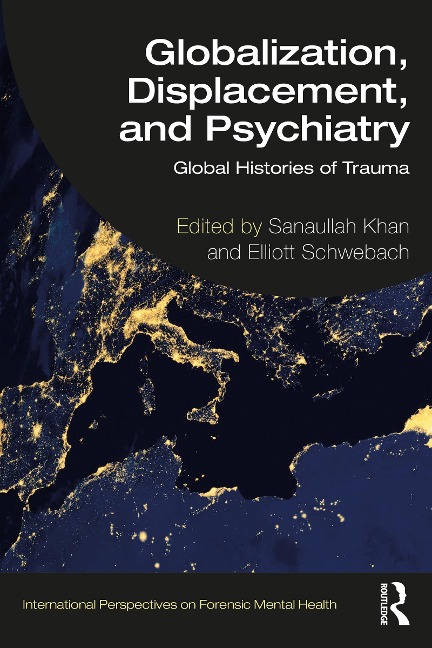
This book explores diasporic identities and lived experiences that emerge in global patterns of oppression and considers the consequences of treatment and cure when patients experience mental illness due to war, displacement and surveillance. Going beyond psychiatric institutions and conventional psychiatric knowledge by focusing on informal networks, socially contingent value systems, and cultural sites of healing, this book considers how communities utilize trauma productively for healing. The chapters in this volume consider the detection of mental illness and its treatment through claims to citizenship and belonging as well as denials of social identity and psychic experiences by institutions of the state. A multidisciplinary team of contributors and international range of case studies explore topics such as colonial trauma, feminized trauma, reproductive violence, military mental health and more. This book is an essential resource for psychologists, psychiatrists, political scientists, sociologists and anthropologists, as well as scholars and those involved in policymaking and practice.
Sanaullah Khan is a medical and psychiatric anthropologist. He received his PhD in anthropology from Johns Hopkins University, where he also received training in the history of medicine and global health. Since then, he has taught at Brandeis University, University of Delaware, and the University of Akron. He is currently an assistant professor in medical anthropology at the City University of New York's Hunter College. Elliott Schwebach (PhD, political science, Johns Hopkins University) is currently working as a DEI Consultant for Dr. Valaida Wise Consulting and teaching at Central New Mexico Community College.
Part 1: Trauma, Globality and Death 1. Where Psyche, History and Politics Merge: Decolonizing PTSD and Traumatic Memory with Fanon 2. Obligatory Death in Wuhan: The Power to Decide who Died, and Therapies for Those who Survived Part 2: Global Surveillance and Trauma 3. American Exceptionalism and the Construction of Trauma in the Global War on Terror 4. Militarism, Psychiatry and Social Impunity in Kashmir Part 3: Culture, Displacement and Healing 5. Healing the Sickness of Fighting: Medicalization and Warriordom in Postcolonial North America 6. Jinns and Trauma: Unbounded Spirits and the Ontology of Mental Illness in Pakistan Part 4: Global Bodies, Logics and Clinics 7. Feminized Trauma, Responsive Desire, and Social/Global Logics of Control: A Dialogue 8. Reproductive Violence and Settler Statecraft 9. Asian Americans and Pacific Islanders (AAPI): Cases/Experiences of Trauma and Healing