Und dann auf "Zum Home-Bildschirm [+]".

Stöbern
genialokal zum Startbildschirm hinzufügen
Installieren Sie die genialokal App auf Ihrem Startbildschirm für einen schnellen Zugriff und eine komfortable Nutzung.
Installieren Sie die genialokal App auf Ihrem Startbildschirm für einen schnellen Zugriff und eine komfortable Nutzung.
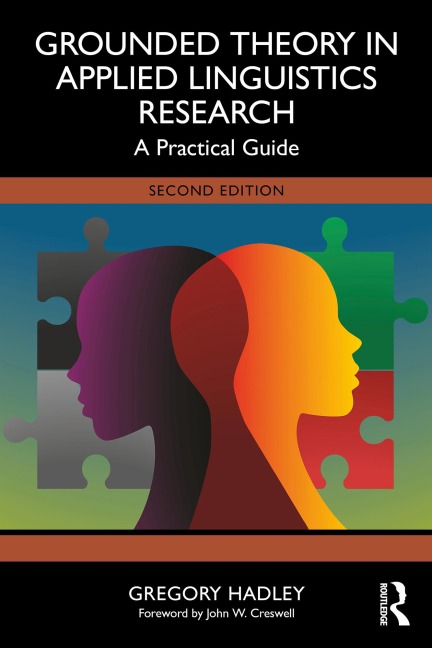
In this revised and expanded second edition, Gregory Hadley unravels the often-tangled understanding among applied linguistics researchers regarding grounded theory, a widely recognized research methodology employed globally by social scientists, educators, and qualitative researchers. This hands-on manual, specifically tailored for graduate students, supervisors, and researchers, not only clarifies the procedures and practical applications of grounded theory but also delves into the latest advancements, developments, and innovations in the field. The second edition offers a real-world guide that incorporates new techniques and approaches, thereby providing readers with a solid foundation and necessary skills to both effectively manage their field data and develop insightful theories with pedagogical implications for their learners. This book also offers effective strategies for explaining, justifying, and disseminating their theoretical insights to the applied linguistics community and beyond, making it a user-friendly resource for researchers in this dynamic domain. New activities and worksheets have been provided in order to lead readers toward higher levels of coding proficiency and mastery of the grounded theory method. This edition includes an expanded discussion on the importance of epistemology in qualitative research and a comprehensive exploration of contemporary grounded theories, and reveals some of the key strategies for the dissemination of grounded theory studies through conferences, papers, and monographs. Valuable insights and guidance are given for effectively communicating grounded theories within the confines of different venues. It will equip readers with the knowledge and skills required to excel in their grounded theory pursuits, and will provide insight as they navigate the ever-evolving landscape of grounded theory research. By harnessing the potential of the grounded theory method, readers will learn how to contribute meaningful insights to the applied linguistics community and related fields. This practical guidebook will be an indispensable resource for students and academics in applied linguistics.
Gregory Hadley is Professor of Sociolinguistics at Niigata University and a Visiting Fellow at the University of Oxford. He has authored and edited key works on grounded theory and English language teaching, including Grounded Theory in Action and English for Academic Purposes in Neoliberal Universities.
Foreword PART I: Understanding Grounded Theory Introduction The Emergence of Grounded Theory Unlocking the Potential of Grounded Theory in Applied Linguistics The Need for this Book Content Overview On Style and Substance 1 Establishing Common Ground: Paradigms in Perspective Toward Deeper Levels of Insight Paradigms and Conceptual Metaphors The Issue of Incommensurability The Autopoiesis of Research Paradigms Implications and Applications Grounding Methodological Practices with Philosophical Insights 2 The Origins of Grounded Theory Early Philosophical and Methodological Development An Overview of Classic Grounded Theory Diverging Paths Conflict and Recriminations External Critiques of Grounded Theory Toward Equilibrium and Methodological Tolerance 3 Contemporary Grounded Theory A Maturing Family of Methodologies Dimensional Analysis Constructivist Grounded Theory Situational Analysis Critical Grounded Theory The Interconnected Nature of Grounded Theory Methodologies Pause for Reflection Comparing Grounded Theory with other Qualitative Research Methodologies Toward Pragmatic Action PART II: Doing Grounded Theory 4 Preliminary Decisions Ethics, Ethical Review, and Ethicism Gaining Access to Informants Technical Decisions Interview Transcripts Packed for the Journey 5 Breaking New Ground Through Open Exploration Wonder, Introspection, and Sensitivity Observation, Note- Taking, and Early Coding Repertory Grids Conducting and Coding Qualitative Interviews Memos An Integrated Cycle of Exploration 6 Taking it to the Next Level: From Description to Theorization Focused Coding Conceptual Categories Theoretical Coding Getting to the Core Theoretical Sufficiency Summary 7 Spreading the Word: Theory Dissemination Writing up Your Grounded Theory Presenting Your Theory in Public Summary 8 Final Thoughts Taking Stock of What We Have Learned Scanning the Horizon Ahead Toward a Greater Contribution
Dieses eBook wird im PDF-Format geliefert und ist mit einem Adobe Kopierschutz (DRM) versehen. Sie können dieses eBook mit allen Geräten lesen, die das PDF-Format und den Adobe Kopierschutz (DRM) unterstützen.
Zum Beispiel mit den folgenden Geräten:
• tolino Reader
Laden Sie das eBook direkt über den Reader-Shop auf dem tolino herunter oder übertragen Sie das eBook auf Ihren tolino mit einer kostenlosen Software wie beispielsweise Adobe Digital Editions.
• Sony Reader & andere eBook Reader
Laden Sie das eBook direkt über den Reader-Shop herunter oder übertragen Sie das eBook mit der kostenlosen Software Sony READER FOR PC/Mac oder Adobe Digital Editions auf ein Standard-Lesegeräte mit epub- und Adobe DRM-Unterstützung.
• Tablets & Smartphones
Möchten Sie dieses eBook auf Ihrem Smartphone oder Tablet lesen, finden Sie hier unsere kostenlose Lese-App für iPhone/iPad und Android Smartphone/Tablets.
• PC & Mac
Lesen Sie das eBook direkt nach dem Herunterladen mit einer kostenlosen Lesesoftware, beispielsweise Adobe Digital Editions, Sony READER FOR PC/Mac oder direkt über Ihre eBook-Bibliothek in Ihrem Konto unter „Meine eBooks“ - „online lesen“.
Schalten Sie das eBook mit Ihrer persönlichen Adobe ID auf bis zu sechs Geräten gleichzeitig frei.
Bitte beachten Sie, dass die Kindle-Geräte das Format nicht unterstützen und dieses eBook somit nicht auf Kindle-Geräten lesbar ist.