Und dann auf "Zum Home-Bildschirm [+]".

Stöbern
genialokal zum Startbildschirm hinzufügen
Installieren Sie die genialokal App auf Ihrem Startbildschirm für einen schnellen Zugriff und eine komfortable Nutzung.
Installieren Sie die genialokal App auf Ihrem Startbildschirm für einen schnellen Zugriff und eine komfortable Nutzung.
Ihr gewünschter Artikel ist in 0 Buchhandlungen vorrätig - wählen Sie hier eine Buchhandlung in Ihrer Nähe aus:

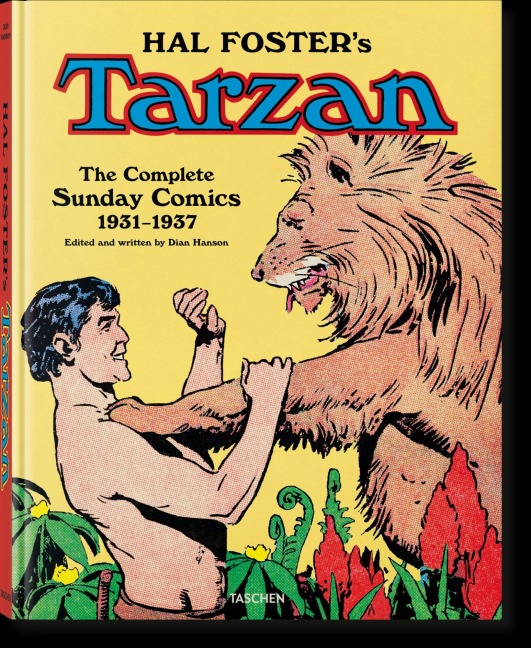
In 1928 commercial artist Hal Foster took a job to turn Edgar Rice Burroughs' novel Tarzan of the Apes into a 60-installment black and white newspaper comic. Initially, no American papers wanted it, so it premiered in England, to great acclaim. When U.S. papers picked it up and wanted more, Foster wasn't interested. It was only in 1931, with the Great Depression threatening his family with starvation, that he consented to take it on as a full color, full page Sunday comic, still calling the low-paid job "a bit of pottage."
That bit of pottage fed him for the next seven years, as Tarzan became the first adventure comic, and one of the most beloved Sunday strips in America. Though newspapers complained about the violence (Burroughs countered that Tarzan's success was the result of a "human weakness for gory and gruesome situations") and the incessant nudity (the writer's script notes asked for "a great deal of female nakedness") readers found Tarzan's adventures with ancient Egyptians, modern criminals, Vikings, dinosaurs, killer apes, and a slew of provocative queens and princesses mesmerizing, right up until Foster handed off the strip to Burne Hogarth in mid-1937.
Produced from original newspapers, preserving the color and texture of the Ben Day dot coloring process distinctive to vintage comics, Hal Foster's Tarzan carries you back to Sunday morning, belly-down on the living room rug, "funnies" spread before you, lost in a world of exotic adventure while mom whips up your own bowl of oatmeal pottage.