Und dann auf "Zum Home-Bildschirm [+]".

Stöbern
genialokal zum Startbildschirm hinzufügen
Installieren Sie die genialokal App auf Ihrem Startbildschirm für einen schnellen Zugriff und eine komfortable Nutzung.
Installieren Sie die genialokal App auf Ihrem Startbildschirm für einen schnellen Zugriff und eine komfortable Nutzung.
Ihr gewünschter Artikel ist in 0 Buchhandlungen vorrätig - wählen Sie hier eine Buchhandlung in Ihrer Nähe aus:

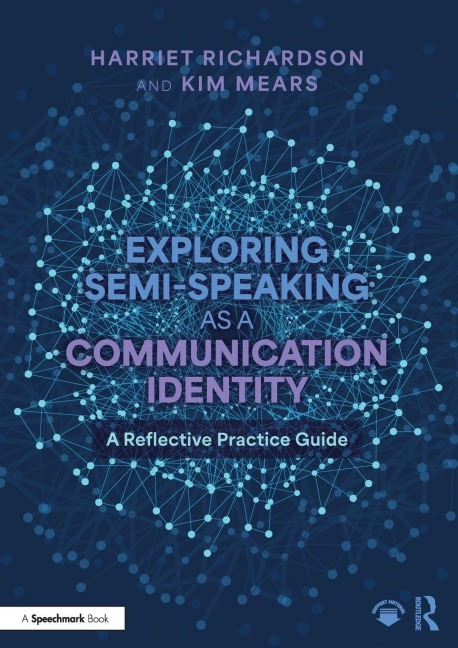
Exploring Semi-Speaking as a Communication Identity is a reflective practice companion which takes an expansive approach to supporting autistic and otherwise neurodivergent people who do not always have access to speech. Written for speech and language therapists, and relevant to other interested people, the book challenges traditional ideas about communication. It offers practical insights grounded in the neurodiversity paradigm, and amplifies neurodivergent voices alongside contributions from people with lived and professional experience of semi-speaking, situational mutism and AAC. Readers are invited on a journey of reflection through their own practice, reconsidering assumptions, deepening thinking, and expanding their understanding in this area. Topics include communication identity, communication capacity, AAC, multi-modal communication and shared understanding to support collaborative discussion. Encouraging curiosity, this comprehensive resource is essential reading for anyone interested in semi-speaking and communication identity.
Hat/Harriet Richardson is a white, semi-speaking, multiply neurodivergent Speech Pathologist, Neurodevelopmental Practitioner and writer. She runs the social media account @hat.talks.uk. Kim Mears is a neurodivergent speech and language therapist who has multiple identities. She is a wife, a mother, daughter and friend. She also identifies as an AuDHD narrator and information sharer who loves learning, unlearning and disrupting.
Dedication Meet the contributors and author bios Acknowledgements Foreword Introduction Section 1 1. What is semi-speaking? 2. Understanding neurodiversity. A term, a paradigm and a social justice movement. 3. An insight into the semi-speaking experience Section 2 Introduction to Section 2 4. Preparing to support discussions exploring semi-speaking 5. Communication identity and semi-speaking 6. Supporting communication capacity 7. AAC and multi-modal communication 8. Exploring semi-speaking with other people; family, friends and education 9. Exploring semi-speaking at work/ supporting colleagues 10. Exploring semi-speaking in a single session Section 2 conclusion Section 3: Resources 1. Information sheet on semi-speaking 2. Suggestions for supporting AAC information 3. Creating spaces to explore AAC and multi-modal communication 4. AAC myth busting 5. Ideas for supporting colleagues at work 6. Ideas for supporting semi-speaking students 7. Tips for writing about semi-speaking 8. Frequently asked questions 9. Communication cards References / bibliography Index