Und dann auf "Zum Home-Bildschirm [+]".

Stöbern
genialokal zum Startbildschirm hinzufügen
Installieren Sie die genialokal App auf Ihrem Startbildschirm für einen schnellen Zugriff und eine komfortable Nutzung.
Installieren Sie die genialokal App auf Ihrem Startbildschirm für einen schnellen Zugriff und eine komfortable Nutzung.
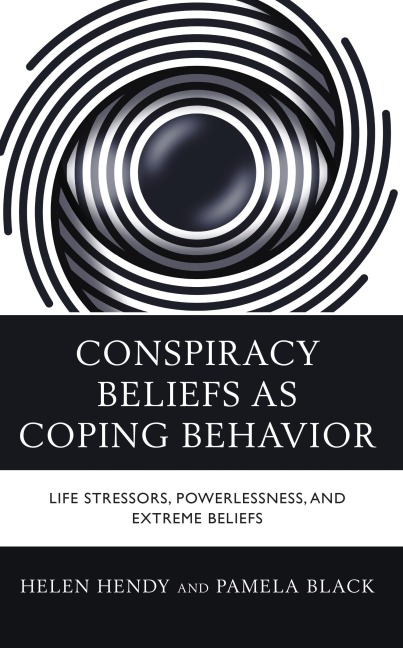
This book provides new answers to who and psychologically why individuals sometimes adopt conspiracy beliefs and thoughts of violence. Five conspiracy beliefs are considered: Government Malfeasance, Malevolent World Power, Extra-terrestrial Cover-up, Personal Well-being Threat, and Control of Information. Using a survey of 977 US citizens, the book compares thirteen possible demographic characteristics (who?) to see which ones are most associated with extreme beliefs. The book then evaluates a three-step psychological sequence (why?) in which individuals experiencing intense life stressors (health, money, or loneliness), combined with powerlessness (displayed as PTSD symptoms), have increased risk for extreme beliefs, perhaps because they offer a sense of understanding, strength, and community.
Helen M. Hendy is professor emeritus of psychology at Penn State Schuylkill.
Pamela Black is professor of criminal justice at Penn State Hazelton and the Discipline Coordinator for Social Sciences and Education in the University College.
Contents
List of Tables and Figures
Acknowledgments
Introduction
Part 1. Foundations
Chapter 1. Theoretical Perspectives on Conspiracy Theory Ideation
Chapter 2. Past Research on WHO? and WHY? People Adopt Conspiracy Beliefs
Part 2. Conspiracy Theories Past and Present
Chapter 3. Conspiracy Theories in an Historical Context
Chapter 4. Contemporary Conspiracy Theories
Chapter 5. The Present Study
Part 3. Research Methodology
Chapter 6. Study Participants
Chapter 7. Survey Procedures
Chapter 8. Measurement of Study Variables
Part 4. Data Analysis and Results
Chapter 9. Demographics and Three Life Stressors
Chapter 10. Demographics and PTSD (Powerlessness)
Chapter 11. Demographics and Extreme Beliefs
Chapter 12. Life Stressors and PTSD (Powerlessness)
Chapter 13. Life Stressors and Extreme Beliefs
Chapter 14. Five Conspiracy Beliefs and Violent Ideation
Chapter 15. Does PTSD Mediate between Life Stressors and Extreme Beliefs?
Chapter 16. Do Demographics Moderate the Three-Variable Mediations?
Part 5. Summary and Conclusions
Chapter 17. Summary of Study Results
Chapter 18. Interpretation and Application of Study Results
Chapter 19. Study Limitations and Directions for Future Research
References
About the Authors
Dieses eBook wird im PDF-Format geliefert und ist mit einem Adobe Kopierschutz (DRM) versehen. Sie können dieses eBook mit allen Geräten lesen, die das PDF-Format und den Adobe Kopierschutz (DRM) unterstützen.
Zum Beispiel mit den folgenden Geräten:
• tolino Reader
Laden Sie das eBook direkt über den Reader-Shop auf dem tolino herunter oder übertragen Sie das eBook auf Ihren tolino mit einer kostenlosen Software wie beispielsweise Adobe Digital Editions.
• Sony Reader & andere eBook Reader
Laden Sie das eBook direkt über den Reader-Shop herunter oder übertragen Sie das eBook mit der kostenlosen Software Sony READER FOR PC/Mac oder Adobe Digital Editions auf ein Standard-Lesegeräte mit epub- und Adobe DRM-Unterstützung.
• Tablets & Smartphones
Möchten Sie dieses eBook auf Ihrem Smartphone oder Tablet lesen, finden Sie hier unsere kostenlose Lese-App für iPhone/iPad und Android Smartphone/Tablets.
• PC & Mac
Lesen Sie das eBook direkt nach dem Herunterladen mit einer kostenlosen Lesesoftware, beispielsweise Adobe Digital Editions, Sony READER FOR PC/Mac oder direkt über Ihre eBook-Bibliothek in Ihrem Konto unter „Meine eBooks“ - „online lesen“.
Schalten Sie das eBook mit Ihrer persönlichen Adobe ID auf bis zu sechs Geräten gleichzeitig frei.
Bitte beachten Sie, dass die Kindle-Geräte das Format nicht unterstützen und dieses eBook somit nicht auf Kindle-Geräten lesbar ist.